September 20, (THEWILL) – The Organized Private Sector of Nigeria (OPSN) has urged the Federal Government to urgently make pronouncement on the ongoing disagreement over the Value Added Tax (VAT).
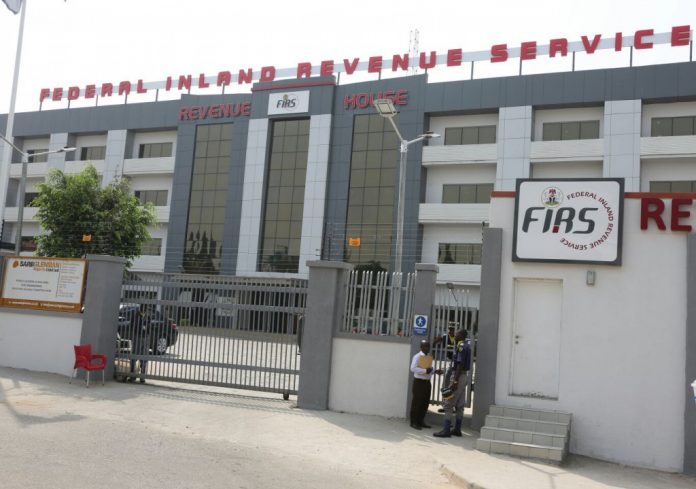
The call followed ongoing legal controversy over the authority of the Federal Inland Revenue Service (FIRS) to collect VAT in States.
THEWILL had reported a Federal High Court ruling that said the Rivers State Government and not the FIRS, should collect VAT in the State.

Following an appeal Court order asking both parties to maintain Status Quo on VAT, in addition to the recent resolution of the Southern Governors Forum asking States to collect VAT, the OPSN, at a news conference in Lagos on Sunday, asked the Federal Government to urgently speak up on the controversy.
The OPSN, comprises the Manufacturers Association of Nigeria, the Nigeria Association of Chambers of Commerce, Industry, Mines and Agriculture, Nigeria Employers Consultative Association (NECA), Nigeria Association of Small Scale Industries and the Nigeria Association of Small and Medium Enterprises.
OPSN chairman, Taiwo Adeniyi, said delays in addressing the issue could cause negative effects on businesses, most especially in the collection and remittances of VAT.
“We are aware that by September 21 we get penalized if we do not pay or remit the VAT for August.
“We are also aware that laws are not made in retrospect. It then means that even if those laws have been enacted, particularly the Lagos State law which came into effect in September, it will not affect the payment by businesses in the state.
“Due to our remittances, we have issues with the fact that the law for Rivers was made in August and the majority of the businesses in Lagos usually will have a relationship with the Rivers State Inland Revenue too.
“The confusion in the public space is the reason we are calling on the government to come to our aid as we want to pay.
“It is for the government at the centre to make a pronouncement as to what becomes of us”, he said.
Adeniyi, who is also the President of Nigeria Employers Consultative Association (NECA), said that the ongoing challenge had the potential to make businesses pay double VAT given demands by the FIRS and state governments.
He said that businesses, as the collecting agents, were practically unclear on the authority to remit to and without a clear path, this would further aggravate the pain on businesses.
“It is a popular saying that where two elephants fight, it is the grass that suffers. It is no longer news that Nigerian businesses have been battling with myriads of challenges, making the survival of enterprises and ease of doing business in the country among the worst in this part of the world”, he said.
Meanwhile, Chairman of the Southern Governors’ Forum and Ondo State Governor, Oluwarotimi Akeredolu, has said the amendments sought by the FIRS at the National Assembly to the controversial VAT law will be killed at the States’ Houses of Assembly.
Governor Akeredolu said the law did not give power to the Federal Government to collect VAT and share to the states.
He explained that it was the state governments that had the power to collect the tax.
“That’s the position of the law. The FIRS seeking for amendment is a confirmation that they don’t have the power. The amendment will be dead on arrival. Why seek an amendment to a constitution when the provision is so clear?”, Akeredolu asked.
The governor spoke on ‘Arise TV Sunday Talk Show’ hosted by Reuben Abati.
Governor Akeredolu insisted that if the Federal Government was to collect VAT for states, it could only get a percentage which it could decide to share at the Federation Accounts Allocation Committee (FAAC).
He said: “You can only collect VAT on behalf of the states and hand their money over to them. You can only take a percentage there for helping us to collect the money.”
On the controversy over the Petroleum Industry Bill (PIB), Governor Akeredolu said the Southern Governors’ Forum aligned and agreed with the position and steps taken by the Nigeria Governors’ Forum to pursue the amendment to the Bill so as to reflect equity, justice and fairness.