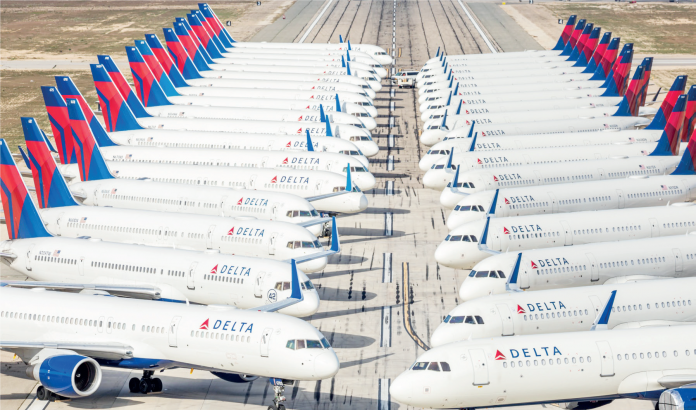
July 11, (THEWILL) – It is on record that the aviation industry is the hardest hit by the COVID-19 pandemic which took the world by surprise in 2020. In April of that year, two-thirds of the global commercial aviation fleet sat idly on the tarmac, while passenger traffic was down by 90 percent year-on-year.
Today, the aviation industry is slowly rebounding, led by domestic travel. As more aircraft return to the skies, a new report from aviation insurer Allianz Global Corporate and Specialty (AGCS) highlights some of the unique challenges facing airlines and airports as they resume operations.
It also identifies a number of ways in which COVID-19 is reshaping the sector, driving long-term changes in fleet composition, flight routes and passenger demand.

Commenting, the Regional Head of Aviation at AGCS, Dave Warfel said, “The grounding of worldwide fleets during the pandemic has represented an unprecedented event for the aviation industry. Airlines have worked tirelessly to maintain their fleets and train their crews during this long period of inactivity and, as insurers, we take a keen interest in working with them to understand their plans to return to service.
“Challenges will, no doubt, emerge as the industry gets ready to take off again. Although it is hard to predict exactly what shape the aviation industry will return, one thing is certain: It will have changed.”
Rusty Pilots
Earlier this year, dozens of pilots reported making mistakes, such as multiple attempts to land, with many citing rustiness as a factor on returning to the skies. Airlines (and other operators) are well aware of the potential for pilot “rustiness” and they continue to take steps to manage and mitigate these risks.
Major airlines have developed different training programmes for pilots re-entering service, depending on the length of absence. “At a time of such unprecedented activity, it is comforting to know that the risk management processes that made airline travel safer than any form of travel, prior to the pandemic, will continue to drive an unparalleled travel safety environment in the post COVID-19 world,” says Warfel.
However, the return of sightseeing flights in tourism destinations could lead to an uptick in risk for smaller leisure aircraft, including helicopters, particularly if there is an influx of new pilots unfamiliar with the routes and terrain. There have already been a number of fatal accidents involving sightseeing flights in recent years.
Perils From Parked Fleets
Although a large proportion of the world’s airline fleet have been – and are still – parked during COVID-19, loss exposures do not disappear. They change. Parked fleets are exposed to weather events. There have been numerous incidents of grounded aircraft being damaged by hailstorms and hurricanes.
The risk of shunting or ground incidents also increases, which can bring costly claims. There were collisions at the start of the pandemic as operators transferred aircraft to storage facilities. More are likely to occur when aircraft are moved again, ahead of reuse.
Aircraft in storage typically undergo regular maintenance to ensure they are ready to return. However, never has the industry seen so many aircraft temporarily put out of service and the report notes that smaller airlines may face significant challenges when reactivating fleets, given it will be an unprecedented process.
Shortage of Pilots
Odd as it may seem, given the impact of COVID-19, the global aviation industry faces a shortage of pilots in the mid to long-term. The tremendous increase in air travel pre-pandemic – annual air passenger growth in China alone was 10 per cent a year from 2011– meant that demand for pilots was already outstripping supply. More than a quarter of a million are required over the coming decade.
“In less regulated countries, shortages can lead to pilots operating commercial aircraft with limited qualifications and low overall flying time,” says Warfel, adding “Pilot fatigue is also a known risk among existing pilots that must be properly managed. Fortunately, there is a lot of industry expertise and resources available to assist airlines in building proper fatigue management systems.”
Some airlines are building their own pilot pipelines by establishing flight schools. Given the nature of training, flying schools are prone to accidents and claims are becoming more expensive with rising values of aircraft and increased activity. Landing accidents are most common, but insurers have also seen total losses.
New generation aircraft bring safety improvements but higher costs. A number of airlines have shrunk their fleets or retired aircraft over the past year, as the pandemic hastens a generational shift to smaller aircraft, given the anticipated reduced number of passengers on aircraft in the short-term future.
“Newer generation aircraft bring safety and efficiency benefits,” said Axel von Frowein, a Regional Head of Aviation at AGCS. “However, new materials such as composites, titanium and alloys are more expensive to repair, resulting in higher claims costs.”
Insect Infestations
There have been a number of reports of unreliable airspeed and altitude readings during the first flight(s) after some aircraft have left storage. In many cases, the problem was traced back to undetected insect nests inside the aircraft’s pilot tubes, pressure-sensitive sensors that feed data to an avionics computer. Such incidents have led to rejected takeoffs and turn back events. Contamination risk increases if storage procedures are not followed.
COVID-19 Claims Impact
The report also notes the aviation industry has seen relatively few claims directly related to the pandemic to date. In a small number of liability notifications, passengers have sued airlines for cancellations/disruptions.
COVID-19 has not been a direct driver of aviation claims over the past year,” says Cristina Schoen, Global Head of Aviation Claims at AGCS. As a result of the significant reduction in commercial airline travel during the pandemic we saw fewer additional claims than we would during a typical year.
However, the insurance sector was not immune to larger losses during the course of the pandemic, with different regions seeing tragic accidents, emergency landings and hull losses to name a few. As air travel begins to return to pre-pandemic levels we expect claims volume to rise accordingly.”
AGCS analysis of more than 46,000 aviation insurance claims from 2016 to year-end 2020 worth more than EUR 14.5bn (US$17.3bn) shows collision/crash incidents account for over half the value of all claims. Other expensive causes of loss include faulty workmanship/maintenance and machinery breakdown.

Anthony Awunor, is a business correspondent who holds a Bachelor of Arts Degree in Linguistics (UNILAG). He is also an alumnus of the Nigerian College of Aviation Technology (NCAT), Zaria Kaduna State. He lives in Lagos.