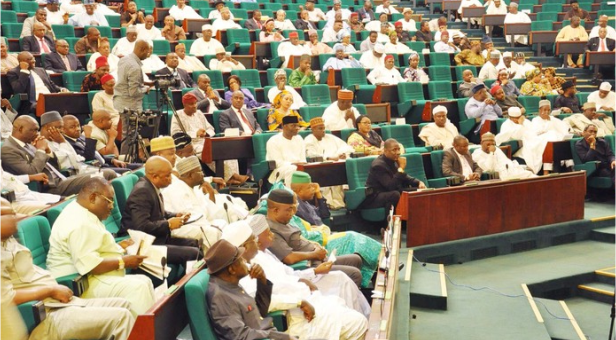
SAN FRANCISCO, December 02, (THEWILL) – The House of Representatives on Wednesday called on the Federal Government to allocate 27 percent of the total actual capital expenditure of the nation’s budget to education sector over the next four years.
In addition, the House called on federal, state and local government councils to address infrastructural decay in the primary and secondary schools in their respective jurisdiction and provide most up-to-date teaching and learning resources to them.
The lawmakers during the debate on the motion titled: ‘Urgent need to arrest the critical of basic and secondary education,’ sponsored by Muhammed Usman, expressed displeasure over the inability of Nigeria to meet the two Millennium Development Goals (MDGs) on education.

To this end, the lawmakers stressed the need for the President Muhammadu Buhari’s administration to review the institutional framework for planning and administration of basic and secondary education as well as the mandated parastatals in the education sector.
In his lead debate, Usman observed that the learning outcomes in the basic and secondary education levels had been very low, as expert studies showed that less than 30 percent of primary school pupils passed the Common Entrance Examinations.
“Survey tests carried out at secondary school level revealed that students’ performance in some important subjects such as Mathematics and English was below 36 percent.
“Hence between 2004 and 2014 an average of 76 percent of candidates who sat for the West African Examinations Council examinations (WAEC) failed to get the minimum of 5 credits,” he said.
Usman who blamed School administrators, proprietors WAEC officials as well as parents for the corruption and examination malpractice across the nation, observed that between 31% and 38% of those who passed the WAEC examinations in 2014 and 2015 do not reflect the true situation.
“Millions of children of school age in Nigeria have no access to basic and secondary education. In fact, the lack of access to basic education has placed Nigeria in the embarrassing position of having the largest number of out-of-school children in the world,” he noted.
In the bid to address the challenges, the lawmaker emphasised the need for review of teachers’ education and incentives with the view to attract and retain the best brains into the teaching profession