
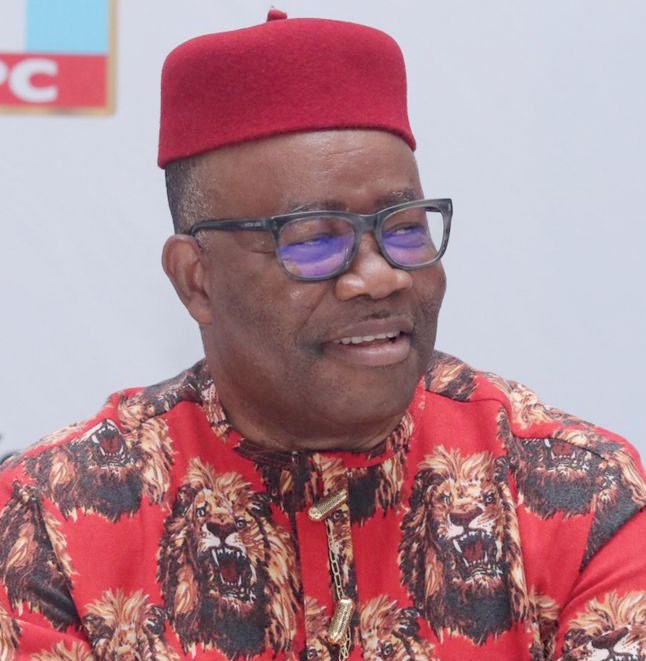
The 10th National Assembly was inaugurated last Tuesday. Immediately after the inauguration, both chambers of the National Assembly elected their presiding officers.
The election was a climax of politicking and intrigue that the contest had generated. In the end, a former Governor of Akwa Ibom State, Senator Godswill Akpabio, was elected as the Senate President of the 10th Assembly.
The Clerk of the National Assembly declared Akpabio as the Senate President, having scored 63 votes. His rival, Senator Abdulaeez Yari, got 46 votes.

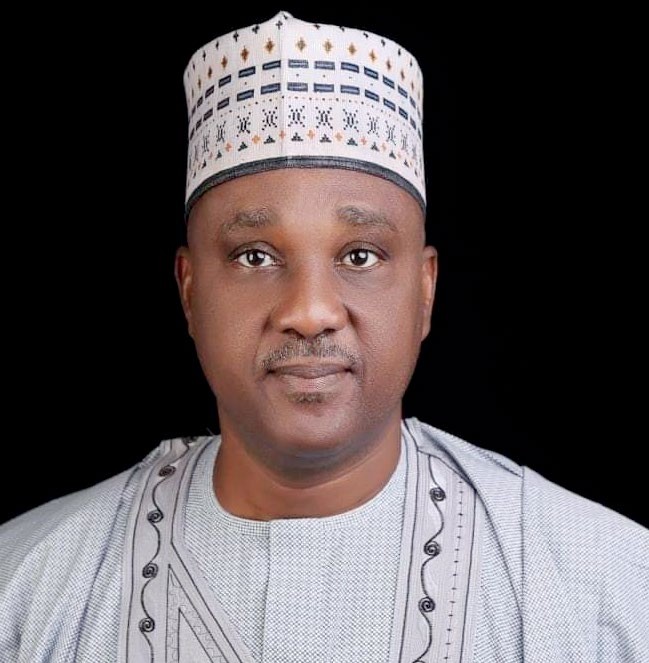
The lawmaker representing Kano North Senatorial District, Barau Jibrin, emerged as the Deputy President of the 10th Senate. He was elected unopposed.
Both Akpabio and Barau had the support of President Bola Tinubu and the leadership of the ruling All Progressives Congress (APC).
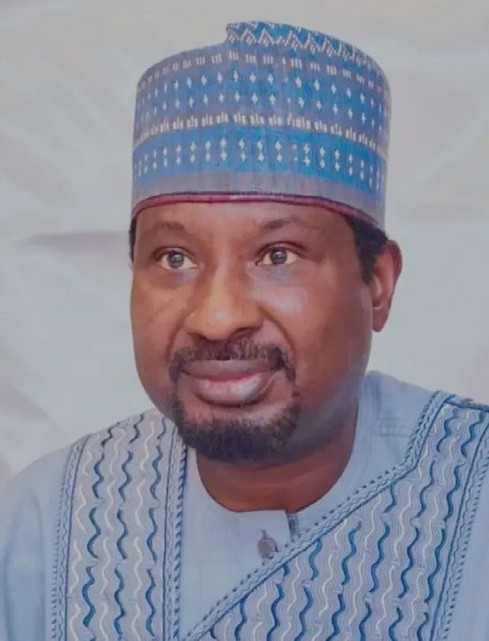
Also in the House of Representatives, Hon. Tajudeen Abass and Hon. Benjamin Kalu were elected as Speaker and Deputy Speaker, respectively.
It was a three-horse race and the House adopted an open ballot system where the members mentioned the names of their choice candidates for the offices.
While Abbas polled a total number of 353 to beat his rivals in the persons of the immediate past deputy speaker of the 9th House, Hon. Idris Wase and a former Chairman of the House Committee on National Intelligence, Aminu Jaji, who scored three votes each, Kalu was elected unopposed.
Setting the tone for the legislative agenda of the 10th National Assembly, Akpabio said, “We shall, therefore, further strengthen the legislative space in continuation of the laudable efforts made by the 9th Senate under the able leadership of H.E. Senator Ahmed Lawan, (GCON), President of the 9th Senate. Chief among these are gender matters, with specific affirmative provisions to guarantee women’s inclusivity; issues relating to persons with special needs and equality; engaging, empowering and rewarding our resourceful and innovative youths in terms of protection of intellectual innovations and property, and improved access to finance for technological start-ups. We must recognise and prepare for a mid-21st century global economy that places a premium on intellectual content and knowledge, and our young men and women must be supported to engage competitively.
“Expansion of the revenue streams available to the country, especially from our huge but largely unregulated natural and solid mineral resources base. These additional sources of revenue will build the nation’s resilience to shocks and stresses resulting from the fluctuation of oil prices in the international market.
“We will, as a forward-looking Senate, pass laws that emphasize economic viability, social acceptability and environmental sustainability, to encourage alternate and green technologies without prejudicing our developmental needs.
“We must, therefore, as a Senate, rise to partner with His Excellency, the President of the Federal Republic of Nigeria, and provide the required legislative framework and legal environment for him to anchor the policies and programmes that he espouses for the country. In doing this, I will particularly like to address our Distinguished colleagues from other parties. Yes, we may have come to the National Assembly through the instrumentalities of different political parties, so it is appropriate to recognise and respect our differing perceptions and positions on issues that will be brought before this chamber.
“However, in all matters of national interest, we are enjoined to remember that we are first and foremost, Distinguished Senators of the Federal Republic of Nigeria, before our roles as representatives and members of our individual political parties. There is therefore, every reason to support good policies and programmes of the federal government, and I call on you to put this national interest first at all times. Our Senate, the 10th Senate of the Federal Republic of Nigeria, will be a senate for all Nigeria. Together, we shall be greater than the sum of our individual political parties.
“On my part, Distinguished Senators, I affirm that this leadership shall be yours. It shall be a servant leadership; it shall be an uncommon leadership. To the Nigerian people, I say this: your dreams, your aspirations, and your well-being will be at the heart of everything we will do in this Senate. I urge you to remain hopeful, steadfast and united. Nigerians must remember that the nation is caught up in global challenges and upheavals which have far-reaching consequences; the impact of armed conflicts in Europe and Africa, as well as global political and economic realignments, are but a few of these events impacting Nigeria, other countries in Africa and even beyond. Our Senate will remain watchful of, and will be responsive to, these events”.
Nigerians Set Agenda for 10th NASS
Having looked at the legislative agenda of the 10th National Assembly, Nigerians have also helped in setting the agenda for it in the next four years.
The Director-General, National Institute for Legislative and Democratic Studies, (NILDS), Prof. Abubakar Sulaiman charged the 10th National Assembly to place Nigeria first in its function of law-making, oversight and representation.
President of the Nigeria Labour Congress (NLC), Joe Ajaero called on the Assembly to be guided by the Provisions of Section 14 of the Constitution.
He urged the National Assembly to be guided by sub-section 1 and 2, which deals with issues of underlying sovereignty and social justice.
Ajaero said, “Nigeria shall be a state based on the principles of Democracy and Social Justice.”
He, therefore, called for an independent legislature devoid of interference.
The Executive Director, LEAD Africa, Mr. Yusuff Liadi, called for the implementation of the National Youth Policy.
He said, “The National Youth Policy is very brilliant. We are not feeling much effect of the policy. It is merely a document.
“We call on the national assembly to ensure the implementation of the policy.”
The Director of Programmes, Action Aid, Mrs. Suwaiba Muhammad-Dankabo, said there should be a mechanism for feedback on every law passed.
She urged the parliament to ensure the functionality of local government councils as the third tier of government.
The Director of Agency Banking, OPAY, Mr. Abraham Enebe, decried the limited number of bank branches in the country, saying that bank branches could only be found in major cities.
Enebe, however, said that Fintech was trying to ensure that financial services were made accessible to people across the 774 Local Government Areas (LGAs) of the country.
He said, “Legislation around that gives our staff incentive or tax exclusion for those who are doing cash-in and cash – We want to see out.”
The Initiative for Research, Innovation and Advocacy in Development – The Electoral Hub has called on members of the newly inaugurated 10th National Assembly to view their four-year tenure as an opportunity to impact positively on their constituents and contribute to the democratic advancement, development and prosperity of the country.
Princess Hamman-Obels, the Director, IRIAD – The Electoral Hub, in a statement, noted that the National Assembly is not just another arm of the Nigerian government but an essential component for the service of public interests.
According to Hamman-Obels, legislative functions of rule-making, budget approval, executive and judicial oversight, confirmation of appointments, and constitutional amendment, make it a key force for ensuring that government is not merely an exercise in the control of the people, but an exercise in the interest of the people.
She said, “For citizens, public inputs are crucial for ensuring responsiveness and accountability of elected representatives. We, therefore, urge every Nigerian to actively engage elected representatives through active participation in public forums, town hall meetings, and community discussions. These will allow citizens to determine policy directions through demands, support and feedback. It will also enhance accountability as citizens will be better informed and equipped to monitor the assembly’s activities, track the performance of elected officials and demand transparency and accountability.
“Civil society actors must leave no stone unturned in the continuous efforts towards securing a legislative arm that advances the ideals of responsiveness, responsibility, accountability, inclusivity and equitable management of state affairs.
“The push for an active civic culture through sensitization campaigns, citizen-friendly legislation through advocacy, and stakeholder engagements, especially with members of the legislature are important activities that can guarantee that the 10th NASS upholds the tenets of democracy and good governance.
“We reiterate that the effectiveness and efficiency of the National Assembly is particularly dependent on the presence of open and effective channels of communication between citizens and their representatives.
“We, therefore, implore members of the legislative arm to prioritize the needs of their constituents as they take up the roles and responsibilities they have signed up for. It is important that legislators establish channels of communication for inputs and feedback from their constituents and prioritize public interest in the discharge of their array of functions.
“Established lines of communication would allow for meaningful and continuous dialogue between representatives and the populace. With meaningful dialogue and incorporation of the public will into legislative action, the Nigerian state can be better equipped to address the myriad of challenges she is currently confronted with.”
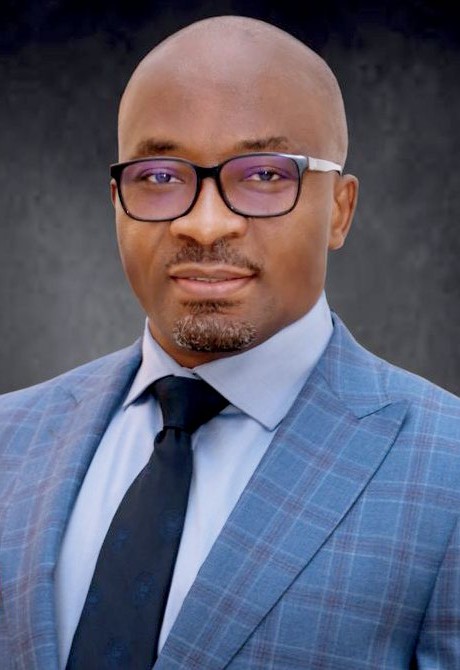
A former member of the House of Reps representing Ado/Okpokwu/Ogbadibo Federal Constituency of Benue State, and Chairman, House Committee on Narcotic Drugs, Hon. Francis Ottah Agbo, said the 10th assembly should push efforts on legislation that would be beneficial to Nigerians during their tenure.
Agbo listed key areas of legislation for the 10th National Assembly to include restructuring and Decentralization of Supreme Court/police reform.
He noted that the decentralisation of the Supreme Court would enhance the quick dispensation of justice.
To this end, the former lawmaker urged the 10th Assembly to come up with legislation that would decentralise the Supreme Court.
He said, “We need to decentralise the Supreme Court. We need to have zonal Supreme Courts for quick dispensation of justice.
“We need to reform the police; why do you need federal police without community policing?
“We need community policing, and every police officer must be made to undergo the rudimentary task that recruits undergo, just like it is obtainable in Senegal.
“We need to make sure that there is resource control like we had in the first republic; we need to sponsor legislation towards that direction.”
Other areas that the 10th National Assembly must focus on according to him include State of residency or citizenship by residency.
He said: “We should have a state of residence or citizenship by residency, so that wherever you are born, you automatically become an indigene of that place. A situation where an Idoma who was born in Gboko can’t aspire to be the local government Chairman is not good.
“So, the legislature, as the true representative of the Nigerian people, must initiate these bills in the tenth Assembly.”
Also speaking on the agenda for the 10th National Assembly, the founding Executive Director, African Centre for Leadership, Strategy and Development, Dr Otive Igbuzor said they should be able to put in place laws that will address the problems that are worrying us as a country.
“We have economic problems that are worrying us as a country. They should be able to promulgate laws that will ensure that we increase our revenues.
“The assembly should also create laws that will address the security issue in the country.
“They should find a way of improving oversight. The weakest point of our legislature is the function of oversight. The 10th assembly must begin to think about how to improve oversight,” Igbuzor said.
AYO ESAN, has been actively reporting and analyzing political events for different newspapers for over 18 years. He has also successfully covered national and state elections in Nigeria since the inception of this democracy in 1999.
