SAN FRANCISCO, June 15, (THEWILL) – The Presidency says that no counterpart funding from states is required to commence the implementation of the Federal Government’s National Home-grown feeding programme for school pupils, stressing that the present administration had already provided N93.1bn in the 2016 budget for the effective implementation of the programme.
This clarification was made in a statement issued on Tuesday by the Senior Special Assistant to the Vice-President on Media and Publicity, Mr. Laolu Akande.
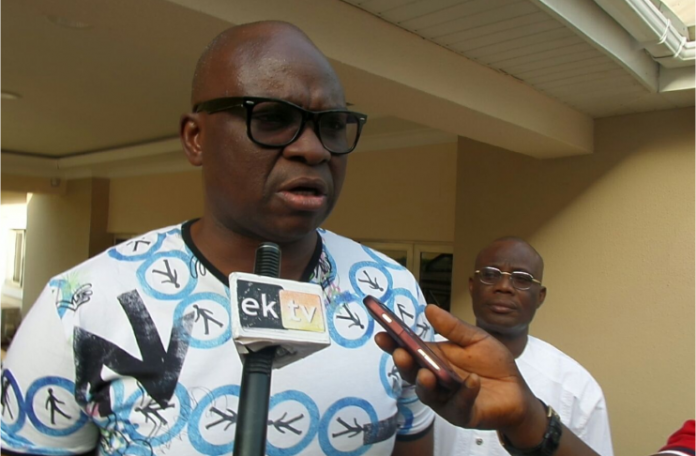
Governor Ayodele Fayose of Ekiti State had insisted that the feeding programme must be implemented without the proposed 40 per cent counterpart funding from states, alleging that anything to the contrary is fraud.

The Governor, who stressed that the feeding programme was purely a contract between the All Progressives Congress-led Federal Government and Nigerians, asked; “Were states consulted before the APC made the promise during the presidential campaign? How can you make a promise and win election on the basis of that promise and now expect states to help you to fulfill the promise? That to me is fraud!”
But Akande explained that while states were active participants in the school feeding plan, their “counterpart funding is not required to start the programme’s implementation.”
While stressing that willing states were however being encouraged to complement the programme so it could reach more pupils, he maintained that state governments could and would not be compelled to do that.
The Vice President’s spokesman however admitted that states’ support was vital whether they were able to provide funds in addition to what the Federal Government would do or not.
According to him, “We want the states to embrace this programme, it is good for the people, it’s a win-win for everyone. School feeding programme is not a counterpart funding arrangement model, no.
“What we have is a plan where the Federal Government provides 100 per cent feeding costs for pupils in primary one to three in all public primary schools in the country.
“The Presidency has made adequate arrangements for the HGSF to happen and by the grace of God; we are going forward to do exactly that.
“But what is interesting is the fact that some states have actually gone ahead to start the school feeding programme on their own, while some others are also making such a plan.
“In that case, more primary school pupils would be fed in the final analysis.”
Akande assured stakeholders that if a state was not able to fund the school feeding in Primary 4 to 6, the Federal Government would not abandon such a state but instead go ahead and feed pupils from Primary 1 to 3.
He specifically disclosed that 5.5 million schoolchildren would be fed free of charge for 200 school days in the first phase of the home-grown school feeding programme starting this year.
But when the programme is completed, over the course of the elected four-year term of the Presidency, he said the number would rise to over 20 million.
He said pupils from 18 states – three per geopolitical zone – would be fed for 200 school days under the programme.
Besides fully funding the programme for pupils in primaries 1 to 3, Akande, said the Federal Government would also provide technical assistance that would allow states design their context-specific state owned models.
He said such assistance would come with partner experience and support in key areas of health education and agriculture, and would allow the managers of the programme to understand the concept of the school feeding.
On how the funds would be disbursed, Akande said the money would come from the Federal Government and go straight to caterers and other beneficiaries at a rate of N70 per meal per pupil.
He said the feeding programme, though a part of the APC manifesto, was also an African Union inspired scheme to grow the continent while ensuring that pupils go to schools.
He added that the programme was also embedded within the National School Health Policy and the Universal Basic Act of the FGN 2004.