
July 12, (THEWILL) — When the Federal Capital Territory High Court recently ruled that the Economic and Financial Crimes Commission (EFCC) defamed former Minister of Power, Dr. Olu Agunloye, by publishing that he was being arraigned over a “$6 billion fraud,” the judgment extended beyond the facts of a single case.
In ordering the anti-graft agency to retract the publication, apologise and pay damages, the court reaffirmed a basic principle: official communications must accurately reflect the charges before the court.
The ruling has reopened a broader debate that has accompanied some of Nigeria’s biggest corruption investigations. While the justice system determines criminal liability through evidence presented in court, public opinion is often shaped much earlier by arrests, official statements and media headlines.

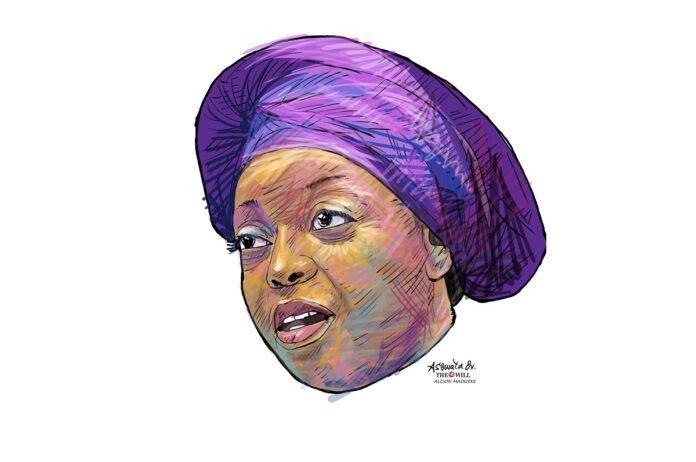
By the time legal proceedings conclude, reputations may already have suffered lasting damage. Few investigations illustrate that reality more vividly than the decade-long anti-corruption cases surrounding former Minister of Petroleum Resources, Diezani Alison-Madueke.
Since leaving office in 2015, Diezani has remained one of the central figures in Nigeria’s anti-corruption campaign.
Allegations involving oil contracts, election financing, money laundering and international asset recovery triggered investigations across Nigeria, the United Kingdom and the United States. The scale of the investigations made the Diezani saga one of the country’s most publicised corruption cases, generating years of criminal proceedings, civil forfeiture actions and cross-border asset recovery efforts. Yet the investigations extended well beyond the former minister herself.
As investigators widened their enquiries, the spotlight shifted to relatives, business associates, oil executives, bankers, lawyers and former public officials. Some were prosecuted. Others were investigated without ever being formally charged. Some were eventually acquitted or discharged by the courts, while proceedings against others remain ongoing.
Despite these different legal outcomes, many shared a common experience: their names became permanently linked to one of Nigeria’s largest corruption investigations. The impact was perhaps most visible among those closest to the former minister. Her son, Ugonna Alison-Madueke, repeatedly featured in investigations relating to the alleged movement of funds connected to the 2015 election financing probe.
Prosecutors in the United Kingdom also alleged that educational expenses had been financed through proceeds of corruption. Although the legal proceedings primarily focused on broader allegations against several defendants, Ugonna’s name became a recurring feature of public reporting, effectively pushing him away from the public business space. Her cousin and private lawyer, Donald Chidi Amamgbo, experienced a similar reversal.
Once regarded as a rising figure in Nigeria’s indigenous oil trading industry through his companies, including Mezcor, Tridax and Lynear Energy, Amamgbo was arrested in 2016 amid allegations that his companies benefited from crude oil allocations because of his relationship with Diezani. Regardless of the eventual legal trajectory of the case, the publicity surrounding the investigation eclipsed his business profile as regulatory scrutiny intensified.
The investigations also reached Diezani’s immediate family in the United Kingdom. Her brother, Archbishop Doye Agama, was accused by British prosecutors of helping facilitate payments connected to alleged bribery involving oil contracts.
That narrative changed significantly in June 2026 when a jury at Southern Crown Court acquitted Diezani, Agama, oil executive Olatimbo Ayinde and other co-defendants of all criminal charges brought against them in the UK proceedings. The verdict marked a major legal milestone, but it also highlighted the gap that can exist between years of public suspicion and the eventual outcome of a criminal trial.
By then, however, the reputational consequences had already unfolded over nearly a decade of intense public scrutiny. The ripple effects were not confined to family members. They extended into Nigeria’s oil industry, where several indigenous entrepreneurs became closely associated with investigations into crude oil lifting arrangements and strategic alliance agreements executed during Diezani’s tenure.
For many of them, years of investigations, forfeiture proceedings and sustained media attention reshaped public perception long before courts reached final determinations. The commercial consequences were particularly evident among some of Nigeria’s best-known indigenous oil businessmen. Kolawole Aluko and Olajide Omokore, principals of the now comatose Atlantic Energy, became prominent figures in investigations into strategic alliance agreements and crude oil lifting arrangements executed during Diezani’s tenure. Authorities in Nigeria and the United States pursued extensive asset recovery proceedings involving luxury properties, bank accounts and other high-value assets. Aluko’s US$50 million Galactica Star superyacht became one of the most visible symbols of the anti-corruption campaign.
Regardless of the eventual outcome of individual proceedings, both businessmen saw their once-dominant positions within Nigeria’s oil sector fade into oblivion.
The investigations also drew in senior officials within the defunct Nigerian National Petroleum Corporation (NNPC); its successor, Nigerian National Petroleum Company Limited (NNPCL), still suffers serious reputational damage from the hangover. At least one prominent figure was alleged by the EFCC to have played a role in the movement of funds from NNPC accounts linked to the 2015 election financing investigation. No indictment or charges were filed in court. The brouhaha effectively overshadowed what had been distinguished careers for these senior officials in Nigeria’s oil industry, illustrating how the investigations reached beyond political office into the technocratic leadership of the country’s petroleum sector.
The investigations also reached Nigeria’s financial sector. Several senior banking executives, including former Fidelity Bank Managing Director Nnamdi Okonkwo, a former First Bank Executive Director Dauda Lawal and current Governor of Zamfara State, as well as a former Sterling Bank Executive Director, Lanre Adesanya, became defendants in money laundering proceedings linked to funds allegedly connected to the 2015 election financing investigation. Their legal outcomes, however, differed considerably.
In 2019, the EFCC amended its charges, withdrawing proceedings against Okonkwo, Adesanya and Stanley Lawson, while continuing a narrower case against Lawal. Lawal subsequently challenged the allegations in court and was eventually discharged before later emerging as Governor.
The contrast between the legal outcomes and the years of public scrutiny illustrated how investigations can leave lasting reputational footprints even where prosecutions evolve or collapse.
The widening investigations also extended into public office. Senior Advocate of Nigeria Dele Belgore and former Minister of National Planning, Prof. Abubakar Sulaiman, faced prosecution over allegations involving N450 million allegedly linked to Diezani. After years of legal proceedings, both men were discharged by the courts.
These cases underscore an important distinction that is often lost in public discourse. Being investigated is not the same as being convicted. Criminal liability is determined by courts after evidence has been tested, witnesses examined and legal arguments heard. Public opinion, however, rarely waits for that process to conclude.
That distinction explains why the Agunloye judgment carries significance beyond the former minister’s case. The Federal Capital Territory High Court did not question the EFCC’s statutory powers to investigate or prosecute alleged offences. Rather, it held that the Commission’s publication inaccurately suggested Agunloye was standing trial for a “$6 billion fraud” when the charges before the court did not support that description.
In ordering the Commission to retract the publication and issue a public apology, the court reinforced the principle that official communication must remain accurate and proportionate to the proceedings before the court. For investigative agencies, the ruling serves as a reminder that public communication is an extension of due process, not a substitute for it. For journalists, it reinforces the obligation to distinguish carefully between allegations, investigations, prosecutions and convictions. Precision in language is not merely a matter of professional ethics; it is essential to preserving the integrity of both the justice system and public discourse.
The Diezani investigations remain one of Nigeria’s defining anti-corruption campaigns. They have resulted in convictions in some proceedings, acquittals in others, ongoing prosecutions, international asset recoveries and complex cross-border litigation that continues to unfold. Yet beyond their legal significance, they also reveal another reality: the enduring consequences of public association.
For many individuals connected to the investigations, the greatest challenge was not only answering allegations before a court of law but also navigating years of public scrutiny that reshaped careers, businesses and reputations. Some were eventually cleared, others remain before the courts and some continue to face unresolved proceedings. Their legal paths diverged, but the burden of association often remained constant. Ultimately, the rule of law requires more than vigorous investigation. It demands equal commitment to fairness, accuracy and the presumption of innocence. As the Agunloye judgment illustrates, official statements can carry consequences long before courts reach their verdicts. Once reputational damage takes hold, it is rarely reversed.

Ogochukwu Onwaeze is a writer specializing in business and economic journalism. At THEWILL News Media, she translates market trends, financial developments, and policy shifts into clear and engaging stories.
