
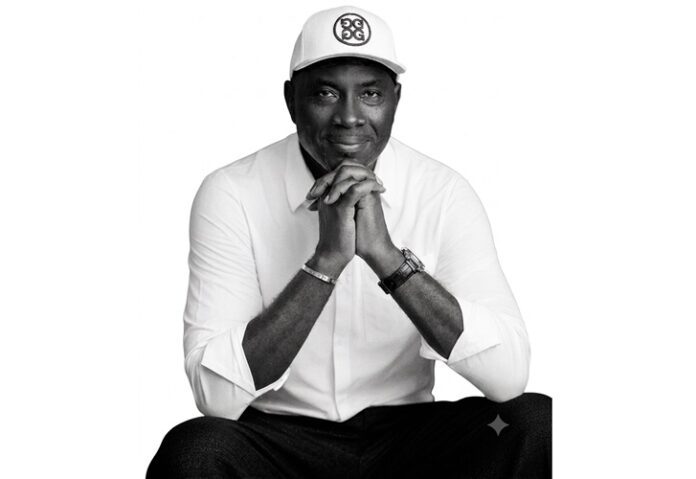
June 28 (THEWILL) — One of the first questions I was asked shortly after joining a new organisation in 2003 had nothing to do with communications, strategy or business. Instead, I was asked whether I played golf.
It was a totally unexpected question for someone who had only just resumed work and was still trying to understand the organisation, learn names and locate meeting rooms without appearing completely lost. At the time, I had joined a team that would eventually become part of one of Africa’s most significant corporate transformation stories. In those early days, as an executive transitioning from banking to the oil and gas sector, my ambitions were considerably more modest. Simply making sense of the industry’s endless stream of acronyms and jargon felt like a respectable achievement.
The company had been invited to participate in an international corporate golf outing and, as it turned out, knowing how to play golf was considered a useful skill.

I did not play golf.
Yet that brief conversation stayed with me. Looking back now, it is remarkable how a seemingly ordinary question can alter the direction of one’s life. I knew almost nothing about the game, but I was intrigued by the possibility of learning something entirely new.
It would take another four years before that curiosity translated into action. In 2007, after joining Ikoyi Club, I finally began to play. What I assumed would be a recreational pastime soon became much more. Golf has taken me to unexpected places, introduced me to enduring friendships and taught me lessons that extend far beyond the fairways.
For many people, golf remains something of a mystery. In Nigeria, as in much of Africa, it is often seen as an elitist sport, hidden behind the gates of private clubs and accessible only to a select few. In a city like Lagos, with more than twenty million residents and only a handful of golf courses, it remains far removed from everyday experience.
Take Ikoyi Club, for example. I have often boasted to golfing friends abroad that it may well be one of the most played golf courses in the world. The initial response is usually a look that suggests they have concluded that I am either mistaken or engaging in a particularly ambitious form of Nigerian exaggeration.
What follows is normally a brief debate. Then they begin to do the maths. They consider the size of Lagos, the number of active golfers and the remarkably small number of courses available to them. Somewhere during that calculation, the scepticism begins to fade. By the end of the conversation, most arrive at the same conclusion: perhaps I am not exaggerating after all.
Yet the longer I have been involved in golf, the more I have realised that its greatest value has very little to do with scorecards, handicaps or even the game itself.
Over the years, I have shared golf courses with chief executives, governors, diplomats, professionals, pros, caddies, retirees and people from backgrounds entirely different from my own. Some became friends. Others were companions for only four or five hours before our paths diverged permanently. What struck me repeatedly, however, was the way golf seemed to level the playing field in ways that everyday life rarely does.
On a golf course, titles matter far less than we imagine. The game has little interest in your achievements or reputation. It responds only to preparation, discipline, judgement and execution.
Perhaps that is one of the reasons the game has remained so fascinating to me.
For much of my professional life, I have worked in branding, communications and sustainability, helping organisations define who they are and how they are perceived. In many ways, branding is an exercise in identity. Yet golf has repeatedly reminded me that identity is revealed less by what we say about ourselves and more by what consistently shows up in our actions.
The game has an almost ruthless honesty about it. It rewards discipline, exposes impatience and magnifies lapses in judgement. More importantly, it reveals how we respond when things do not go according to plan.
The realities that shape a round of golf are remarkably similar to those that shape careers, businesses, relationships and leadership journeys. We prepare, we make decisions, we encounter setbacks and we adapt. Sometimes things work exactly as intended; at other times, despite our best efforts, they do not. What happens next often matters more than the setback itself.
One of the most surprising discoveries of my golfing journey has been that many of the game’s most valuable lessons emerge not during moments of success, but during moments of frustration. A rushed decision, a loss of focus or an attempt to recover too quickly from an earlier mistake can alter the outcome of an entire round.
In that respect, golf has been an extraordinarily committed teacher. For nearly two decades, it has delivered lessons in humility with remarkable consistency, often when I was least interested in receiving them.
Life often operates in much the same way.
The most significant consequences are not always the result of dramatic events. More often, they emerge from small decisions repeated consistently over time. Character is built in those moments. Habits are formed there. Leadership is tested there.
As the years passed, I found myself becoming increasingly interested in these parallels. I began paying less attention to golf as a sport and more attention to golf as a teacher. The game seemed to provide a steady stream of observations about human behaviour, decision-making, discipline, resilience and personal growth.
Some of those observations were about me. Others were about the people I met along the way. Together, they created a collection of lessons that extended well beyond fairways, bunkers and scorecards.
That is the inspiration behind The Long Game.
This is not intended to be a column about swing mechanics, equipment reviews or the technical aspects of golf. Instead, this series will explore the lessons hidden within the game and their relevance to the lives we all lead, whether we play golf or not. Through stories, reflections and personal experiences, I hope to examine themes such as leadership, decision-making, discipline, character, relationships and personal growth.
Looking back, it is remarkable that it all began with a simple question asked more than two decades ago. At the time, I could not have known that a game I had never played would become an unlikely teacher of lessons about leadership, discipline, identity and life itself.
For me, golf has been one of those teachers. The Long Game is simply an attempt to share some of what it has taught me.
The author, Meka Olowola is a sustainability and communications expert, business leader and avid golfer.

