
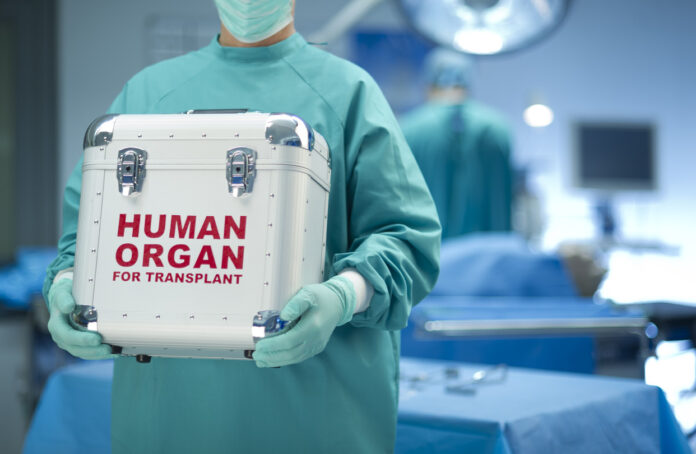
December 14, (THEWILL) — Allegations of organ harvesting made worrisome headlines last week in a way that may show an unfolding, well – coordinated business with human parts by official and unofficial participants.
In the seeming official case was the allegation by a patient, Mr. Joshua Afolayan, that his kidney was removed during surgery at Ekiti State University Teaching Hospital, EKSUTH.
According to Mr. Afolayan, a victim of an accident in August 2025 which left one of his kidneys damaged as confirmed by multiple scans and had to undergo surgery in October to remove the damaged kidney, he was left without a kidney after the surgery at EKSUTH.

Disputing Afolayan’s allegations, Chief Medical Director of EKSUTH, Professor Kayode Olabanji, has stated that the “hospital operates under strict ethical standards and does not perform organ transplants, making trafficking claims unfounded.” According to him, both of Afolayan’s kidneys were adhered to each other due to a structural issue and the hospital has pledged to provide free dialysis for Mr. Afolayan until he can get a transplant. Still, the matter has generated such furore and bad image for the institution that the state government had to wade in to calm frayed nerves and restore public confidence in the services of the hospital.
It has set up a seven-member independent panel to conduct a comprehensive review of the matter and submit its findings within 10 days. The panels’ findings are eagerly awaited by the public and stakeholders alike.
While the outcry against this official aspect to the suspected trafficking in human organs was yet to subside, a similar allegation broke out in Imo State. There, an unofficial mortuary, Ugwudi Cottage Hospital Mortuary located in Umechem, Umuhu community in Ngor Okpalla Local Government Area of the state, had 21 mutilated corpses. The corpses were discovered during an inspection carried out by a delegation from the Ministry of Health and the Police.
According to the state Commissioner for Health, Dr Chioma Egu the facility was not suitable for mortuary services and was not authorised to operate, the services offered by the mortuary were substandard and posed health risks to the community.
She added that apart from being unlicensed to operate, immediately the Police declared the owner, one Stanley Oparaugo, wanted and the state governor, Hope Uzodinma directed that the mortuary be demolished alongside the properties of Oparaugo, Jessy Best Hotel and two residential houses at Amaeke Ngo Okpala.
According to the Commissioner of Police in the state, Oparaugo is involved in ritual murder, kidnapping and organ harvesting.
Both cases are not new. Current report shows that organ harvesting has been on the rise for a while. Between 2015 and 2020, for example, a report showed that at least 651 kidneys were illegally harvested and transplanted in Nigeria.
An expose by a BBC investigation team in an Abuja community, where young, poor and vulnerable boys and girls were ignorantly allowing a named hospital to harvest their organs for a pittance, barely enough to cover medical bills, let alone provide for other upkeep was treated with some levity by the relevant authorities.
In fact, the report exposed the loopholes in legislation like the Nation Health Act 2014, which allowed the removal of organs without clear cut donor consent under some circumstances. Similarly, the Trafficking in Persons (Prohibition) Enforcement and Administration Act 2015 is said to contain ambiguities that organ traffickers often exploit.
A 2025 Federal Minister of Health new guidelines on the regulation of organ transplants, prohibiting organ sales and allowing for voluntary donation has obviously bridged the gap in the previous legislation. But it must not be allowed to be observed in the breech. It is the lack of enforcement of laws that allow for prevailing abuses in the country.
The EKSUTH and Imo cases should be a wake-call for the renewed fight against organ harvesting and trafficking in the country. The Senator Ike Ekweremadu’s case internationalised this evil. Time to put a stop to it is now.

