
August 02, (THEWILL) — The investigation into the unlawful establishment of the Presidential Foreign Investment Promotion Council, PFIPC, is still ongoing. But emerging revelations are stunning and a pointer to gradual institutional decay in the country.
By her admission last week that her office failed to carry out due diligence before issuing key approvals to the fake Presidential Foreign Investment Promotion Council, PFIPC, Mrs Esther Didi Walson-Jack, Head of the Civil Service of Nigeria, would appeared to have atoned for the ‘sins’ of the institutions of governments implicated in the ongoing investigation of the scandal involving the purported agency.
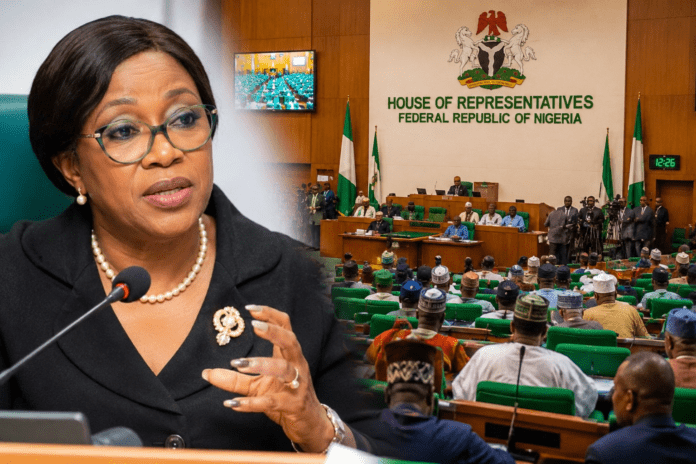
Her testimony during an appearance before the House of Representatives Ad-hoc Committee investigating the unlawful establishment of the PFIPC and the Presidential Economic Advisory Council, PEAC, has been more revelatory in her precision and without equivocation than others who appeared before her.

She explained that representatives of the purported agency attended the 2025 Annual Manpower Budget Defence, presenting themselves as officials of a newly created federal body and submitted what appeared to be an Establishment Act, a letter appointing a Director-General and other supporting documents required for the processing of recruitment approvals.
She said based on the documents presented, her office issued an authorised establishment and a provisional recruitment waiver in line with existing civil service procedures.
She said based on the documents presented, her office issued an authorised establishment and a provisional recruitment waiver in line with existing civil service procedures based on documents presented by the fake agency Director General.
A baffled HoSF, who disclosed having almost 30 years of legal experience, bemoaned that in almost a century of the Federal Civil Service, “we have never encountered a situation like the current one.”
Through her testimony, we now know that under established procedures, every newly created ministry, department or agency seeking approval to recruit staff must submit an enabling law, the appointment letter of its chief executive and other official documentation before the Office of the Head of the Civil Service can process its request. Yet, vetting authorities failed to notice discrepancies in the purported appointment letter allegedly issued by the Office of the Chief of Staff to the President.
So far forensic analysis conducted by the Nigeria Police Force had already confirmed that the disputed appointment letter was fake. Also, the purported Establishment Act submitted by the agency lacked citation numbers, Gazette references and other mandatory security features of a valid Act of the National Assembly.
Before her, the office of the Accountant General of the Federation, key officials of the Central Bank of Nigeria and the Foreign Affairs Ministry had also appeared before the House Committee, each making contradictory statements.
The AGF stated that it did not authorise the opening of account with CBN, an account the apex bank disputed though revealing that after it received authorisation from the AGF to open an account for the PFIPC, no money was eventually deposited in the account.
Moreover, officials of the Office of the Accountant-General of the Federation were found to have issued an administrative code to the purported agency, with lawmakers alleging that official correspondence meant for the Permanent Secretary, State House, was intercepted by the alleged fake Director-General.
The Budget Office was even more intriguing in its testimony. It said even though the fake agency was budgeted for, no money was paid into its account. This is beside the point. The point is about appropriation, which is a legal process giving authority to spend.
Though Wilson-Jack assured lawmakers that the Office of the Head of the Civil Service would strengthen its internal verification procedures to prevent a recurrence, we called for urgent institutional reforms involving all the agencies, offices and Ministries involved in the saga. Where applicable, administrative sanctions and possible criminal prosecution as envisaged by the House Committee be carried out with speed and discretion.

