
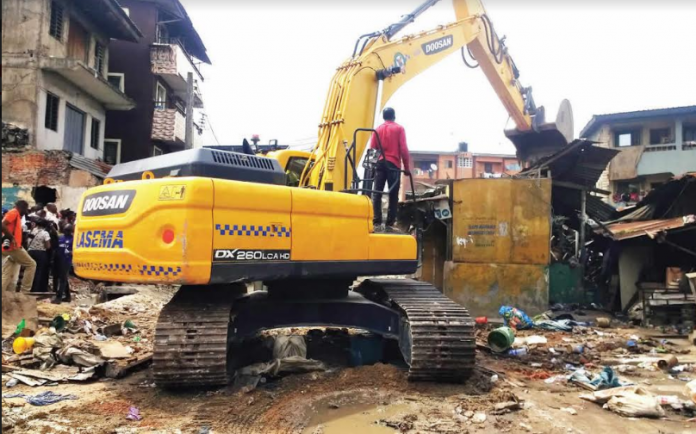
February 02, (THEWILL) — The debate ignited by the recent demolition of Makoko, one of the biggest floating slums in the world, by the Lagos State Government is still raging across the country, with different people and groups divided over the legality or illegality of the government’s action.
Before the Makoko incident, there have been demolitions of a similar scale in the state. Once upon a time, there was a settlement known as Maroko. Inhabited by the poor and downtrodden, Maroko was basically a slum bordered by the glittering homes of the rich and affluent who probably considered its nearness embarrassing and a big problem. At that time, Lagos was governed by a military administrator, Colonel Raji Rasaki.
One day, Col. Rasaki got tired of listening to the constant whining by Maroko’s neighbours and sent a demolition squad to pull down the shanty-town that was home to thousands of people for many years.

Residents of Makoko find themselves in a similar situation: Homeless, displaced, confused and uncertain about the future. Many of them have complained that they were taken unaware by the state government. The latter, they lamented, did not give them adequate notice before rolling the bulldozers into their community.
Reactions have trailed the demolition of the settlement and the sad outcome of a protest that followed almost immediately, as expected. More than six people reportedly died when police allegedly shot at the protesters, but the police claimed they only fired teargas during the demonstration.
Concerned Nigerians, civil society organisations and other groups have condemned the role played by the state government. The general consensus is that the government acted unconstitutionally. It did not follow due process.
Speaking on Channels TV, with close reference to the Makoko demolition, prominent human rights lawyer and Senior Advocate of Nigeria, Femi Falana, described the forceful ejection of the residents of Makoko as a criminal offence. He said, “It has to be recognised by government that the people are entitled to enjoy their right to housing. Human beings live in slums. You cannot shoot teargas at them in the middle of the night. You cannot move bulldozers there to render them homeless. You must create an alternative accomodation for them. That is what the law provides. In Lagos, it is a criminal offence to eject a tenant without a court order. Apart from the provisions of the Constitution, it is a criminal offence to forcefully remove anybody from a house.”
Although the Lagos State Government tried to defend its decision to demolish structures in Makoko and other communities by saying that the action was meant to protect lives and property, as well as an essential step toward a safer, more sustainable megacity, it sounded quite unconvincing.
Its claim that the demolitions were driven primarily by public safety, environmental protection and security considerations, particularly the dangers posed by illegal structures built beneath high-tension power lines and along critical waterways, has done very little to dissuade critics from reaching the conclusion that its actions are motivated by a secret hatred for the poor.
We believe that, in deciding what to do about Makoko, the state government ought to have followed rules set out in both Federal and state legislation, as required by law. Under the Land Use Act ( Section 28), revocation of occupancy must be for a recognised public purpose, accompanied by a notice and followed by compensation as provided under the Act. Arbitrary demolition without revocation, notice and compensation risks violating constitutional property protection.

