
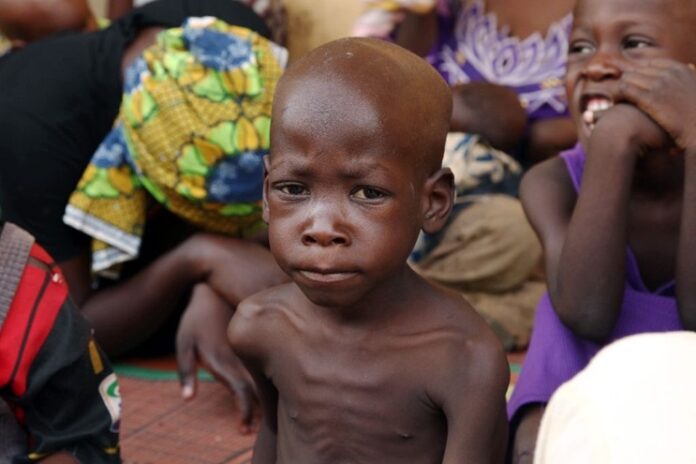
May 12, (THEWILL) – The United Nations Children Fund (UNICEF) has identified Nigeria as the country with the highest burden of malnourished children in the world.
The international organisation revealed this on it’s website quite recently, adding that an estimated 2 million children are suffering Severe Acute Malnutrition (SAM), while the country has the second-highest stunted children in the world.
About 32 per cent of Nigerian children under five years, it said, are stunted and of the 2 million with SAM only two out of 10 can be reached for treatment.

UNICEF described malnutrition as a direct or underlying cause of 45 per cent of all deaths of under-five children. It explained that exclusive breastfeeding rates did not improve significantly over the past decade, with only 17 per cent of babies being exclusively breastfed during their six months of life.
The agency also said that high rates of malnutrition posed significant public health and development challenges for Nigeria. This is a frightening report by all means, especially as it concerns the future of the country.
Indeed, malnutrition severely impacts human development, particularly in children, leading to stunted growth, weakened immune systems and cognitive impairments. In some cases, the effects of malnutrition can be irreversible, impacting on a child’s physical and cognitive potential throughout their life.
Unfortunately the current situation in the country does not seem to help matters. There is hardship and hunger in the land. The people are hungry. We fear that if nothing is done to assuage the hunger, the worst could happen.
It is important to point out that domestic commitments from governments are critical to achieve the shared vision of a world free from malnutrition in all its forms. Local and national governments, including the Nigerian Government, must provide their populations with access to healthy foods, ensure food security and deliver high-quality healthcare.
Governments must be fully committed to the Sustainable Development Goals (SDGs) and implement actions, programmed and policies addressing both the underlying and immediate causes of malnutrition.

