
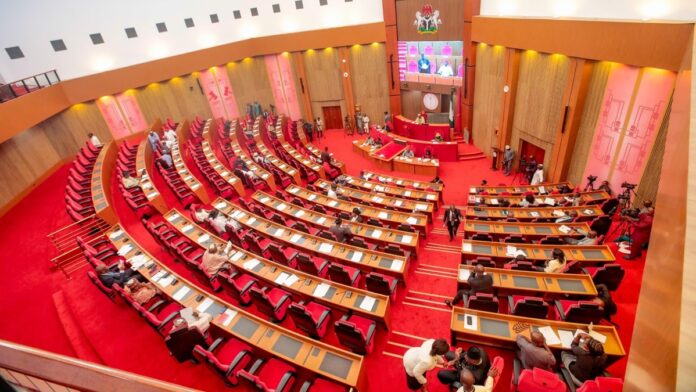
August 03, (THEWILL) — The decision of the Senate Committee on Public Accounts to commence public hearings on August 3, into over $21 billion in allegedly unremitted oil revenue identified in the Nigeria Extractive Industries Transparency Initiative (NEITI) audit reports, is one of the most consequential oversight exercises undertaken by the 10th National Assembly.
The invitation extended to the Nigerian National Petroleum Company Limited (NNPCL), the Central Bank of Nigeria (CBN), the Nigerian Upstream Petroleum Regulatory Commission (NUPRC), the Nigerian Midstream and Downstream Petroleum Regulatory Authority (NMDPRA), the Ministry of Petroleum Resources, more than 40 government agencies and leading oil companies reflects the enormity of the issues at stake.
The hearings are intended to scrutinise the 2021, 2022 and 2023 NEITI audit reports, identify revenue leakages and enforce compliance with statutory remittances.

On paper, this is exactly what legislative oversight should look like. Nigeria’s economy is under severe fiscal pressure. Public debt continues to climb. Government borrows to finance budgets. Citizens pay higher taxes. Businesses struggle with rising costs. Yet, allegations persist over those billions of dollars due to the Federation Account that may never have reached public coffers. If even a fraction of the alleged unremitted funds can be recovered, the impact on government finances would be significant.
However, Nigerians have every reason to greet this latest probe with cautious optimism rather than celebration.
The Senate has investigated Nigeria’s oil sector repeatedly over the past two decades. Hardly a legislative session has passed without one committee or another announcing investigations into a serious anomaly. These include subsidy fraud, crude oil theft, refinery rehabilitation, NNPC operations, fuel importation, production-sharing contracts, missing crude revenues and abandoned energy projects.
The rehabilitation of Nigeria’s four state-owned refineries is perhaps the most painful example.
Successive Senates and House Committees investigated billions of dollars appropriated over many years for turnaround maintenance. Reports exposed waste, repeated spending and questionable contracts. Committees summoned ministers, NNPC officials and contractors. Recommendations were adopted. Yet the refineries remained largely idle for years, while Nigeria continued to import petrol at enormous costs. The investigations produced publicity, not accountability.
The Senate must therefore avoid the temptation to reduce the hearings to televised confrontations designed merely to generate headlines. Nigerians are no longer impressed by such scenes as dramatic exchanges between committee chairmen and agency heads.
Several expectations should define the success or failure of this exercise.
First, every figure cited during the hearings must be reconciled transparently. The public deserves to know whether the alleged $21 billion represents accounting discrepancies, delayed remittances, outstanding liabilities or actual missing revenues. Ambiguity only fuels speculation.
Second, every agency found culpable must face consequences. Legislative oversight loses credibility when officials simply apologise before committees and continue business as usual.
Third, where criminal conduct is established, the Senate should immediately refer cases to the appropriate law enforcement agencies with clear timelines for prosecution. Parliamentary reports alone do not recover stolen funds.
What matters are measurable outcomes.

