
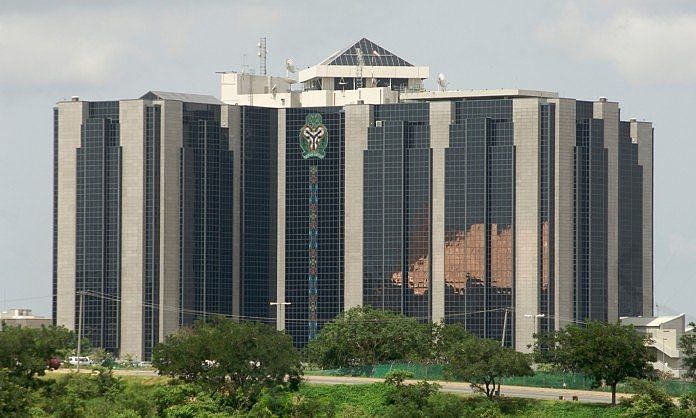
June 28 (THEWILL) — Nigeria’s net foreign exchange inflows have surged nearly ten folds in recent times on reform gains, reflecting stronger foreign exchange liquidity, rising investor confidence and improved external buffers.
Data from the Central Bank of Nigeria (CBN) showed that net foreign exchange inflows into the economy rose from $0.95 billion in 2022, to $9.25 billion in January 2026, representing an increase of about 871 percent over the period.
The sharp increase in inflows comes amid sweeping economic reforms that have improved confidence in Nigeria’s foreign exchange market and strengthened the country’s external position.

The sustainability of these gains hinges mainly on the monetary policy initiatives of the CBN which have impacted the environment in the most remarkable way creating avenues for result-oriented deliverables.
For nearly three years, Nigeria’s economic management has been dominated by monetary policy. Interest rates have climbed steadily. Liquidity has been tightened. The exchange rate has been liberalised. Inflation has become the principal target of policymakers.
The CBN has demonstrated unusual resolve in deploying effective monetary tools to restore macroeconomic stability after years of economic distortions. Yet, despite these efforts, inflation remains stubbornly high, businesses continue to struggle under elevated borrowing costs, and the purchasing power of ordinary Nigerians has been severely eroded.
This reality raises an uncomfortable but necessary question: Can monetary policy alone rescue an economy weighed down by deep structural weaknesses? The answer is no.
Monetary policy can only do so much. Without equally robust fiscal policy, the gains from monetary tightening will remain limited, delayed or, in some cases, completely undermined.
Nigeria’s economic recovery now depends less on what the central bank does and more on how government strengthens the fiscal policy framework.
Fiscal and monetary policies are two sides of the same coin. One controls the supply and cost of money; the other determines how government raises revenue, spends resources and stimulates productive activity. When these policies complement one another, economies flourish. When they work at cross purposes, economic instability becomes inevitable.
Today, Nigeria appears to be asking monetary policy to solve problems that are fundamentally fiscal. High inflation in the country is not driven solely by excess money supply.
It is also fuelled by insecurity that limits agricultural production, poor transport infrastructure that raises logistics costs, persistent energy shortages that increase production expenses, multiple taxation that discourages investment, and weak productivity across key sectors. These are challenges that interest rate increases alone cannot solve.
Indeed, raising interest rates may reduce demand, but it cannot produce more food, repair highways, generate electricity or secure farming communities. Neither can it eliminate the structural bottlenecks that make doing business in Nigeria one of the most expensive in Africa.
This is where fiscal policy becomes indispensable.
Government spending should increasingly target productivity-enhancing investments rather than recurrent expenditure. Greater investment in roads, rail, ports, power infrastructure, irrigation systems and digital connectivity would reduce production costs and improve supply, thereby addressing inflation from the supply side.
Similarly, fiscal authorities must aggressively pursue reforms that make the new tax reforms meaningful by widening the tax base rather than merely increasing tax rates. It is not enough to argue that Nigeria’s tax-to-GDP ratio remains among the lowest globally. But the economy must be made functionally productive to boost tax revenue.
Another critical area is expenditure efficiency. Nigeria does not merely have a revenue challenge; it also has a spending challenge. Billions of naira are lost annually through inefficiency, duplication of agencies, poorly targeted subsidies and abandoned projects. Fiscal discipline requires government to obtain greater value from every naira spent.

