
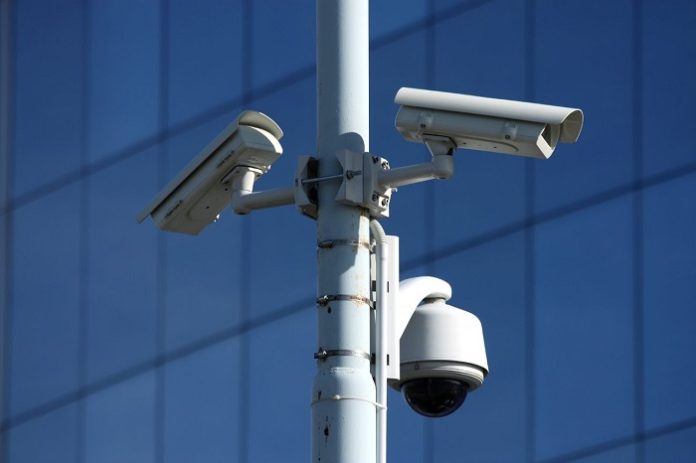
June 01 (THEWILL) — It is scandalous that the Federal Government awarded a contract to install CCTV in the Federal Capital Territory, Abuja for the past four years with nothing to show for it. It is criminal that the records and names of the contracting company cannot be found in the files of the Finance Ministry.
It has taken a non-governmental agency, Socio-Economic Rights and Accountability Project, SERAP, to bring everything to light. Four years after the botched contract and almost a fortnight after it was publicly unveiled, officials of the ministry involved in the scandal are still seating pretty in their offices.
Emerging details of the false transactions not only show the layers of official involvement but also offer a peep into similar transaction at other arms of government.

According to reports, the Federal Government has admitted that it lacks detailed records identifying Nigerian contractors, subcontractors, and other local beneficiaries involved in the $460 million Abuja CCTV security project, sparking fresh demands for full disclosure and accountability from SERAP.
The disclosure was contained in a letter by the Federal Ministry of Finance in response to contempt proceedings initiated by SERAP over the government’s alleged failure to fully comply with a Federal High Court judgment in May 2023 directing transparency in the implementation and financing of the project.
According to the letter dated May 15, 2026 and signed by the Permanent Secretary of the Federal Ministry of Finance, R.O. Omachi, records obtained from the Ministry of Police Affairs indicated that while local subcontractors “may have been engaged” during the execution of the project, there were no detailed records identifying specific Nigerian firms that directly received payments from the Chinese loan facility used to finance the surveillance scheme.
According to records disclosed by the Ministry of Finance, the Federal Government received $399.5 million from the Export-Import Bank of China for the National Public Security Communication System, popularly referred to as the Abuja CCTV Project.
The funds were reportedly disbursed in 10 instalments between March 2011 and December 2013.The Federal Government also contributed an additional $70.5 million through the Ministry of Police Affairs as counterpart funding, representing 15 per cent of the project’s estimated total cost of $470 million.
The principal contractor for the project was identified as ZTE Corporation, with payments reportedly processed through the Bank of China, Shenzhen Branch. According to the Ministry, inventory records showed that while 68,005 equipment units were expected for delivery under the project, only 61,970 units were confirmed delivered, leaving 6,035 items unaccounted for.
Until the former Minister of Finance and Coordinating Minister of the Economy, Wale Edun gave marching orders to the Accountant General and heads of MDAs to obey legislative call for appearances for oversight by relevant committees of the National Assembly, it was almost a war of nerves between officials and senior lawmakers over proper accounting every budget circle.
Still, as it appears with this CCTV scandal, the directive has been obeyed in the breach. Otherwise, how else can what looks like an obvious brazen theft on $420 million be explained? This is the answer waiting for the Independent Corrupt Practices Commission, ICPC, on whose table the investigation falls to answer, perhaps with a back-up from the Economic and Financial Crimes Commission, EFCC.
The case is not just about mission, stolen or misappropriated money. It is sabotage of the highest order. The project was conceived at the height of insecurity in the country and meant to secure the FCT, the administrative capital of the country, from the marauders. The diplomatic, administrative, and safety implications of the project was conveniently ignored by the ministry and its officials charged with implementation of the project. The CCTV project was originally conceived as part of efforts to improve surveillance, emergency response, and public safety.
Now that the lawmakers may have failed in their oversight of the project, we call on the judiciary to expedite action of the suit before it by SERAP. This case must serve as stepping stones to tackling similar cases of bureaucratic corruption. We encourage SERAP to stay course on it until justice is delivered.

