
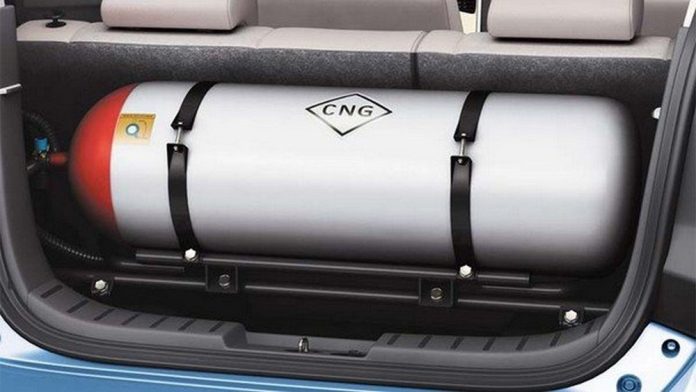
November 04, (THEWILL) – For the second time in two weeks, avoidable accidents involving vehicles fitted with the Compressed Natural Gas cylinders have taken place with across the country.
The Federal Government recently asked Nigerians to embrace CNG as an alternative to petrol in the face of an astronomical rise in the cost of petrol following the removal of subsidy on petrol for the past 17 months. The first accident occurred at a CNG refilling station in Benin-city, the Edo state capital, where a car fitted with the CNG cylinder exploded, destroying the car and injuring three persons nearby.
Last week, social media was agog with the story of a tragedy involving 18 passengers who were burnt beyond recognition when the bus they were travelling in, fitted with a CNG cylinder, caught fire and exploded at G-hostel Junction in Abakaliki, Ebonyi State.

The Abakaliki accident is still a subject of accuracy, as there are conflicting reports about the accident. What has emerged from the various reports is that the said vehicle probably ran over an explosive object on a bad portion of the road, leading to an explosion of the bus and the death of five of the passengers and injury of 12 others. The worry, however, is that the story could be linked with the CNG initiative of the government and immediately circulated to raise safety concerns about the CNG.
In all probability, both accidents result from the work of quacks. The Presidential Initiative on CNG, PCNGI, held an untrained technician responsible for the Benin-City accident.
According to the PCNGI in a statement on its official social media handle, “a close examination of the cylinder in question in Benin City shows it was welded and modified and not approved for use for CNG. The police, regulatory authorities and management of NIPCO are undertaking a painstaking investigation of the incident and we are coordinating with them. This incident reiterates the impetus of the PCNGI and our partners on the soon to be launched Nigeria Gas Vehicle Monitoring System at SON, NMDPRA, NADDC and FRSC to tackle any bad actors in the ecosystem that seeks to make this safer, cheaper, cleaner and more reliable source of fuel risky for all.”
Indeed, the Chief Executive Officer of the PCNGI, Michael Oluwagbemi has restated on many occasions that compared to petrol, CNG is far cheaper and does not cause harm to the environment. Explaining the component of the CNG, he added that because it is lighter than air, has a small fire range and rises up and disperses into the atmosphere in case of a lick. This quality precisely makes it a safe fuel.
Even so, these observable accidents are becoming a bad advertisement for a desirable alternative that ought to go a long way in assisting the country pull out of its economic woes. After all, countries like Pakistan and Iran have millions of CNG- powered vehicles, meaning that the project is viable.
In a country where 90 per cent of transports users are commercial vehicles, this initiative will certainly positively impact the transportation system and meet the government’s envisaged goal of between 40 percent to 70 per cent savings for road users.
Still, doubts abound about the options thrown up by the CNG. Cost of conversion has continued to increase with rising inflation-from N300 to N700 and currently N1 million- while accessibility is a major headache as very few filing stations are still unavailable.
Despite the Federal Government’s plan for the conversion of 1 million petrol vehicles in the country to CNG by 2027 alongside construction of conversion centres in some states of the federation, these lingering doubts about the rising cost may raise scepticism among Nigerians, especially vehicle owners. Many fear that just as the price of cooking gas keeps rising and never comes down, this new, better initiative to costly petrol powered vehicles may suffer the same fate in the long run.
These lingering doubts, coupled with the reported accidents need to be addressed through effective public enlightenment campaigns, both in the urban and rural areas.
Like with any new project, change would be the first casualty. So, emphasis should be on educating the people about the long- term benefits of the project. Finally, availability of CNG is a must if the project would not suffer the fate of other laudable projects that failed on the altar of inefficiency and inadequacy.

