
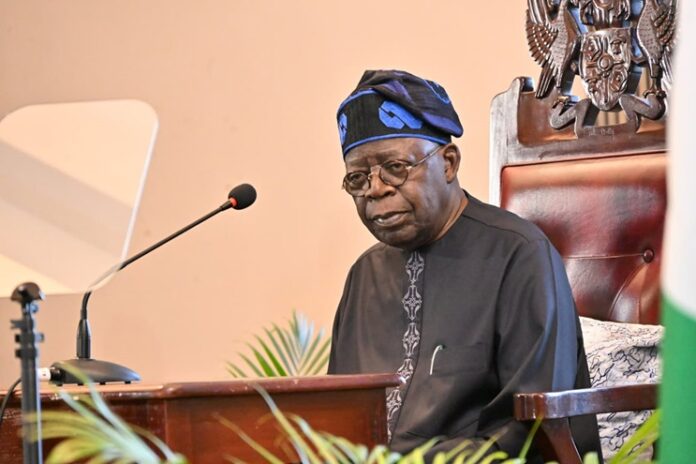
July 26, (THEWILL) — President Bola Ahmed Tinubu’s decision to constitute a 15-member Economic Advisory Committee has been welcomed by many stakeholders who see it as an opportunity to inject fresh ideas into Nigeria’s troubled economy.
Notwithstanding some improved macroeconomic indicators such as exchange rate stability, external reserves rising above $50 billion and a record $10 billion in capital inflow in Q1 2026, the economy is still not out of the woods.
The country is grappling with stubborn inflation, widespread poverty, high unemployment, weak industrial output, rising public debt, a fragile manufacturing sector and declining purchasing power. Few would dispute that Nigeria needs the best economic minds to navigate these challenges.

This is not the first time a Nigerian president has assembled eminent economists, technocrats and business leaders to advise government. The Muhammadu Buhari administration also inaugurated an Economic Advisory Council comprising distinguished professionals whose credentials were beyond question. Expectations were high. Yet, over time, the council faded into the background. Along the line, the council became largely invisible as Nigeria’s economy drifted into deeper distress, with a notorious ways-and-means window hitting a record N30 trillion – among other marks of fiscal rascality.
The Bola Tinubu Administration must therefore resist reducing the new committee to another prestigious gathering of accomplished Nigerians. Nigeria no longer needs advisory bodies that produce elegant reports destined for government shelves. It needs an institution whose impact can be measured in economic outcomes.
The committee’s priority should be making the existing reforms work better. Its first assignment, therefore, should be to establish clear, measurable national economic targets against which both government and the committee itself can be judged. Without quantifiable goals, success becomes a matter of public relations rather than performance. But this cannot be achieved in an environment where governance is run without a functional federal budget.
Within two years, the committee should work towards helping government reduce inflation to below 15 per cent through coordinated monetary, fiscal and supply-side reforms. It should support policies capable of raising Nigeria’s annual economic growth above six per cent, a level considered necessary to significantly reduce poverty in a rapidly growing population.
Investment should become another defining benchmark. Nigeria cannot transform its economy without sustained private capital. The committee should recommend reforms capable of attracting at least $15-20 billion in annual foreign direct investment, while simultaneously unlocking much larger domestic investment. Investors require more than incentives; they require policy stability, regulatory certainty, reliable electricity, contract enforcement and improved security.
Job creation must also move from political rhetoric to measurable reality. The committee should pursue strategies capable of creating several million productive jobs within four years, especially in manufacturing, agriculture, mining, technology and export-oriented industries. Nigerians are less interested in theoretical growth figures than in whether economic expansion translates into employment and improved household incomes.
The committee must also become the strongest advocate for productivity. Nigeria cannot tax its way into prosperity if businesses remain uncompetitive. It should recommend reforms that lower production costs by improving electricity supply, transport infrastructure, logistics efficiency and access to affordable financing for manufacturers and small businesses. A productivity-driven economy will naturally generate higher tax revenues without imposing excessive burdens on struggling enterprises.
Equally important is fiscal discipline. Nigeria’s expanding debt profile demands greater scrutiny. Debt sustainability indicators should become part of its regular public assessment. Future generations should not inherit debts accumulated without corresponding productive assets.
Ultimately, the success of Tinubu’s Economic Advisory Committee should be judged by simple questions that ordinary Nigerians understand: Is inflation falling? Are more factories opening? Are food prices becoming affordable? Are more Nigerians finding decent jobs? Is investment increasing? Are exports rising? Is poverty declining? Is the naira becoming more stable? Are government finances becoming stronger?
If, after four years, the answers to these questions remain largely negative, then the committee would merely have joined a long list of well-intentioned government initiatives that consumed public attention without changing national fortunes.

