
September 21, (THEWILL) — The recent peace deal between the Katsina State Government and wanted bandits reeks of weakness and powerlessness on the part of the state government and helplessness on the part of the community.
Before the negotiations got underway, Governor Dikko Radda had given his approval.
Speaking at the launch of an EU-funded conflict prevention project earlier, the governor disclosed that negotiations were ongoing in several frontline local government areas and credited them with restoring calm in those areas. But the ongoing negotiation that drew public attention and underlined the method, processes and severity of the situation was last Sunday’s talks between communities in the Faskari Local Government Area of the state and bandits declared wanted by the Nigerian State.
Some of the wanted bandits were present during Sunday’s negotiations. They included Ado Alerio, said to be one of the most notorious bandits in the Northwest, Isiya Kwashe Garwa, a wanted bandit declared wanted by the Defence Headquarters, Babaro, accused of killing 32 worshippers in a mosque in Katsina and Malam Hassan Dan Tawawe, another notorious bandit.

At the end of the meeting, the bandits who came armed to the meeting, got what they wanted. In exchange for an agreement to stop attacks on villages, ensure safe passage for farmers and release kidnapped persons in their custody, the bandits demanded freedom of movement and access to markets for the Fulani, as well as the development of their areas.
“In Nigeria, whenever there is a discussion, they call Fulani herders bandits and terrorists. But tell me, which tribe in the world does not have criminals among them?” Mr Garwa reportedly addressed the gathering in Hausa. He was said to have vowed that killings and kidnappings would continue until “injustice” against the Fulani was addressed. “There will be no peace if security agencies do not also stop killing our people,” he said. Similar negotiations are also ongoing between local community leaders in Dan Musa, Jibiya, Batsari, Kankara, Kurfi and Musawa Local Government Areas.
This is worrisome. Radda’s successor, Aminu Bello Masari, embarked on a similar negotiation during his tenure and failed. He lived to regret even entering a negotiation with bandits, persons who kill at will, live by no moral code and lack any form of integrity to speak of.
In a well-advertised negotiation with terrorists in 2021, Masari celebrated the handover of weapons by the terrorists, paid a large sum of money to the criminals and later regretted his decision. Recall that Governor Masara acted with the support of the country’s security networks.
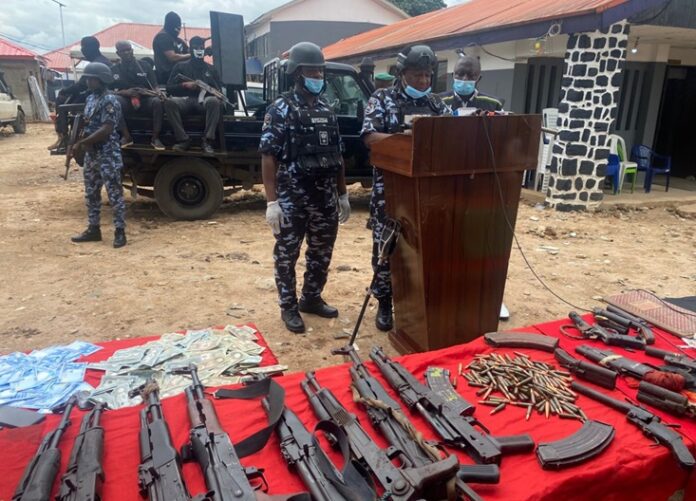
Apart from the Secretary to the state government, police commissioner and Director-General of the SSS, who were actively involved in the negotiation, the Security Chiefs at the defence headquarters, with whom the governor and his team held a meeting, sanctioned the talks. According to ex-Governor Masari, a dialogue with Fulani leaders and the vigilante across the eight LGAs ensued and led to an agreement that was signed at Kankara in the presence of all our traditional leaders, including the late notorious Buharin Daji. The bandits returned over 300 guns.
“Later, things gradually returned and life went back to normal before the whole thing assumed a different dimension, because those who entered the amnesty among the Fulani were murdered in the bush and that scared away others,” said Masari, explaining further that the major reason the negotiations the state once had with bandits broke down was because those who entered into the amnesty programme among the Fulani were murdered in the bush and the development scared away the others.
Frustrated, he had to ask the citizens of the state to “bear arms and defend themselves against the increasing attacks of the bandits, because it was the only way to go if the state must reduce the level of carnage by the criminals.”
The story is the same in Zamfara under former Governor Bello Matawalle, ex-Governor Nasir el-Rufai in Kaduna and the Nigeria Army under a similar amnesty policy for repentant Boko Haram terrorists pushed by former Chief of Army Staff, General Tukur Buratai (retd). Called “Operation Safe Corridor” the amnesty programme meant to rehabilitate and reintegrate repentant Boko Haram insurgents into the society after their de-radicalisation, rehabilitation and reintegration failed.
Why the Katsina State Government would embark on a similar venture that appears certain to collapse and lead to renewed violence, speaks volumes about the current state of the nation State in which the constitutional mandate to secure and protect the citizenry has weakened and need to be revived urgently.

