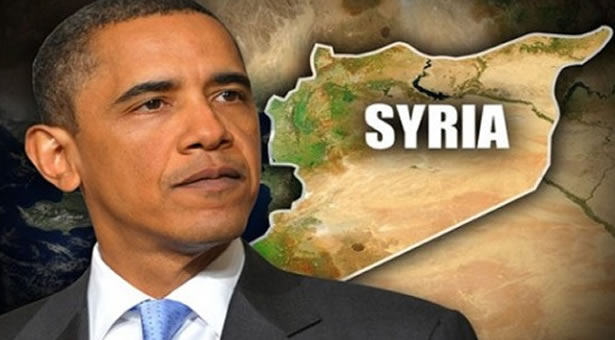
President Obama returned from G20 summit in St. Petersburg without a measurable progress in winning international hearts over a move to use military strike against Syria. Russia and China have continued to reject a military response against Syria. They are insisting on pursuing a diplomatic means to address the crisis in Syria.
At home, emotions are flaring over the discussion. Many observers and concerned polity took to the streets late last week to voice their disapproval on the impending U.S. drummed attack on Syria. About 200 persons were reported to have gathered in front of White House shouting anti-war slogans, with placards and signs. More anti-war rallies across the major cities of U.S. are expected to include a larger demonstration planned on Monday.
The discussion is anticipated to get stormier when Congress reconvenes on Monday. Although the vote had scaled through the Senate Committee on Foreign Relations with a 10 to 7 in favor of Obama’s plan, Obama may not get his wish moving forward as evidenced by massive phone calls, faxes and emails from citizens petitioning their elected representatives to vote ‘no’ on the idea to strike Syria.

Crumbling Coalition
On the international scene, the coalition of UN member states, some who had earlier steamed off into the battle grounds of Syria in their rhetoric had sooner than their take off been ordered to retreat by their informed sense of democratic voices in their respective countries. First on the list was Germany. The German Chancellor has maintained that any verified use of chemical weapon by Syria against its own people will be meted with measurable consequences but has refuted any plans to be directly involved in the reprisal action drummed up by the U.S. Angela Merkel had earlier during the days following the chemical weapon attack, pleaded with Germans, to welcome with open hands Syrians who were fleeing their country in search of asylum status.
Next was Britain. At the height of the discovery of chemical weapon attack in Syria, Prime Minister David Cameron was vociferous about the repulsiveness of poison gas use by Syria and was quick to band with her lifelong ally, the U.S. in the move to punish Assad’s regime. The wheels soon fell off the wagon as the Parliament and the British citizens bucked at the plan. The vote of no confidence by the British parliament stifled that ambitious drumbeat. In his recent comment on the ongoing debate as reported by Telegraph, David Cameron said, “I accept that Britain can’t be part, and won’t be part, of any military action on that front, but we must not in any degree give up our utter revulsion at the chemical weapons attacks that we have seen, and we must press this point in every forum that we are a member.”
France had come into the fray of the hot debate on a military strike against Syria as bold and forceful than their usual sideline, observer sort of stance since the end of Second World War. For their Socialist President Francois Hollande, observers of the current Syria crisis say he came off as the most hawkish proponent of military action. Frankly, It was not a far stretch from French resume since the recent history. Their footprint as neo-protector can be traced to the West intervention in Libya crisis of 2011, where French Air Force was integrant in storming Gadhafi’s military bases, ultimately subduing the de facto leader. In Ivory Coast, French troops were equally involved in stripping Laurent Gbagbo of his hold on the country. And then comes 2013, where French troops routed Al-Qaeda elements in northern Mali. Thus far, France parliament had not voted on Syria’s case and Francois Hollande has indicated he would opt for a UN approval before stepping into the ring, in an atmosphere where the French polity has called for no intervention.
What is next for President Obama?
There is very little steam left on the Obama’s train to Syria. International coalition is rapidly splintering. Economic score cards of most countries in Europe with the exception of Germany does not appear strong enough to be saddled with a potentially protracted military engagement, and the populace are not hiding their feelings. The Iraq experience and Afghanistan had left a sultry cloud of doom across the minds of Europeans and Americans. The United Nation has maintained that the political process is the preferred route for dealing with Syria’s crisis and that a unilateral strike by the U.S. is a violation of international law. All these have aided the sudden trepidation that we now see across the world.
As pointed out earlier, there is growing opposition from within the polity, and within the Democratic and Republican ringside, which is a reflection of where the chips may fall at the end of the voting process. President Obama is backed into a strange wall, politically and morally. He has a moral impetus to punish aggression, protect the weak and innocent. Politically, he has an obligation to the nation, to adjudicate his political mandate wholesomely, that is, an obligation to administer his office respecting due democratic process. Whatever path he takes on the matter of Syria, it may well be the singular epochal decision that would overshadow his legacy as the first African American to become the President of these United States of America.
Written By Dr. Edwin Ndukwe
Austin, Texas