November 24, (THEWILL) – The United Kingdom (UK) has directed its nationals to leave Ethiopia as soon as possible, citing the potential for fighting to move closer to the capital.
“The conflict in Ethiopia is deteriorating quickly. In the coming days, we may see fighting move closer to Addis Ababa, which could severely limit options for British nationals to leave Ethiopia.
“I am urging all British nationals — whatever their circumstance — to leave immediately while commercial flights are readily available and (the airport) remains open”, Africa minister, Vicky Ford said.

Britain has been advising its citizens to leave Ethiopia since November 9 due to the worsening conflict between the government and the rebels.
Foreign, Commonwealth and Development Office travel advice currently warns that the fighting “has potential to escalate and spread quickly and with little warning”.
London has temporarily suspended the requirement for travellers unvaccinated against Covid-19 to test before their arrival in Britain to help those wishing to leave.
The announcement came after Ireland said Ethiopia had expelled four of its six diplomats in the country due to the country’s previous comments on the conflict.
Last month, Britain announced a further £29 million ($37 million) in aid funding for people affected by the conflict in northern Ethiopia.
London has also called for an urgent ceasefire to allow humanitarian aid through and for Addis Ababa to lift an effective blockade of relief to the Tigray region.
It also joined more than 40 countries in condemning the expulsion of leading UN representatives from Ethiopia.
Britain has now joined Germany and France, as a list of countries asking their citizens to leave Ethiopia, amid an escalation in the civil war.
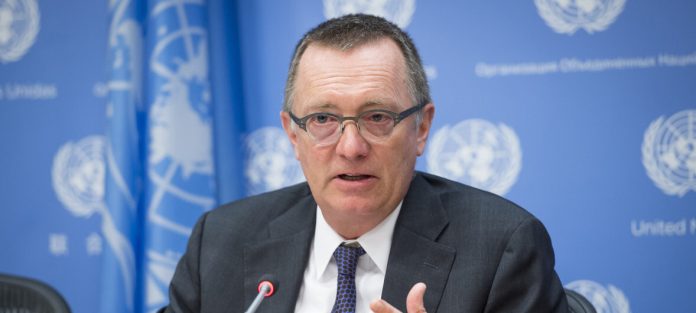
On Tuesday, US envoy to the region Jeffrey Feltman warned that tentative diplomatic progress towards ending the conflict was being jeopardised by alarming developments on the ground.
Meanwhile, Ethiopian Olympic heroes Haile Gebrselassie and Feyisa Lilesa have said they are ready to go to the front line in the war against rebel forces.
Their announcement came after Prime Minister Abiy Ahmed said he would go to the front to lead the war.
Tigrayan rebels are currently advancing towards the capital, Addis Ababa.
The rebels earlier this week said that they had taken control of Shewa Robit, a town about 225km (140 miles) north-east of Addis Ababa. There is no independent confirmation of the claim.
Communication Minister Legese Tulu said the military has had “many successes” since Mr Abiy’s decision to lead the battle, and victory was “so close”.t
With Mr Abiy gone to direct the war effort, his deputy, Demeke Mekonnen Hasse, had taken charge of routine government business, a spokesman was quoted by state-linked media as saying.
Abiy’s announcement has bolstered recruitment for the army, with hundreds of new recruits attending a ceremony, marked by patriotic songs, in Addis Ababa on Wednesday.
Earlier, Gebrselassie, 48, was quoted by state television as saying: “I am ready to do whatever is required of me, including going to the front line.”
Gebrselassie is regarded as a legend in Ethiopia, and his comments were seen as an attempt to rally public support behind the war effort.
During his 25-year career as an athlete, he claimed two Olympic gold medals, eight World Championship victories and set 27 world records. He announced his retirement from competitive running in 2015.
Expressing his support for the war, Feyisa, 31, was quoted by the state-affiliated Fana Broadcasting Corporation website as saying that he was ready to draw inspiration from the “gallantry of my forefathers” and go to the front line to “save my country”.
The athlete won the marathon silver at the 2016 Rio Olympics. He became famous for holding up his crossed wrists as if they were shackled to draw global attention to the crackdown on demonstrators demanding political reforms in Ethiopia.
The Tigray People’s Liberation Front (TPLF) was the dominant party in government at the time. Following the protests, Abiy became prime minister and the TPLF lost the grip on the country it had held for 27 years.
It later retreated to its stronghold of Tigray, from where it launched a rebellion last November after a huge fall-out with Abiy over his reforms.
The war has created a massive humanitarian crisis, leaving thousands dead, forcing millions from their homes, and several hundred thousand in famine-like conditions as aid agencies battle to get food in war-affected areas.
The African Union is leading efforts to find a negotiated end to the fighting, but neither side has committed to talks.