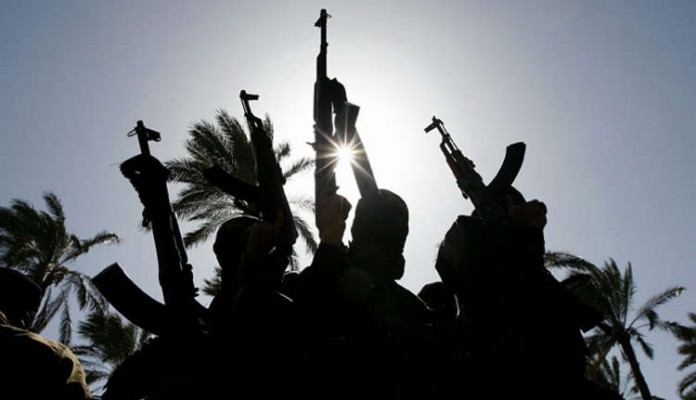
October 16, (THEWILL) – The United Kingdom government has alerted Nigeria to likely terror attacks in the country.
It also warned its citizens in Nigeria to avoid some states which are hotbeds for kidnapping and other violent crimes.
The UK government in a statement published on its website on Friday, urged its citizens to monitor the local media for information on possible protests in different parts of the country.

“Terrorists are very likely to try to carry out attacks in Nigeria. Most attacks are conducted by Boko Haram or Islamic State West Africa (ISWA) and occur in Borno, Yobe and Adamawa States in the North East.
“Events to mark the one year anniversary of #EndSARS protests are likely to take place nationally, week commencing 18 October.
“There may be protests and a heightened security presence in major cities such as Lagos and Abuja. In parallel, the high profile trial date of a separatist leader is also scheduled for 21 October in Abuja.
“There may be additional protests and a heightened security presence in Abuja and in the South-East for this reason. In all areas affected, you should monitor local media, and avoid any demonstrations or large gatherings.
“From 3 September 2021, the Nigerian Commission mandated for all telecommunication operators in Nigeria to stop extending services to Zamfara State.
”This includes a suspension of all mobile telecommunications including WiFi. A number of other state governments, including Kaduna, Katsina, Sokoto, Kebbi and Niger have also implemented a partial shutdown of telecom services.
“Since 9 August, there has been an increase in protests and demonstrations in the South-East region of Nigeria. Protests, including “Stay at Home” protests, are likely during October in the South East region.
“There have been reports of violence during Stay at Home protests previously. You should monitor local media, avoid any demonstrations or large gatherings and follow any instructions from local police and security forces.
“There have been a number of attacks and targeted killings in the South East and South-South regions of Nigeria, including in the states of Akwa Ibom, Rivers, Imo, Abia, Anambra, Delta, Edo and Ebonyi.
“Some of these attacks have been on isolated roads and in remote locations, but there is a chance that they could occur in metropolitan areas. There is also a heightened risk of indiscriminate attacks on police and security infrastructure, which may inadvertently affect bystanders.
”A number of states have imposed curfews. Travellers to these regions are advised to exercise caution if travelling in remote areas at night and follow local news and information outlets for further information, including on local curfews.
”During October 2020, there were a number of large-scale protests (known as #EndSARS protests) in Abuja, Lagos and other locations across Nigeria. Strikes over workers’ rights in Kaduna State started on 17 May 2021. Protests have occurred and disruptions to transport and utilities have been reported. See Safety and Security.
”The terrorist groups have previously shown intent and capability to conduct kidnaps in Nigeria. Foreign nationals, including humanitarian workers, are likely targets for kidnap. Humanitarian hubs and humanitarian workers have been targeted during attacks in the North East, including Monguno, Borno State on 13 June 2020.
”There have also been significant attacks in Gombe, Kano, Kaduna, Jos and Bauchi States and in the Federal capital, Abuja. Further attacks are likely. Attacks could be indiscriminate and could affect western interests as well as places visited by tourists.
”You should avoid places where crowds gather, including political meetings, religious gatherings and places of worship, markets, shopping malls, hotels, bars, restaurants, transport hubs and camps for displaced people. See Terrorism.
“The al Qaeda-linked terrorist group Jamaat al Ansar al Muslimeen fi Bilad al Sudan, better known as Ansaru, claims to have killed at least 6 people, kidnapped dozens, and destroyed several vehicles during an ambush along the Kaduna-Zaira highway in Kaduna State in mid-January 2020.
“If you decide to travel to Kaduna State, you should avoid regular patterns of travel or movement, and aim to only travel during daylight hours.
“There’s a high threat of kidnap throughout Nigeria. Kidnaps can be motivated by criminality or terrorism and could be carried out for ideological, financial or political gain. Anecdotal evidence suggests that the risk of kidnap increases after dark.
”As well as in North-East Nigeria, extremist groups operate in some northern and middle belt states including Bauchi, Gombe, Kano, Kogi, Kaduna, Niger and the Adamawa States. If you’re working or travelling in these States then you should be aware of the risk of terrorist kidnapping.
“Before considering travel to areas to which the FCDO advise against all or all but essential travel you should take professional security advice. Be vigilant at all times and keep others informed of your travel plans. If you’re working in Nigeria you should follow your employer’s security advice, make sure your accommodation is secure and review your security measures regularly”, the statement read