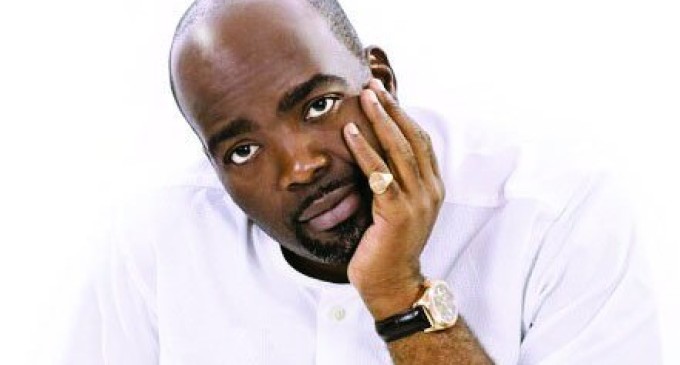
April 03, (THEWILL) – Chief Adejare Adegbenro is a security expert, politician and businessman. In this interview with AYO ESAN, he speaks on the state of the nation, rotational presidency, zoning system and power shift, among other issues. Excerpts:
What is your impression of the All Progressives Congress (APC) and the Peoples Democratic Party (PDP)?
There is not much difference between the ruling APC and the main opposition, PDP as both have almost the same ideologies as well as almost identical personalities. It is easy for members of both political parties to defect from one to the other as they find it easy to adapt with their new abode.

So, it is not surprising the way both parties go about their politicking. A big difference is just the way of infusion of former members of the ACN and the CPC whereby they lean backward to relate with themselves even in the new arrangement called APC. If you look closely at those who defected from PDP to APC, you will find that they still carry about the PDP mind-set in the APC, which is sharing the booties and moving on.
Whether we accept it or not, the APC has been focusing on infrastructural development. Although it might be slow, it is steady and sure. APC has been doing a lot in the area of infrastructure development.
Politicking is not about what you have done, but how you can push your agenda to the minds of the people in a way that they will accept you. Sadly, what you read in the media nowadays is about rancour, such as APC accusing the PDP of one thing or the PDP accusing the APC of another thing. Whatever the case, both of them are aiming at 2023.
What then is your expectation, with regard to both parties’ candidates in the 2023 general election?
The bottom line of all these will depend on the candidates of the parties at the end of the day. What I am trying to say is that whoever emerges as the presidential candidate of all the parties will make a lot of difference. Let the choice among them be decided through robust debates. Let the choices be based on the calibre of candidates, not on the political parties they belong to. So, if the APC and PDP field their candidates, we should encourage a very strong debate between the aspirants to decide who is more capable. The consideration should not be about the political parties. I want the people to focus on each candidate’s unique qualities and personality, not on his or her political party. It is about who can do it better.
What is your take on the zoning system and power rotation between the North and the South?
As a Nigerian, I believe that anyone from any part of the country can contest for President, whether male or female, young or old, as long as they have the capacity to run Nigeria well. Also the issue of religion should be out of it. It should not be part of the consideration. There is only one God. And that is why my motto has always been, ‘I am a Nigerian and my tribe comes second.’
Do you have any word for the women and the youth in the country on politics and governance?
There is no denying the fact that the women and the youth control the votes in Nigeria. Demographically, the youth are more than the women in the country. This is because the youth are combination of men and women. However, women have some roles to play in guaranteeing good governance in the country. Women have the capacity to mobilise, to sensitise and to raise awareness of the need to do the right things for the people, as required of democracy.
And against this background, women should be given more inclusion in governance. Former President Goodluck Jonathan promised the women 25 per cent in government and he went ahead to make that happen.
Although the Muhammadu Buhari administration did not make a policy, from the look of things however, the President has promoted women in his government. We expect those women to encourage other women.
Women are also playing key roles in the financial sector. Women are heading about four big banks in the country today. A similar thing is happening in the Niger Delta Development Commission. In fact, the Buhari administration has looked into promotion of women in governance. But in politics, we have to understand something. You don’t sit down at home and expect Manna from heaven. So women should do more for themselves. Part of the problems women have is that they always feel relaxed waiting for men to do it for them.
There has been a form of agitation recently concerning the Constitution review that women are not getting affirmative action on a particular percentage in government. If the Senate and the House of Representatives approve such affirmative action, how do they now make the selection? Which constituency would you tell the contestants to step down for a woman? The women have to do more for themselves. They have to promote, they have to go out there to identify, appraise, elect and promote women that can deliver on result.
There is lot of great women out there. There are many programmes in the country today that beckon on women. In terms of technology, we expect more women to be involved. The role of women is already there in the economy. It is only left to the women to motivate and organise themselves, just as the youth should also be doing. They should organise themselves and find a place to fit in because these men will not invite their wives to be their bosses voluntarily. It is not possible. However, if they have the competence and capability, the men will not be able to deny them the opportunity to come in. I think that has thrown more light on that path.
Corruption is still endemic in the Nigerian society. How can we effectively tackle this monster?
Former President Goodluck Jonathan said stealing is not corruption and we laughed at him. But with the recent happenings in Nigeria today, you cannot differentiate between how to be a thief and how to be corrupt. Corruption is actually a systemic thing. Being a thief is a personality. What do I mean by this? If somebody is not interested in stealing before, but when he gets into government and you get to resume as Commissioner for Environment, and they tell him the United Nation Environmental Protection Agency is sending in 150, 000 equipment for a pilot programme and he says, ‘Fine, where is the equipment?’ They say there is none. He says, ‘Let us set up the structure’ and they say no. Then they say, ‘Oga, that is not how we do things here.’ That is the problem with Nigeria.
The problem is the system of ‘how we do things here.’ And when you insist, they will tell you repeatedly that this is how we do it here. As long as we have the system of ‘how we do it here,’ corruption will continue.
I tell everybody that corruption cannot be stopped because it is systemic. It happens in the Principal’s office according to a story. The Principal told his student I am selling this book to you at N1,000. The student goes home to tell his parents that the book is N1, 500. The father now thinks of how he can increase the price to N3, 500. It goes on and on like that in a cycle.
Corruption is systemic and we have to look for a way to curb it at the systemic level. If you ask me which department in the government has been mostly influenced by corruption? I will say it is the civil service. From the local government to the state government down to the Federal Government, corruption is flowing like a river through their systems!
Most civil servants do not go to work with the intent of serving the country whole heartedly. They go with the notion that, ‘is it my father’s work or if I die today will somebody else not come to replace me?’ If there is training for example in Dubai, they will rush to Dubai and come back as the same people.
So, there is a need for civil service reform so it could be managed like a private sector. And to do that, it will depend on the quality of the ministers or commissioners in charge. For corruption to stop, the highest office holders like the President and Governors must sit down to select the people that will focus on achieving results. Once there is result measurement in place, it will now be difficult to bypass the structures and the system.
The security challenges are still here. Is there any solution in sight?
Security of this country was stable till a lot of interests came in. Some people want to hold some parts of the country to ransom. However, the way it is now, the best way to solve the security problems in the country, we have the right training and capable hands. If you go to the military, they are more organised than any other sector in this country. Yet, why are they failing? They are failing because there is internal sabotage. The day internal sabotage stops in the military, that is the day all the security challenges, such as kidnapping and banditry will stop.
AYO ESAN, has been actively reporting and analyzing political events for different newspapers for over 18 years. He has also successfully covered national and state elections in Nigeria since the inception of this democracy in 1999.