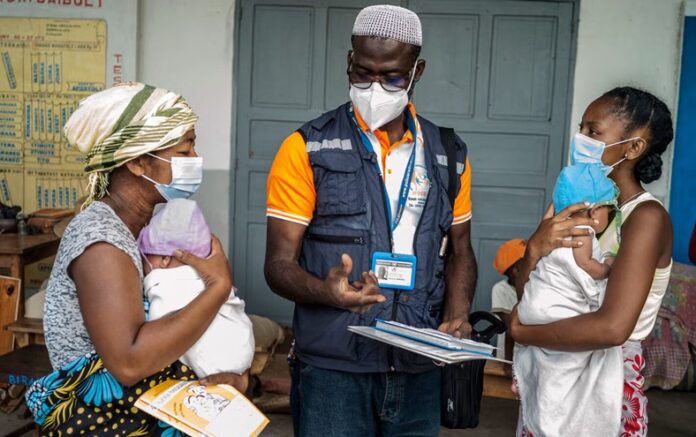
April 27, (THEWILL) – At least 15 million vulnerable children worldwide are without access to vaccines, making them victims of outbreaks of vaccine-preventable diseases, a recent survey report by the United Nations Children’s Fund (UNICEF) and the World Health Organization (WHO) has revealed.
The report highlights that the limited access to vaccines is largely due to global funding cuts to health programs, which is putting lives at risk and increasing costs for treating diseases and responding to outbreaks.
This funding shortfall is further jeopardizing public health efforts.

The survey findings were presented by UNICEF’s Health Specialist for the Enugu Field Office, Dr. Olusoji Akinleye, during a two-day media dialogue to mark the 2025 World Immunization Week.
The theme of the event was ‘Immunization for All is Humanly Possible.’ The dialogue, organized by UNICEF’s Enugu Field Office in collaboration with the Broadcasting Corporation of Abia State (BCA), targeted media professionals from 12 states: Abia, Akwa Ibom, Anambra, Bayelsa, Cross River, Benue, Ebonyi, Enugu, Rivers, Delta, Imo, and Kogi.
Dr. Akinleye, in his presentation titled “‘Immunization for All is Humanly Possible’ – Availability,” discussed the many challenges facing the health sector.
Akinleye said,“I’d like to highlight the shrinking funding for immunization and the entire health sector.
“A global funding crisis is exacerbating the situation. A recent WHO report indicates that nearly half of all countries are facing severe disruptions to vaccination campaigns due to these cuts, which also affect the supply of vaccines due to reduced dollar funding.”
He further explained that while efforts have been made to catch up with children who missed vaccinations during the COVID-19 pandemic, the number of children missing routine immunizations continues to rise.
He said, “Between 2019 and 2022, vaccine production was heavily diverted to focus on COVID-19 research, leading to a scarcity of vaccines. Meanwhile, vaccine hesitancy grew, causing routine immunization rates to fall.
“As a result, in 2023, an estimated 40.5 million children missed their routine vaccinations, an increase from 13.9 million in 2022 and 4.9 million in 2019.”
Dr. Akinleye noted that over half of these children live in conflict zones and unstable countries, where access to basic health services is often disrupted. “Nigeria falls into this category,” he added.
Citing UNICEF Executive Director Catherine Russell, Akinleye said, “The global funding crisis is severely limiting our ability to vaccinate 15 million vulnerable children in fragile countries, particularly against measles. In nearly 50 countries, immunization services and disease surveillance are already being disrupted.”
Despite these challenges, Akinleye praised the joint efforts of UNICEF and its partners, which have helped to vaccinate over 14.2 million children annually, with nearly half of those lives saved in Africa.
“In the past two years, we have saved many lives, particularly in the African region, which has the highest rate of cervical cancer in the world,” he noted.
UNICEF and WHO have called for urgent, sustained political efforts and investment to strengthen immunization programs.
“Vaccines have saved more than 150 million lives over the past five decades.
“Countries with limited resources must invest in high-impact interventions, including vaccines,”said the WHO Director-General.
Beyond funding, Akinleye identified several other challenges facing the health system, including economic downturns, reduced health workforce, and insecurity.
He said, “When the economy suffers, the health sector also suffers. Additionally, many health workers are emigrating due to poor remuneration, a phenomenon known as the ‘Japa’ syndrome,” he said.
“There is also a lack of essential products and insecurity, especially in the South East, where facilities in areas like Imo and Anambra states have been forced to close due to safety concerns.”
Akinleye called on governments to invest in strengthening immunization programs. “UNICEF is committed to ensuring that vaccines are available at every level, from the national level down to the point of service in healthcare facilities,” he said.
Earlier, in her welcome address, UNICEF Chief Field Officer Juliet Chiluwe emphasized that UNICEF will continue to provide logistical support, funding, and other resources to ensure access to healthcare services for women and children. She also commended the contributions of state governments to UNICEF’s efforts in these areas.
Dr. Ijeoma Onuoha Ogwe, Communications Officer for UNICEF Enugu Field Office, explained that the media dialogue aimed to emphasize the role of the media in sharing information and fostering partnerships in the campaign against vaccine-preventable diseases.
Another UNICEF Health Specialist, Dr. Ifeyinwa Anyanyo, discussed the importance of ensuring that vaccines are delivered closer to the people, from the state cold chain to local government facilities. However, she also acknowledged that insecurity remains a major challenge.
“Despite these challenges, our mandate is to ensure that no child is left behind,” she said.