
January 18, (THEWILL) — The total budgets for Nigeria’s 36 states in 2026 have risen by N12 trillion within a year, increasing from N25.03 trillion in 2025 to N37.01 trillion this year, which indicates a rise of 47.8 percent. The 2026 budgets reported encompass those in the appropriation bill phase as well as those that have already been enacted into law.
A notable aspect of the 2026 budget allocations is the significant percentage designated for capital expenditures, ranging from 47 percent in Oyo to 83 percent in Imo.
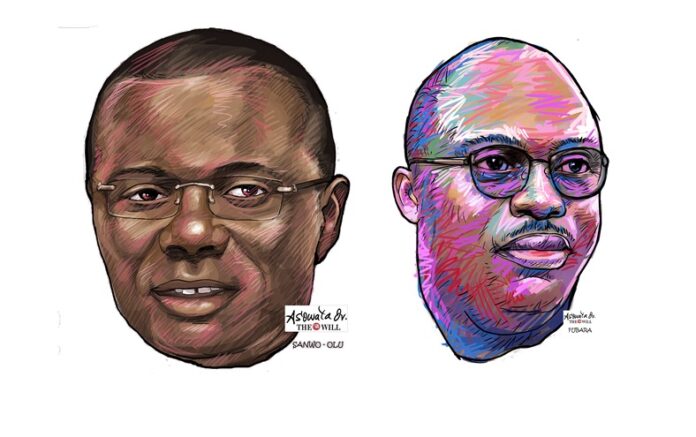
An examination of the 2026 budget proposals reveals that Lagos holds the highest budget allocation among the 36 states, with a total spending plan of N4.23 trillion. This marks a 40.5 percent increase from the N3.27 trillion budgeted in 2025. The capital budget for Lagos is N2.33 trillion, which represents 52 percent of the 2026 proposal.

According to the Debt Management Office, Lagos also has the highest outstanding debts, amounting to N1.04 trillion in domestic debt and $1.05 billion in external debt.
Following Lagos, Rivers has a significantly lower budget of N1.85 trillion for 2026, compared to N1.18 trillion in the previous year, reflecting an increase of 56.7 percent. The capital allocation for Rivers is N833 billion, which constitutes 70 percent of the overall budget. Rivers’ debts include N364.4 billion in domestic obligations and $181.1 million in external debts.
The third largest budget proposal of N1.7 trillion in 2026, is Delta, representing a 73.46 percent increase from the N979.23 billion budgeted in 2025. The capital budget for Delta state is N1.19 trillion, accounting for 70 percent of the current year’s spending plan. This oil-producing state carries domestic and external debts of N205 billion and $57 million, respectively.
The states with the smallest budgets for 2026 are Ekiti, Yobe, and Ondo. For 2026, Ekiti’s budget stands at N415.57 billion, which is a 10.5 percent increase over the N375.8 billion allocated in 2025. The proposed capital expenditure for the state is N193.52 billion, or 47 percent of the current budget plan. Research indicates that Ekiti has outstanding domestic debt of N50 billion and external debt of $12
Yobe has the second lowest budget allocation of N515.1 billion for the year 2026, which signifies a 60.5 percent increase compared to the N320.8 billion budgeted for 2025. The capital budget for 2026 amounts to N319.63 billion, accounting for 62 percent of the total budget. The state’s outstanding domestic debt stands at N38 billion, while its external debt is $23.1 million.
Ondo, an oil-producing state, has the third lowest budget of N524.4 billion for the current year, reflecting a 22 percent increase from the 2025 figure of N492.8 billion. Its proposed capital expenditure is N285.8 billion, which constitutes 54.4 percent of the overall budget. Ondo has an outstanding debt stock of N10.6 billion and $77.8 million for domestic and external debts, respectively.
Revenue surge, zonal performance
Investigations have revealed that the substantial budget allocations of the states are a result of a revenue windfall from the federation account, triggered by the removal of the oil subsidy that had long drained the nation’s treasury, as well as the devaluation of the domestic currency, which has led to increased naira allocations to sub-national entities.
The total monthly FAAC allocations to the three tiers of government (federal, state, and local) increased from N21.35 trillion in 2024 to N22.34 trillion in 2025, marking a 4.6 percent rise. In line with this growth, total FAAC allocations to the states rose to N6.38 trillion in 2025, up from N5.09 trillion in the previous year.
Further analysis of the states’ budgets indicates that the South West zone has the highest budget proposal N8.27 trillion; followed by the South-South with N7.85 trillion. The South-West’s total budget is N6,42 trillion followed by N4.55 trillion by the North-Central. The South-East and North-East have N4.72 trillion and N4.05 trillion respectively.
Paradox of Realities
While the states are experiencing an influx of cash, the paradox of economic realities has compelled them to navigate a precarious situation in order to address ongoing challenges. Despite the economy witnessing improved foreign exchange inflows, there remains significant macroeconomic stress characterised by double-digit inflation (15.15 percent in December 2025), elevated food prices, and rising energy costs, which are exerting the most severe cost-of-living pressures seen in over a decade.
Reports from the National Bureau of Statistics (NBS) regarding investment inflows indicate that, despite the substantial oil and gas reserves in the oil-producing states, these regions seldom attract capital inflow necessary to enhance their economies.
The lack of investment inflow in majority of the states has raised concerns among stakeholders, particularly for Nigerian citizens, as it reflects a deficiency in robust developmental progress, especially in the oil and gas producing regions.
This situation also affects job creation and the employment status within the states, which in turn influences the quality of life, misery index, inflation, and other economic indicators in these areas. Industry experts assert that the drought of capital importation in these states signifies developmental hurdles, as the oil-rich regions grapple with various socio-economic issues that deter investors from considering their areas.
Moving forward
Experts in the industry, however, emphasise that the historical increase in allocations provides both fiscal relief and long-term development opportunities if managed effectively. These opportunities are highlighted in the following domains:
- Investment in infrastructure: Funding for roads, electricity access, water systems, and transportation networks.
- Environmental restoration and community support.
- Economic diversification: Financial support for agriculture, small and medium enterprises (SMEs), manufacturing, and human capital development.
- Budgetary stability: Increased revenue can lessen borrowing requirements and assist in addressing fiscal deficits.
Nevertheless, risks and structural vulnerabilities persist, as the benefits are accompanied by considerable challenges:
- Erosion of cash inflows due to inflation.
- Volatility in oil prices and production risks.
- Concerns regarding governance and misuse of funds.
- Fiscal pressures arising from ongoing reforms.
If oil production remains stable and global prices are favorable, derivation allocations alone could surpass N2 trillion by 2026. However, the actual value of these funds may diminish if inflation accelerates as anticipated. The critical question remains whether the states can transform temporary revenue increases into sustainable growth through:
- Strategic capital investment
- Transparent fiscal management
- Diversification beyond oil
- Protection of revenues from inflation.
With the anticipated revenue from the newly enacted tax reform laws, the states are approaching 2026 with a financial advantage not experienced in years — albeit amidst some of the most challenging economic conditions for households.
The unprecedented increase in FAAC allocation offers a unique chance to realign developmental priorities, bolster local economies, and safeguard vulnerable communities. The outcome of whether this will be a pivotal moment or yet another squandered opportunity hinges entirely on the manner in which state governments utilize these funds.
Notice: Function wpdb::prepare was called incorrectly. Unsupported value type (object). Please see Debugging in WordPress for more information. (This message was added in version 4.8.2.) in /home/thewilln/public_html/staging.thewillnews.com/wp-includes/functions.php on line 6170
Notice: Function wpdb::prepare was called incorrectly. Unsupported value type (object). Please see Debugging in WordPress for more information. (This message was added in version 4.8.2.) in /home/thewilln/public_html/staging.thewillnews.com/wp-includes/functions.php on line 6170
Warning: Undefined variable $show_related in /home/thewilln/public_html/staging.thewillnews.com/wp-content/plugins/molongui-authorship/views/author-box/parts/html-tabs.php on line 30

Sam Diala is a Bloomberg Certified Financial Journalist with over a decade of experience in reporting Business and Economy. He is Business Editor at THEWILL Newspaper, and believes that work, not wishes, creates wealth.

Ogochukwu Onwaeze
