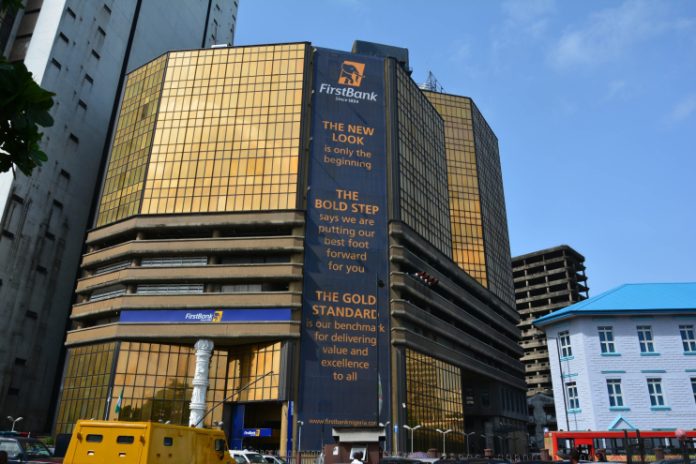
January 15, (THEWILL) – The raging war of words between First Bank of Nigeria Limited and General Hydrocarbons Limited (GHL), owners and operators of OML 120, Deep Offshore Nigeria, has continued, even as both parties said they would meet in court.
The controversy began with a December 30, 2024, ex-parte order by Justice Deinde Dipeolu of the Federal High Court in Lagos, freezing the accounts and assets of GHL across all Nigerian banks. This order was secured by First Bank of Nigeria Limited, which alleged the company owes $225.8 million in unpaid debts tied to loan facilities as of September 30, 2024.
GHL had, in response, accused First Bank of legal abuse, saying the December 30 order directly conflicts with a prior judgement by Justice Allagoa of the same court on December 12, 2024, securing its operations. It said the earlier ruling explicitly barred First Bank from taking any enforcement action on the loan facilities pending the resolution of ongoing arbitration.
However, First Bank, in a statement on Tuesday, said that as a responsible and law-abiding financial institution with the utmost respect for the courts, it will not be able to offer comments on issues that are pending determination by the courts, as such issues are sub judice.
Assuring its customers, stakeholders and the general public that it remains solid, calm, steadfast and unflinching in its resolve to continue to provide first-class services to its teeming customers within and outside the country, the bank insisted it has not abused court processes in the ongoing legal battles with GHL.
The bank said it performed its obligations under the loan agreements, but trouble started when it demanded good governance and transparency in the transaction, which GHL rejected.
According to the bank, “There is a subsisting commercial transaction between FirstBank as the lender, and GHL as the borrower, where FirstBank extended several credit facilities to GHL for the development of some Oil Mining Lease assets.
“These facilities are backed by very robust loan agreements executed by the parties in which the obligations of the parties are clearly defined and the security arrangement clearly spelt out.
“While FirstBank has diligently performed its obligations under the loan agreements, at the root of the present dispute is FirstBank’s demand for good governance and transparency in the transaction, which GHL rejected.
“Upon FirstBank’s realisation of breaches on the part of GHL including diversion of proceeds, FirstBank requested that an independent operator mutually acceptable to both parties be appointed in line with the terms of the agreement, to operate the financed asset in a transparent manner that will bring greater visibility to the project, protect the interest of and bring value to all stakeholders. Not only did GHL roundly reject this reasonable and fair request, rather GHL insisted that FirstBank avails it with more funding. GHL refused to execute the terms of the offer stipulated by the Bank for the availment of additional funding but rather proceeded to commence needless Arbitral proceedings.
“GHL issued a notice to initiate arbitration and has no substantive claim pending at the Federal High Court. GHL approached the Federal High Court solely to seek preservative orders pending arbitration. Some of the preservative orders sought by GHL were granted while others were denied.
“FirstBank is the only party that filed a substantive claim against GHL at the Federal High Court and the subject matter of FirstBank’s claim is not identical with the dispute GHL submitted to arbitration because FirstBank’s claim is in respect of subsequent credit facilities granted to GHL and the offer letters and finance documents pertaining to the subsequent transactions clearly state that the disputes arising from the subsequent facilities are to be resolved by a court of competent jurisdiction in Nigeria and not by arbitration.
“Consequently, it is incorrect to assert that FirstBank abused the process of the court.
“GHL off-took crude from the Floating Production Storage and Offloading (FPSO) vessel and diverted the proceeds. The Bank had no choice as a secured lender, under these circumstances of continued breaches, non-payment of due obligations and attempts to shield the Bank away from agreed security and repayment sources, than to approach the court for legal remedies, to preserve assets, recover the diverted proceeds, prevent recurrences and safeguard FirstBank’s interest. It is clear to us that the courts do not support or protect illegalities and breaches of contracts.
“FirstBank has a long and very rich history of supporting and providing for the financial needs of its customers over its more than 130 years of unbroken existence. FirstBank remains committed to ensuring that it continues to support the legitimate business aspirations of its teeming customers. At the same time, FirstBank is committed to the building of a strong credit culture where borrowers pay their debts when they borrow and will always take appropriate steps, within the ambit of the law, to resist attempts by borrowers to repudiate their repayment obligations.
“We wish to assure FirstBank’s numerous customers, stakeholders and the general public that FirstBank remains solid, calm, steadfast and unflinching in its resolve to continue to provide first-class services to its teeming customers within and outside the country.
“FirstBank also wishes to respectfully thank our shareholders for the indicatively oversubscribed Rights Issue of its parent company, First Holdco Plc (“FirstHoldco”), in the first round of its capital raise and looks forward to an equally successful final leg of the recapitalisation exercise when it is announced by FirstHoldco.”
However, in response to FirstBank’s statement, GHL maintained that the bank is being economical with the truth about the transaction.
In the accounts provided by GHL as part of her Right of Reply, it emphasised that the bank breached its Tripartite Agreement obligations.
It narrated how FirstBank’s failure to pay its pending requests according to contract terms, nearly claimed the lives of 93 persons working on the oil ring in 2023.
Titled “How First Bank’s Recklessness Almost Killed 93 Souls on Rig”, it reads in part: “First Bank keeps talking about the diversion of funds by GHL without providing any evidence. Here are the facts. As we said before and will repeat now, all GHL contracts and invoices were vetted and paid by FBN through their Credit and Risk teams directly to ALL service providers. FBN’s repeated failures to pay on time within the contractual framework of 5 days which became up to 70 days or not at all, in a clear breach of its Tripartite Agreement obligations as captured below:
“The Bank shall, where GHL has satisfied all conditions precedent to disbursement under the Facility Agreement, disburse all of or part of the Facility Amount to GHL not later than 5 (five) Business Days after GHL makes a utilisation request in accordance with the terms of the Facility Agreement.
“This failure to pay GHL pending request as per above terms led to an international incident on October 7, 2023, when the drilling rig, Blackford Dolphin, ran out of fuel, food, water and other critical supplies with 93 souls on board and the Rig was on the verge of declaring MAYDAY.
“The Managing Director and Executive Director of FBN were abroad and the current Managing Director, Olusegun Alebiousu, who was then the Chief Risk Officer (CRO), was acting for the Managing Director and GHL brought this matter to his urgent attention. He then worked the phone, calling Suppliers and Service Providers one after the other and promised payment within 3 days. Based on FBN’s assurances, the Service Providers made emergency supplies, but the payment never came.
“To ensure the safety of life and continuing security at 75KM Offshore Nigeria, GHL had to enter an Irrevocable Third-Party Payment Order with one of the Offtakers to pay the suppliers directly, which stabilised the operation. FBN was later given evidence of the payments made.
“That is what FBN calls Diversion.
“We will meet FBN in court with Daily Reports and log details to debunk this continuing misinformation of diversion.
“GHL acted to save 93 souls, most of them foreign nationals, who had begun contacting their embassies and home governments, and to save Nigeria from an international incident offshore Nigeria.
“We are ready, willing and able to present the body of evidence to any court, including the continuing non-payment to Century FPSO and other service providers by FBN despite repeated demands in line with signed agreements.
“Indeed, we had to cough out our own cash as reflected in our audited financial statements to keep the project afloat or go to court to seek protective reliefs.
“On abusing the Court process and failure to comply with a valid court order, FBN claimed they went to court on a different matter with regards to the Facility Agreement. But Justice Ambrose L. Allagoa had given his judgement after hearing both sides on the Facility Agreement, amongst other issues on December 12, 2024. “That an order is granted, restraining the Respondent (FBN) either by itself, or acting through its servants, agents, assigns, privies, affiliates howsoever described, including any persons claiming under its authority from making any calls or demands, or taking any steps whatsoever to enforce any security, receivables, instrument, finance documents or assets of the Applicant (GHL), which have been charged as security for the facility agreements in respect of the Applicant’s operation of OML 120, including but not limited to the side letter and the amended and restated agreements between the Applicant and the Respondent pending the hearing and determination of the arbitration proceedings between the Applicant and the Respondent brought pursuant to Clause 12(c) of the Agreement between the Applicant and the Respondent dated 29th of May, 2021.”
“FBN then went to Justice D. Dipeolu of the same Federal High Court on December 30, 2024, with the same lawyers, without disclosing this relevant judgment to the Learned Justice, to obtain a Mareva injunction Ex Parte freezing order against GHL and individual directors who never signed personal guarantees and thus not personally liable. Is this how a 130-year-old blue-chip financial institution committed to good governance and the rule of law, should behave? Why the hurry to score cheap points to use on social media?
“If FBN was so sure of its facts why not put GHL on notice? Why an Ex-parte?
“We leave this to the Justices of the Federal High Court to decide on this matter and we will not make any further comment to avoid being subjudice.
“Contrary to FBN’s claims, it sought to appoint an Independent Asset Manager to promote corporate governance. What it sought to do was to appoint a company that it could fire at any time to “take over GHL’s business, offices and operations within 90 days” of further disbursement. GHL refused and counter-offered a Joint Operating Committee with FBN and they declined, resulting in the current impasse which they weaponised and made a public spectacle with their publication of their Ex Parte Mareva Freezing Orders. GHL had to stand its ground against such bullying.
“This 2nd Right of Reply has become necessary, again, in view of FBN’s continued misstatement but they have failed to debunk or deny the foundational material facts and seek to eat their cake and have it. Luckily, FBN has not denied the Subrogation MOU and the benefits it got upfront from GHL’s intervention. They should meet their obligations and all will be well.”

Felix Ifijeh is a journalist with years of professional reporting experience. Known for his keen news sense, compelling storytelling and commitment to accurate, impactful reporting, he has built a reputation for turning leads into clear, engaging, and well-structured reports that resonate with readers. His work reflects deep newsroom experience and a commitment to accurate, impactful journalism.