
April 20, (THEWILL) – Nigeria stands at a dangerous precipice, with blood spilling across its landscape in a pattern too familiar to be coincidental. The past week has seen violence erupt in multiple regions: in Plateau State, at least 40 people were massacred during a midnight raid on the remote Zike community; in Borno State, a deadly bomb blast on the Damboa-Maiduguri highway claimed eight lives; and in Bayelsa, pipeline sabotage threatened critical energy infrastructure. These tragedies, occurring within days of each other, paint a grim portrait of a nation struggling against forces that seek to destabilise it from within.
The timing of this violence reveals a disturbing calculation. President Bola Tinubu was in France on what the presidency described as a working visit as these attacks ramp up. While statements from Aso Rock insist that he remains engaged, condemning the killings and ordering humanitarian interventions, his physical absence has fuelled public perception of absentee leadership. Social media has become a cauldron of grief and outrage, with citizens expressing a sense of abandonment when they most need reassurance.
I do not believe that these heinous incidents are merely coincidental. There is a recognisable pattern to how insecurity, particularly in Nigeria’s North, escalates at strategic moments when political control is being contested or when certain entrenched interests feel marginalised. Former Vice President Atiku Abubakar’s characterisation of Tinubu’s absence as “worrisome absenteeism” and Peter Obi’s condemnation of the lack of immediate national leadership speak to a larger narrative being constructed: that of a president unable to maintain control.

The parallels with former President Goodluck Jonathan’s experience are striking. During his presidency, a similar narrative of incapacity in the face of spiralling insecurity was deployed by his critics, many of whom now surround Tinubu. The northern insurgency that painted Jonathan’s government as adrift ultimately contributed to his becoming the first incumbent president in Nigeria’s history to lose a re-election bid. The architects of that political strategy appear to be working from the same playbook against a new target.
I am not being paranoid. Any smart data analyst should easily recognise this pattern. Terrorist attacks, banditry and orchestrated violence often flare not merely as criminal acts but as instruments of political communication, deliberate signals meant to unsettle a government perceived as unwilling to serve certain interests. The deaths of innocents become collateral in a theatrical performance designed to sow discontent, tarnish the government’s image, and erode the incumbent’s popular support.
Such strategies are not unique to Nigeria. During the “Troubles”, the Irish Republican Army targeted not just infrastructure but public confidence in the British Government’s ability to effectively govern Northern Ireland. From Colombia to Pakistan, examples abound of how extremist violence often aligns with elite political manoeuvring. The tragedy lies not just in the violence itself but in the cynical calculation that makes such violence an acceptable cost for political advancement.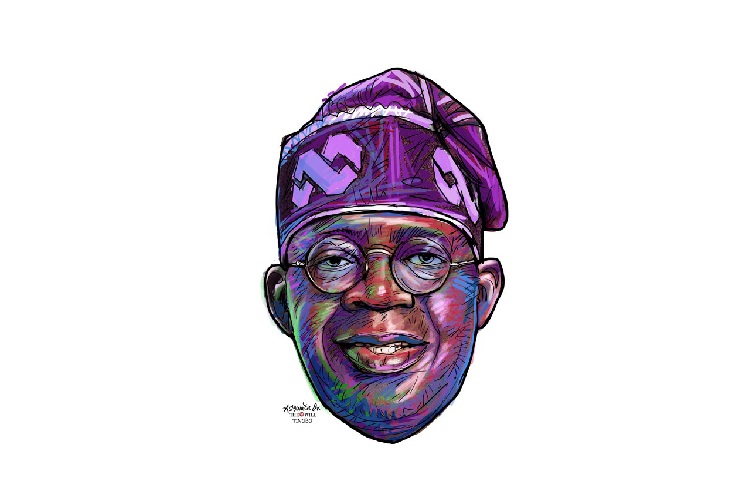
The most chilling aspect of this approach is its fundamental disregard for human life. When women, children and entire communities are reduced to pawns in a grotesque game of political brinkmanship, the soul of the nation is mortgaged. Bodies are buried so that political ambitions may rise, a playbook with no shame, no honour, and no boundaries. It is not the frequency or brutality of these events alone that frightens Nigerians, but the realisation that their lives may be expendable in service to someone else’s quest for power.
Unlike conflicts driven by coherent ideological causes, the randomness and intensity of Nigeria’s violence stands as a blunt-force message: “The government is weak; the President is vulnerable; the time for change is near.” This message is not crafted for ordinary Nigerians but for consumption by kingmakers, cabals and foreign observers. For the victims, there is only silence, trauma and the ruins of what was once home.
Nigeria’s security response remains inadequate to this challenge. Agencies are underfunded, under-equipped, and often compromised. Even the military—once the nation’s proudest institution—struggles to hold territory. Reactions to attacks are delayed and reactive rather than preventive. The presidency’s attempts to manage public perception through press statements and vague reassurances fail to address the fundamental security crisis facing the nation.
The deeper roots of this crisis lie in Nigeria’s political culture, particularly in the failure of democratic structures. If the Independent National Electoral Commission (INEC) were beyond reproach, if elections genuinely reflected the will of the people rather than the machinations of the powerful, perhaps politicians would have fewer incentives to turn to insecurity as a tool of political messaging.
This is why Nigeria’s political crisis is not just about who holds power but how that power is attained and preserved. In the absence of guaranteed electoral integrity, elections become contests not of ideas but of manipulation, muscle, and manufactured insecurity. If citizens believed they could remove underperforming leaders with their votes and replace them with genuine alternatives, then those in power would be more accountable, and those seeking power would be more honourable in their methods.
Without trusted democratic processes, violence remains the loudest voice in the room and this is indeed very disturbing as well as saddening. Political discourse is determined not by debate but by blood, with regional instability serving as a form of communication more effective than any campaign speech. The cynical use of violence as a political tool becomes viable precisely because legitimate democratic channels have been corrupted or rendered ineffective.
For President Tinubu, the challenge is twofold. First, he must respond decisively to violence, not just with military force but with political clarity. Second, he must protect the democratic infrastructure that allows for peaceful political change. This means strengthening electoral processes, ensuring judicial independence, and fostering political dialogue that does not resort to subterfuge or violence.
Real leadership does not run when there is fire. It does not remain silent when its people cry out. And it certainly does not allow blood to stain the path to political ambition. Nigeria cannot continue in this cycle where lives are exchanged for political expediency and governance is reduced to a theatre of survival. Nigeria’s security must be overhauled, but so too must the nation’s electoral architecture.
If electoral legitimacy were guaranteed, then elected leaders would know they must serve or be replaced—not by force, not by subterfuge, but by the ballot. Opposition forces would focus not on destabilisation but on persuasion. Until then, politics will remain a dangerous game in which the stakes are paid in blood.
Nigeria grieves today, but it must not be allowed to grieve in vain. From these acts of violence must rise a renewed commitment to democratic principles, secure communities, and leadership that values human life above political advantage. The future of the nation depends not just on stopping the immediate violence but on addressing the deeper dysfunction that makes such violence politically expedient. Only then can Nigeria truly emerge from this deadly crossroads and chart a path toward lasting peace and genuine democracy.