
March 17, (THEWILL) – The increasing acquisition of foreign companies’ assets by Nigerian investors in oil and gas sees a huge opportunity in local participation by indigenous players.
In recent times, Nigerian investors have acquired assets from foreign companies like Shell, ExxonMobil, and Eni, with notable deals including Renaissance Africa Energy Holdings acquiring Shell’s SPDC and Seplat Energy acquiring ExxonMobil’s Mobil Producing Nigeria Unlimited (MPNU).
In August 2024, Oando Plc announced the successful completion of the acquisition of 100% of the shareholding interest in the Nigerian Agip Oil Company (NAOC) from the Italian energy company, Eni, for a total consideration of US$783 million consisting of consideration for the asset and reimbursement.

Oando described the acquisition as a significant milestone in its long-term strategy to expand its upstream operations and strengthen its position in the Nigerian oil and gas sector.
In December 2024, Seplat Energy Plc announced that it had finalised the $1.28 billion acquisition of Mobil Producing Nigeria Unlimited from ExxonMobil, marking a milestone in the company’s growth strategy.
The Chief Executive Officer, Seplat Energy Plc, Roger Brown, described the transaction as a historic achievement for the company, stating, “We have acquired a company with one of the best portfolios of assets and related infrastructure in a world-class basin, providing enormous potential for the Seplat Group. Our commitment is to invest to increase oil and gas production while reducing costs and emissions, maximising value for all our stakeholders.
“MPNU is a perfect fit with our strategy to build a sustainable business that can deliver affordable, accessible, and reliable energy for Nigeria alongside attractive returns to our shareholders.”
Additionally, the company emphasised the acquisition’s potential to contribute significantly to Nigeria’s economic future.
In a similar development, Renaissance Africa Energy Holdings announced in March 2025, that it had successfully completed the acquisition of the entire equity holding in the Shell Petroleum Development Company of Nigeria (SPDC).
“Renaissance Africa Energy Holdings today announced that it has successfully completed the landmark transaction between itself and Shell for the acquisition of the entire (100 per cent) equity holding in the Shell Petroleum Development Company of Nigeria (SPDC),” the statement said on March 11.
Going forward, it said SPDC will be renamed as Renaissance Africa Energy Company Limited.
The statement explained that Renaissance Africa Energy Holdings is a consortium consisting of four successful Nigerian independent oil and gas companies: ND Western Limited, Aradel Holdings Plc, FIRST Exploration and Petroleum Development Company Limited and the Waltersmith Group, each with considerable operations experience in the Niger Delta, and Petrolin, an international energy company with global trading experience and a pan African outlook.
Managing Director/Chief Executive Officer of Renaissance, Tony Attah, said: “We are extremely proud to have completed this strategic acquisition. The Renaissance vision is to be Africa’s leading oil and gas company, enabling energy security and industrialisation in a sustainable manner.
NCDMB, industry impact
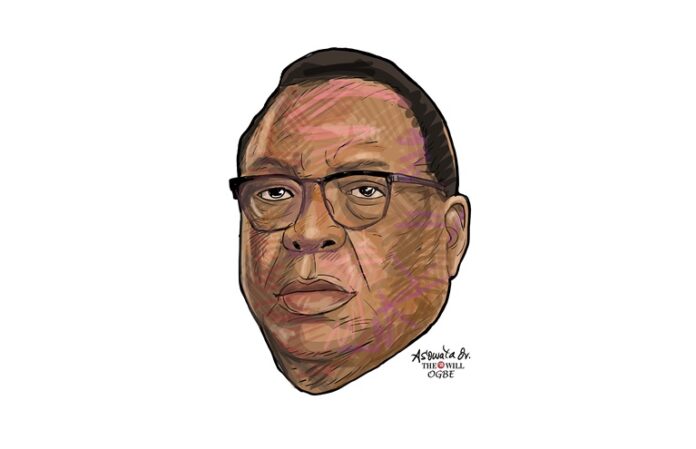
Industry experts emphasise that the strategic acquisition of the formerly owned international oil companies’ (IOC) facilities by Nigerian investors marks a landmark achievement by the indigenous oil and gas operators. They also consider it a huge opportunity for the Nigerian Content Monitoring and Development Board (NCMDB).
The primary objective of NCDMB is to promote and develop Nigerian content in the Nigerian oil and gas industry, ensuring the growth and utilisation of local capabilities, goods, and services.
This year, April 22, 2025, marks the 15th anniversary of the establishment of the Nigerian Content Policy through the Local Content Law signed by former President Goodluck Jonathan on April 22, 2010.
During this period, the scheme has recorded remarkable success that portends rapiZ economic development through expanding local capacity, creating jobs and boosting foreign exchange earnings.
The NCDMB success story includes the recent groundbreaking ceremony for a Compressed Natural Gas (CNG) Mother Station at Iwhreken, Ughelli South, Delta State.
It has been documented that the earlier phase of this scheme was marked by capital flight amounting to an estimated US$380 billion, loss of two million jobs as a result of human capital deficits, and less than five per cent in local content.
In sharp contrast is the post-NOGICD Act era which has witnessed phenomenal development of in-country capacity and capabilities as a result of creative enforcement and monitoring of industry operations as well as strategic interventions by the NCDMB.
Data by the NCDMB revealed that local content hit 56 per cent at the end of 2023, which translates into in-country retention of 56 per cent of oil and gas industry yearly spend on operations.
Today, the NCDMB is on the fast lane to the 70 percent local content target in 2027 ensuring that equipment and tools as well as services required for oil and gas operations are made and procured in Nigeria.
Opportunity windows
The expertise acquired by the Nigerian operators in Engineering, Procurement, Installation, Operation and Maintenance (EPICOM) space equips them to undertake a wide range of technical jobs in the regions.
These include installation and servicing of the metering system, construction of loading bay, LPG installation, tank farm construction, installation of actuators, colons, mechanical seals, valves, steam trap and other process equipment.
Human capital drive
The NCDMB is partnering with educational institutions and skill acquisition centres towards equipping Nigerian youths for the challenge of managing the facilities acquired by indigenous operators.
For instance the NCDMB and Shell Petroleum Development Company (SPDC), with its joint venture (JV) partners, last year unveiled a world-class engineering design studio and an information and communication technology (ICT) hub at the Federal University of Technology, Owerri (FUTO).
The facilities were conceived and donated in furtherance of the Nigerian Content Human Capacity Development (HCD) programme which had focused lately on institutional strengthening, equipping universities and revamping select technical and vocational schools across the country, in a bid to develop competent technical manpower and craftsmen needed in the oil and gas industry and the linkage sectors.
The new facilities include two state-of-the-art Engineering Design Studios and a fully furnished 100-seater Main ICT Lecture Hall, equipped with computers and smartboards. The studios are designed to serve as a “visually stimulating collaborative workspace that fosters an environment where students can engage in group work, brainstorming sessions, and ideation meetings.”
Other facilities are a 200KVA diesel generator, diesel storage tank, generator house, borehole, overhead water tank, perimeter mesh wire fence, a car park, as well as shallow drains and landscaping.
According to the NCDMB boss, who was represented by the Board’s Director in charge of Capacity Building, Dr. Ama Ikuru, “We shall keep enhancing institutional capacity to equip our students with the requisite knowledge and skills needed to compete globally in the wake of the 4th industrial revolution where Artificial Intelligence, data science, Internet of Things, robotics dominate.”
Recalling several interventions by the NCDMB in academic institutions to boost acquisition of contemporary skills, Engr. Ogbe said, “the Board has carried out the upgrade of many vocational schools and universities under its Technical and Vocational Education and Training Centres (TVETs) upgrade programme” and that it believes in “the significance of education particularly the Science, Technology, Engineering and Mathematics (STEM) courses.”
The recent acquisition of the facilities of divested IOCs by local investors will lead to increased participation by Nigerians for rapid economic development of the country.

Sam Diala is a Bloomberg Certified Financial Journalist with over a decade of experience in reporting Business and Economy. He is Business Editor at THEWILL Newspaper, and believes that work, not wishes, creates wealth.
