

August 02, (THEWILL) — As worries increase regarding the persistent issues surrounding Nigeria’s expensive inactive refineries situated in Port Harcourt, Warri, and Kaduna, the situation appears to have worsened with the advent of Dangote Refinery, which could change the negative narrative and elevate the country onto the global stage. This development may force the state-owned refineries into a position that signifies their decline into obsolescence, thereby ending years of corruption and unearned gains for the ruling elite.
Dangote Petroleum Refinery & Petrochemical Limited recently completed a $2.5 billion private placement, securing fresh capital to fund the expansion of its refining and petrochemicals operations in one of Africa’s largest corporate fundraising transactions. This is prelude to the company’s upcoming initial public offering (IPO) expected to open in September, 2026.
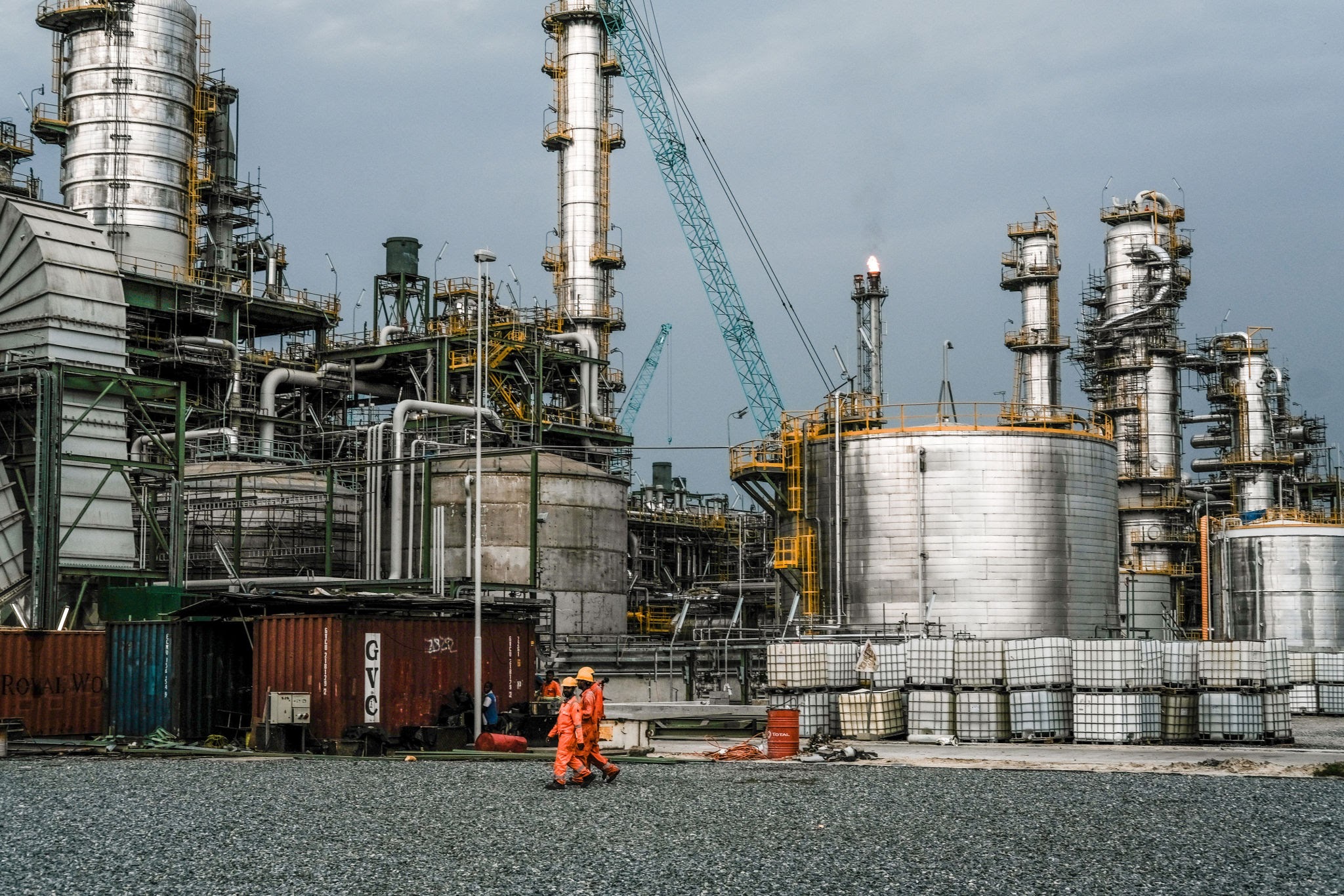
Investors, analysts, and capital market enthusiasts anticipate that between three billion and ten billion ordinary shares will be available in the IPO, priced between N350 and N500 per share. Despite this, the IPO is projected to be oversubscribed, reflecting the belief that the facility will transform the dynamics of the global energy landscape and elevate Nigeria and Africa to international prominence.

Aliko Dangote, the President of Dangote Group, had announced that the planned expansion will enhance the facility’s refining capacity from 650,000 barrels per day to 1.4 million barrels per day, thus positioning it as the largest refinery globally upon its completion. This underscores the significant investment that will be allocated to the expansion project as investors continue to take positions.
Capital market specialists had linked the significant drop in the Nigerian equities market at the conclusion of Q2 2026 particularly to substantial sell-offs aimed at raising cash in preparation for the upcoming Dangote Refinery IPO.
Although the proposed IPO has not yet received regulatory approval, expectations surrounding what could become Africa’s largest public offering have already begun reshaping investment decisions. Market operators say institutional investors have been reducing their exposure to existing equities to create liquidity for what is expected to be one of the most sought-after investment opportunities in Nigeria’s history.
David Adorin, the Chief Executive Officer of HighCap Securities Limited, a registered dealing member of the Nigerian Exchange (NGX), confirms that the substantial asset offloading was driven by various factors, but mainly the anticipation of the IPO of Dangote Refinery.
“Dangote Refinery is the elephant in the house. A lot of investors are targeting the Dangote IPO and are moving into cash so that they can take positions early enough. Everybody knows that Dangote Refinery will pay dividend in dollars, so they are equally taking positions,” said Andorin.
Industry experts who spoke to THEWILL say Dangote Petroleum Refinery’s successful $2.5 billion private placement marks far more than another corporate fundraising milestone. It represents another decisive shift in Nigeria’s downstream petroleum industry. They agree that the development could further diminish the prospects of the country’s four state-owned refineries, which have consumed hundreds of billions of naira and several billions of dollars in rehabilitation funding over decades without returning to sustainable commercial operation.
Engr. Mike Akannor, an oil and gas expert, stressed that “The fresh capital gives Africa’s largest refinery greater financial muscle to expand refining capacity, deepen petrochemical production, improve logistics infrastructure and strengthen its competitive advantage just as the Nigerian National Petroleum Company (NNPC) Limited continues to grapple with uncertainty over the future of the Port Harcourt, Warri and Kaduna refineries.”
A finance and oil expert, Nnaemeka Obiaraeri, had said that “The ideal situation would be to sell off the refineries to private investors. If NNPC Ltd still wants to be involved, they should have equity because it has been proved that NNPC Ltd cannot operate the refineries. They should not be the operator.
“If Dangote had acquired those refineries, we would have gone far in resolving the lingering energy challenges that now confront the nation in terms of producing what we require as a country. These refineries should be sold out.”
For many industry analysts, Dangote Refinery’s fund-raising widens the competitive gap between an efficient private-sector refinery operating under commercial principles and government-owned facilities burdened by years of poor maintenance, policy reversals, operational inefficiencies and political interference. More worrying is NNPCL’s decision to continue pushing for the repair of the refineries amid obvious signs of elusive results.
The NNPCL had disclosed on May 4, 2026, that it signed the MoU with two Chinese firms, Sanjiang Chemical Company Limited, and Xinganchen (Fuzhou) Industrial Park Operation and Management Co., Ltd., for the restart, completion, and expansion of the Port Harcourt and Warri refineries through a potential technical equity partnership.
The agreement, signed in Jiaxing City, China, by NNPC Group Chief Executive Officer, Bayo Ojulari, alongside executives of the Chinese firms, is expected to cover the completion of outstanding work, operation and maintenance of the facilities, refinery upgrades, and expansion of petrochemical and gas-based industrial hubs
The announcement came ahead of the June 2026 deadline established by NNPCL for the acceptance of declarations of interest from qualified companies seeking a technical partnership. Engr Ojulari had revealed in November 2025 that NNPCL was actively seeking ‘partners’ to rejuvenate its stagnant refineries, which have been inactive for nearly two decades. Ojulari disclosed that the initiative followed the substantial investments made in repairing the facilities without yielding any results, despite expert recommendations indicating that the plants have surpassed their operational lifespan.
Gideon Agbedo an Energy Lawyer/Analyst disagrees that the government should continue with the bid to fix the refineries, arguing that previous efforts yielded no results. He noted that Dangote Refinery has opened a new vista in Nigeria’s energy ecosystem which should be the country’s operating standard.
“The government has had its moment to fix the refineries and failed. To try again will be akin to madness: Trying to do the same thing over and over again and expecting a different result.
“In addition, with the newer Dangote refinery and the expected BUA refinery, the private sector has shown capacity in refining. There is no reason for government refineries. In any case, the government refineries with their old technology and inefficient processes may not be able to compete with the private sector,” Agbedo had told THEWILL in a note.
Also, the Nigeria Employers’ Consultative Association (NECA) faulted the recent agreement between the NNPCL and the Chinese firms to revamp and expand the Port Harcourt and Warri refineries, describing it as another opaque arrangement amid unresolved questions over past refinery spending.
In a statement issued on Sunday, May 10, 20226, NECA Director-General, Adewale Oyerinde, said it would be unpatriotic to support another refinery rehabilitation deal without full disclosure on the previous billions of dollars spent on turnaround maintenance projects.
Oyerinde said, “While we note that the nation desperately needs functional refineries, we cannot ignore the decade-long pattern of billion-dollar rehabilitation contracts that have delivered zero sustained refining output. It will be unpatriotic to endorse another opaque deal while questions on past spending remain unanswered.”
He stated that Nigeria could not afford another round of wasteful refinery spending after expending huge sums with little to show for it.
“It is on record and apt to say that the nation cannot afford another trail of wasteful spending. In the last few years, $25bn had been spent with zero value.
“Between 2010 and 2023, Nigeria spent over N11tn – approximately $25bn – on refinery rehabilitation projects, maintenance, and turnaround programmes, yet the state-owned refineries remain significantly unreliable and non-functional,” Oyerinde said.
“Dangote expansion is a reality. However, the development signals a bad omen for the dormant NNPC refineries which may lead to uncertainty after consuming stupendous financial resources,” Akannor said.

Sam Diala is a Bloomberg Certified Financial Journalist with over a decade of experience in reporting Business and Economy. He is Business Editor at THEWILL Newspaper, and believes that work, not wishes, creates wealth.
