
July 12, (THEWILL) — Africa’s journey at the 2026 FIFA World Cup ended this week in familiar fashion painfully close to history, yet filled with reasons for pride.
There will be no African nation lifting football’s most coveted trophy this year. Morocco and Egypt have bowed out, while Cape Verde’s fairy-tale debut also came to an end. Yet their campaigns collectively reinforced a powerful truth: African football is no longer content with simply participating on the world’s biggest stage.
It is competing and increasingly, convincing the world that the gap between Africa and football’s traditional powers has never been smaller.

Morocco’s New Standard
If one team embodies Africa’s continued rise, it is Morocco. The Atlas Lions arrived in North America carrying the weight of expectation rather than surprise. Their remarkable run to the semi-finals in Qatar four years earlier had transformed perceptions of African football, but questions lingered over whether that achievement could be sustained.
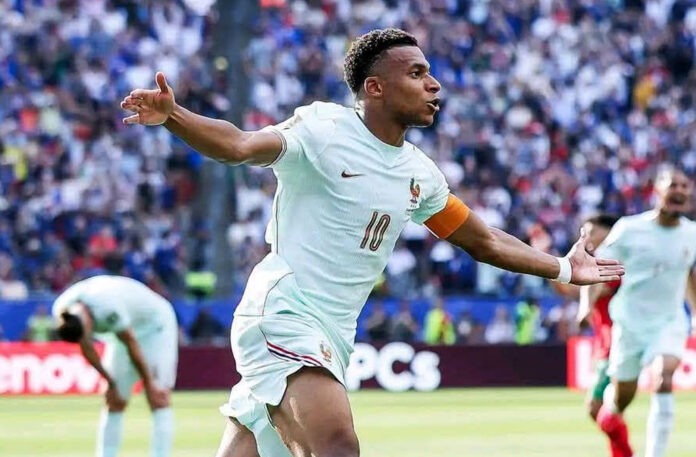
The answer, for much of this tournament, was emphatic. Unbeaten in 34 matches, reigning African champions and ranked above several European heavyweights, Morocco dismissed co-hosts Canada 3-0 to become the first African nation to reach consecutive World Cup quarter-finals. Their dream eventually ended in Boston against France.
After missing a first-half penalty, Kylian Mbappé redeemed himself with a superb strike before creating Ousmane Dembélé’s decisive goal in a 2-0 victory that halted Morocco’s remarkable unbeaten run. The scoreline ended their campaign. It did not diminish what they had achieved.
Morocco have now moved beyond being Africa’s surprise package. They have become one of international football’s established contenders and future tournaments will judge them not by how far they can go, but by whether they can finally win it all.
Egypt’s Cruel Heartbreak
If Morocco exited with admiration, Egypt departed with heartbreak. The Pharaohs had already made history by winning their first-ever World Cup knockout match, overcoming Australia on penalties to reach the Round of 16.
Against defending champions, Argentina, they came within touching distance of producing one of the greatest upsets the tournament has ever witnessed. Goals from Yasser Ibrahim and Mostafa Zico gave Egypt a stunning 2-0 advantage with just 11 minutes remaining. Then came Lionel Messi.
Argentina mounted an extraordinary comeback as Cristian Romero reduced the deficit before Messi restored belief. Deep into stoppage time, Enzo Fernández completed a dramatic turnaround, sealing a 3-2 victory that left Egyptian players and supporters in disbelief.
For Egypt, the pain lay not in being outclassed. It lay in knowing that for more than 80 minutes they had matched—and at times outplayed the reigning world champions. Their exit may have ended the dream, but it also signalled that Egypt belong among football’s emerging elite once more.
Cape Verde’s Historic Arrival
Perhaps no African team captured the imagination of the football world quite like Cape Verde. With a population of barely half a million people, the island nation arrived at its first-ever FIFA World Cup carrying little expectation.
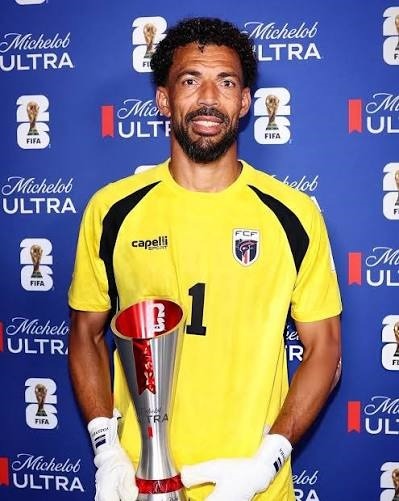
They left with global admiration. Their Round of 32 clash against Argentina became one of the tournament’s defining contests as Cape Verde twice fought back before eventually falling in extra time. Veteran goalkeeper Vozinha delivered one of the best individual performances of the World Cup, frustrating Argentina with a series of remarkable saves that briefly made him one of the tournament’s most celebrated figures.
Cape Verde did not need a deep run to make history. Their courage, organisation and belief ensured that football’s smallest World Cup nation left one of its biggest impressions.
A New Era for African Football
Morocco, Egypt, Cape Verde. Three different nations. Three different stories, One unmistakable message. Africa no longer arrives at the World Cup hoping to compete. It arrives expecting to win.
Gone are the days when African success was measured simply by reaching the knockout rounds. Today’s benchmark is challenging world champions, eliminating European giants and believing that lifting the trophy is no longer an impossible dream. That evolution may be the continent’s greatest achievement.
The Lesson For Nigeria
However, this tournament also offered an uncomfortable mirror. While Morocco, Egypt and Cape Verde inspired the continent on the pitch, the Super Eagles watched much of the tournament from the outside. The contrast was impossible to ignore. Nigeria possess a player pool comparable with many of Africa’s leading nations. Yet talent alone has never guaranteed success.
What Morocco displayed was continuity. What Egypt demonstrated was resilience. What Cape Verde embodied was organisation and belief. Those qualities proved just as valuable as individual brilliance. If African football leaves North America with a report card, Morocco, Egypt and Cape Verde deserve the highest grades.
Nigeria’s assignment begins now. The continent has shown that the ceiling continues to rise. The challenge for the Super Eagles is ensuring they are among those pushing it even higher at the next World Cup.

