
November 02, (THEWILL) — Approximately three weeks after the National Assembly initiated an inquiry into the ongoing repairs of the country’s refineries, the Nigerian National Petroleum Company Limited (NNPC Ltd) has recommenced efforts to restore the facilities that have been inactive for over 20 years.
On Thursday, October 9, 2025, the House of Representatives resolved to probe the over $18 billion reportedly expended on the rehabilitation of Nigeria’s state-owned refineries in Port Harcourt, Warri, and Kaduna over the last 20 years without achieving significant results.
This decision followed the adoption of a motion presented during plenary by Hon. Sesi Oluwaseun Whingan, regarding the non-functionality of state-owned refineries. In his motion, Whingan expressed concern over the inefficacy of the refineries despite numerous turnaround maintenance projects and repeated assurances from the government. He pointed out that the facilities have remained inactive even after substantial funding and multiple promises of rehabilitation.

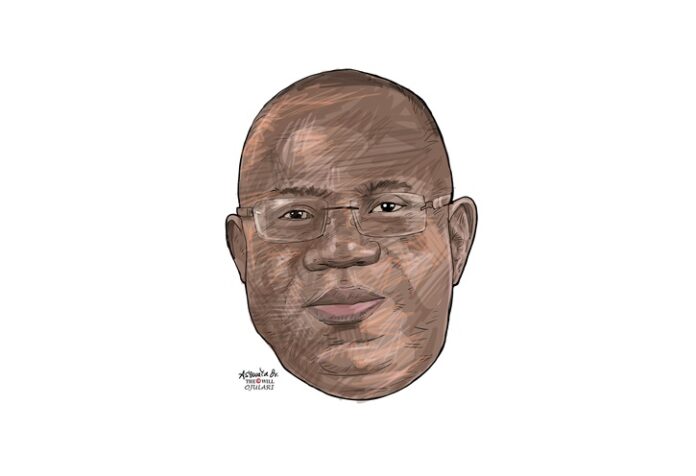
He highlighted that the recent acknowledgment by the Group Chief Executive Officer NNPCL, Engr. Bayo Ojulari, regarding the refineries’ non-functionality despite significant investments, raises further concerns about fiscal responsibility and transparency in the management of national assets.
“The ongoing non-functionality of these refineries, despite regular budget allocations and rehabilitation contracts, signifies a severe misappropriation of public funds and a breach of public trust,” lamented Whingan.
NNPC’s new solution initiative
Nevertheless, in an unexpected announcement, NNPC Ltd revealed on October 30, 2025, that it has commenced a comprehensive technical and commercial assessment of its three primary refineries situated in Port Harcourt, Warri, and Kaduna. According to the national oil company, the purpose of the review is to evaluate the operational readiness and financial viability of the facilities as part of NNPC’s renewed dedication to revitalizing Nigeria’s refining capacity.
The initiative, which was announced by the Group Chief Executive Officer, Mr. Bayo Ojulari, represents a significant advancement in ensuring that the refineries can once again play a vital role in Nigeria’s energy security and economic development.
According to the company, this review is part of a larger modernisation strategy aimed at transforming the refineries into globally competitive, revenue-generating assets. Rather than simply conducting repairs, the emphasis is on ensuring that the facilities comply with international standards regarding efficiency, output, and environmental regulations.
Doubting voices
Stakeholders and industry experts have voiced their concerns regarding the recent decision by NNPC Ltd to recommence the seemingly endless process of repairing the unproductive yet resource-intensive facilities. An oil and gas expert, Engr Godwin Obadere, stated that NNPC Ltd’s latest initiative to undertake an “extensive technical and commercial review of its three major refineries located in Port Harcourt, Warri, and Kaduna” is yet another futile endeavor.
“The refineries cannot become operational again as long as they remain under government control. They should be handed over to private operators if NNPC is genuinely committed to its objectives,” Obadare said.
Dr. Nnaemeka Obiaraeri, an oil and gas expert and former senior employee of NNPC Ltd, argues that the government should decrease its ownership stake in the refineries and transfer control to private sector majority stakeholders. Obiaraeri contends that the refineries have consistently served as a channel for corruption among government officials and politicians.
NASS endless probe
The most recent investigation into the substantial expenditures associated with repairing the non-functional refineries marks the third inquiry by national lawmakers since the inauguration of the 10th National Assembly in 2023. The two prior investigations yielded no results, nor did the lawmakers release any reports.
First probe
On October 24, 2023, the Senate established an ad-hoc committee to investigate all contracts estimated at over N11.35 trillion that were awarded for the rehabilitation of the four inactive refineries in the country. This followed a motion brought by Senator Sunday Karimu on the “unending repairs of the nation’s refineries despite the huge resources invested in fixing them.”
Karimu said, “We are concerned that the Federal Government of Nigeria has carried out rehabilitation projects in Port Harcourt Refinery Company (PHRC) over a period of seven years from 2013-2019 at an estimated cost of N12,161,237,811.61. In addition, on the 18th March 2021, a rehabilitation contract was executed between NNPC/PHRC and Tenenimont SPA at a Lump Sum of $1,397,000,000.00, about N75 billion naira amidst global public criticism, no result has been achieved.”
The Senate ad-hoc committee was asked to report back in four weeks. No report was submitted.
Second probe
Ten months after the Senate embarked on the probe of the endless maintenance of Nigeria’s moribund refineries, the upper and lower legislative chambers jointly commenced a similar exercise in August, 2024.
Following fresh controversies trailing the nation’s oil and gas industry, especially in the aspects of sabotage, corruption and oil theft, the Speaker of the House of Representatives, Abbas Tajudeen, named a seven-member committee to probe alleged economic sabotage in the oil and gas sector.
NNPC’s previous vows
The latest move by the NNPC Ltd to make the refineries functional was another action in the series of exercises and promises to restore the facilities.
The NNPC Ltd on August 30, 2024 announced that it was seeking private Operations and Maintenance (O&M) companies to bid for the Warri and Kaduna refineries (while repairs of the Port Harcourt refinery were in progress).
“NNPC Ltd is seeking to engage reputable and credible Operations & Maintenance (O&M) companies to operate and maintain two of its refineries, Warri Refining and Petrochemical Company (WRPC) and Kaduna Refining and Petrochemical Company (KRPC), to ensure reliability and sustainability to meet the nation’s fuel supply and energy security obligations,” the company said in a circular.
As expected, this was not achieved. Instead, the plants suddenly began production, according to NNPC Ltd, following the commencement of petroleum products production by the Dangote Refinery on September 3, 2024.
Interestingly, the Minister of State for Labour and Employment, Mrs Nkeiruka Onyejeocha, during a tour of the facility about that time, disclosed that the refinery would resume full production “soon”.
According to her, the refinery will produce two million litres of Premium Motor Spirit, otherwise known as petrol, and 2.2 million litres of diesel per day upon resuming operations.
However, Aliko Dangote had in June 2025 cast serious doubt on the viability of Nigeria’s state-owned refineries, warning they may never function again despite a staggering $18 billion reportedly spent on their rehabilitation.
While hosting members of the Global CEO Africa group at the Dangote Petroleum Refinery in Lagos, Alhaji Dangote said the NNPC Ltd refineries’ outdated infrastructure and years of mismanagement renderd them effectively obsolete, even with continued investments.
“I doubt very much if they will work,” he said bluntly. “It’s like trying to modernise a car that was built 40 years ago. Even if you change the engine, the body will not be able to take the shock of that new technology engine.
‘Beginning of new era’
However, Mr. Ojulari has described the latest process as “the beginning of a new era in Nigeria’s refining sector,” highlighting the government’s determination to restore confidence in the nation’s energy infrastructure.
At the heart of the review is the concept of “high-grading”; a process that involves transforming outdated or underperforming plants into modern, high-efficiency facilities. This goes beyond fixing existing faults; it means upgrading the refineries’ systems and operations to improve capacity, reduce losses, and ensure long-term profitability.
According to the GCEO, the NNPC’s goal is to reposition the refineries to meet domestic fuel demands while also making them competitive enough to supply the regional market.
Ojulari emphasized that the company’s guiding philosophy is rooted in national prosperity over individual interests, stating that a fully functional refining sector is essential for Nigeria’s economic resilience.
He explained that the review is being carried out by a combination of internal experts and external consultants, ensuring a comprehensive assessment that covers technical, financial, and commercial aspects. This will enable NNPC to make informed decisions on whether to rehabilitate, upgrade, or repurpose each refinery for optimal performance.
In line with this, NNPC Ltd. is exploring strategic partnerships with globally recognized operators through the engagement of Technical Equity Partners (TEPs). These partners will bring in both expertise and investment to support the rehabilitation and management of the refineries.
Discussions with potential partners are already ongoing, with NNPC insisting on strict adherence to technical and commercial benchmarks to guarantee value for Nigerians and transparency throughout the process.
The refinery review is a central pillar of Nigeria’s National Energy Strategy, which prioritizes energy security, asset optimization, and sustainable industrial growth. Once completed, the exercise is expected to pave the way for significant technological upgrades, improved production capacity, and a reduction in the country’s dependence on imported petroleum products.
Ultimately, through this initiative, the President Bola Ahmed Tinubu administration and NNPC Ltd. are signalling a renewed commitment to making Nigeria a self-reliant energy powerhouse capable of fueling its economic transformation.
Report of the NASS’ investigation committee is expected by November 9.

Sam Diala is a Bloomberg Certified Financial Journalist with over a decade of experience in reporting Business and Economy. He is Business Editor at THEWILL Newspaper, and believes that work, not wishes, creates wealth.
