

-
World Bank Chief Economist Indermit Gill says AI can help banks and regulators allocate capital more efficiently by improving risk assessment.
-
He argues Nigeria should prioritise predictive AI that solves practical problems instead of pursuing expensive frontier models.
-
Alternative data such as mobile money, utility payments, and satellite imagery could help millions of underserved businesses gain access to credit.
-
Experts say the technology’s success will depend on stronger data systems, better regulation, and public trust.
Aug 03, (THEWILL) — Artificial intelligence is often presented as a race to build the smartest chatbot or the most powerful language model.
At the 7th Africa Emerging Markets Forum in Abuja, the World Bank’s Chief Economist, Indermit Gill, offered a different view.
For countries such as Nigeria, he argued, AI’s greatest economic value may lie in something far less glamorous. It could help banks decide who deserves a loan.

Gill’s argument goes beyond technology. It touches one of the oldest problems in Nigeria’s financial system, which is that capital does not always reach the people and businesses capable of using it most productively.
Small businesses, farmers, and informal enterprises frequently struggle to obtain financing because they cannot satisfy conventional lending requirements, even when they have built profitable businesses over many years.
According to Gill, predictive AI can narrow that gap by analysing information that lenders have traditionally overlooked.
Instead of relying almost entirely on collateral, formal credit histories, or audited financial statements, AI systems can assess payment behaviour, mobile money transactions, utility bills, and even satellite imagery of farmland to build a clearer picture of a borrower’s financial profile.
“Back-end systems that analyse payment data, mobile money flows or satellite imagery of farmland can help regulators and private lenders allocate capital more efficiently,” Gill said during his presentation.
His comments come at a time when access to finance remains one of the biggest obstacles facing businesses across Africa.
The International Finance Corporation estimates that the financing gap for formal micro, small, and medium-sized enterprises in developing countries runs into trillions of dollars annually, with businesses in Sub-Saharan Africa among the most affected.
In Nigeria, where small businesses account for a significant share of employment and economic activity, many entrepreneurs continue to depend on informal borrowing despite years of financial sector reforms aimed at expanding credit.
Gill believes the problem is not simply that lenders are unwilling to provide loans.
In many cases, they lack enough reliable information to distinguish between borrowers who present genuine opportunities and those who pose unacceptable risks.
That is where predictive AI differs from the generative AI tools that have dominated global headlines over the past two years.

Why Predictive AI Matters More Than Chatbots
Gill divided artificial intelligence into three broad categories.
Predictive AI forecasts outcomes such as credit risk, crop yields, and disease outbreaks.
Generative AI creates text, images, and other forms of content.
Agentic AI goes further by carrying out tasks with limited human intervention.
For developing economies, he argued, predictive AI offers the fastest and most practical returns because it addresses everyday challenges rather than demanding expensive computing infrastructure.
He described this approach as “suitcase AI”, lightweight systems capable of operating within existing infrastructure instead of relying on the massive computing power required by frontier AI models.
The approach has already produced measurable results in several developing countries.
Gill pointed to examples from India, Kenya, and Bangladesh, where predictive AI has improved agricultural productivity, strengthened healthcare delivery, and reduced court case backlogs by helping public institutions process information more efficiently.
Its potential extends beyond lending.
Banks can deploy predictive AI to strengthen fraud detection and monitor portfolio risks. Agricultural insurers can use weather patterns and satellite imagery to improve insurance products for farmers.
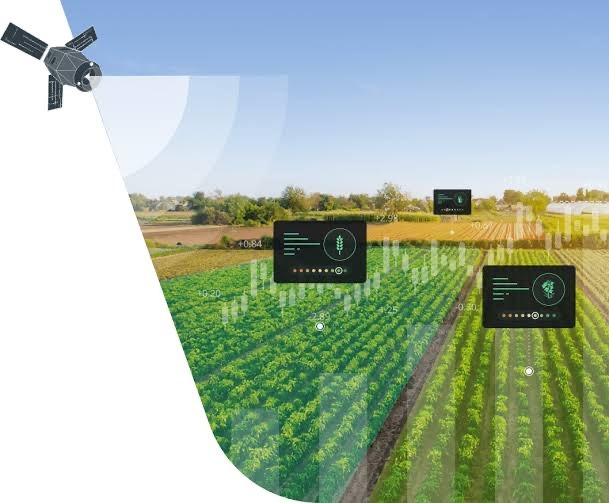
Governments can also apply similar tools to identify households eligible for social intervention programmes and improve the allocation of limited public resources.
Gill, however, cautioned against assuming that AI developed for advanced economies can simply be imported into countries such as Nigeria. Technology, he said, must reflect local languages, institutional capacity, infrastructure and available data.
That point may prove just as important as the technology itself.
Artificial intelligence does not create reliable information where none exists. It depends on the quality of the data available.
Weak identity systems, incomplete financial records and fragmented databases can reduce the accuracy of AI-driven decisions and even reinforce existing biases if left unaddressed.
Nigeria has made progress in expanding digital financial services through initiatives such as the Bank Verification Number, the National Identification Number and growing mobile payment adoption.
Yet large sections of the economy remain outside formal financial systems, leaving important gaps in the data lenders rely on.
Gill also challenged widespread concerns that artificial intelligence will trigger mass unemployment across developing economies.
While advanced economies are increasingly debating automation, he noted that only about one in ten jobs in low-income countries is currently highly exposed to AI, compared with between 30 and 40 percent in richer economies.
Rather than replacing workers, he expects AI to improve the productivity of farmers, traders, healthcare workers, financial institutions and public agencies by helping them make faster and better-informed decisions.
For governments, Gill said the priority should be to create the conditions that allow practical AI applications to flourish.
That includes investing in digital infrastructure, improving data quality, strengthening governance frameworks and encouraging responsible innovation instead of attempting to compete in the costly race to build frontier AI systems.
Artificial intelligence will not solve every structural challenge confronting developing economies.
It cannot substitute for sound economic policy or eliminate the risks created by inflation, weak institutions or policy uncertainty.
What it can do, Gill argued, is reduce one of the most persistent frictions in financial markets by helping lenders and regulators make better decisions with the information already available.
If that happens, the biggest impact of AI in Nigeria may not be the conversations it generates.
It may be the businesses that finally gain access to capital after years of being invisible to the financial system.

