
December 22, (THEWILL) — In a decisive move to block revenue leakages and restore confidence in public finance management, the Akwa Ibom State government has commenced the full implementation of the Treasury Single Account (TSA) for Internally Generated Revenue (IGR), following revelations that over 20 percent of state revenue was previously not remitted to the Consolidated Revenue Account.
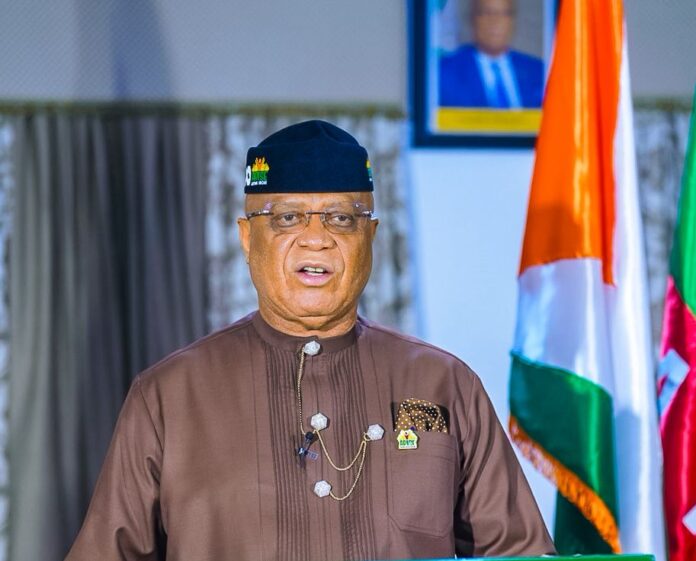
The Commissioner for Finance, Mr Emem Almond Bob, disclosed this at the weekend, while delivering opening remarks at a sensitisation programme on the full TSA rollout, held at the ICT Centre, Office of the State Accountant-General, Uyo.
According to him, the failure to sweep all revenues collected by Ministries, Departments and Agencies (MDAs) into the state’s central account had undermined Akwa Ibom’s revenue credibility at the national level, as captured in the 2024 Public Financial Management (PFM) Assessment Report and findings of the State Fiscal Responsibility Board.

“This ugly situation weakened our revenue generation status and fell short of international best practices in financial management”, Bob said, stressing that the TSA had become non-negotiable in the state’s reform agenda.
He explained that the Treasury Single Account is a unified structure of government bank accounts designed to consolidate public funds, provide a real-time view of government revenue, and ensure optimal utilisation of financial resources.
“With TSA, government receipts and payments are centralised, transparent and accountable. It blocks loopholes, strengthens cash management, reduces borrowing costs and guarantees efficient disbursement and collection of public funds”, the Commissioner stated.
Bob added that the sensitisation exercise was aimed at familiarising stakeholders with the state TSA framework and AkwaRemit, the digital platform driving revenue collection and remittance, while assuring that retained-revenue MDAs such as tertiary institutions would still receive their operational funds promptly after revenues are swept into the TSA.
The most far-reaching impact of the reform, however, appears set to be in the health sector. Speaking at the event, the Commissioner for Health, Dr Ekem Emmanuel, said the ministry embraced the TSA initiative early to align with the reform vision of Governor Umo Eno, noting that the health sector stood to gain significantly from standardised pricing, transparency and data-driven decision-making.
The Commissioner revealed that Akwa Ibom State owns about 518 health facilities, including 44 general hospitals, yet charges for the same procedures vary widely across facilities.
“It makes no sense that a caesarean section costs N100,000 in one general hospital and N170,000 in another, when both are owned by the same government and supplied from the same central medical store”, he said.
According to him, TSA-backed digital revenue systems would eliminate arbitrary charges, restore public trust and enhance professionalism in the health sector.
“When patients are asked to transfer money into private accounts, it raises doubts about the entire system. Once transparency is embedded, confidence is restored. Whatever is generated is visible from the back end, there is nothing to fear”, Emmanuel added.
Also contributing, the Commissioner for Science and Digital Economy highlighted the data advantage of the TSA platform, noting that government would now be able to identify high-demand services and make informed policy and budgetary decisions.
Dr Emmanuel disclosed that the Ministry of Health demonstrated its commitment by attending the sensitisation with all relevant stakeholders, including permanent secretaries, heads of parastatals, medical superintendents and primary healthcare managers.
“We are big on this reform, and we cannot wait. This will mark the beginning of a golden era in healthcare service delivery in Akwa Ibom State”, he said.
He noted that, with the full TSA implementation, the Akwa Ibom State Government is positioning itself to tighten fiscal discipline, enhance service delivery and rebuild public confidence in the management of public funds.

