

-
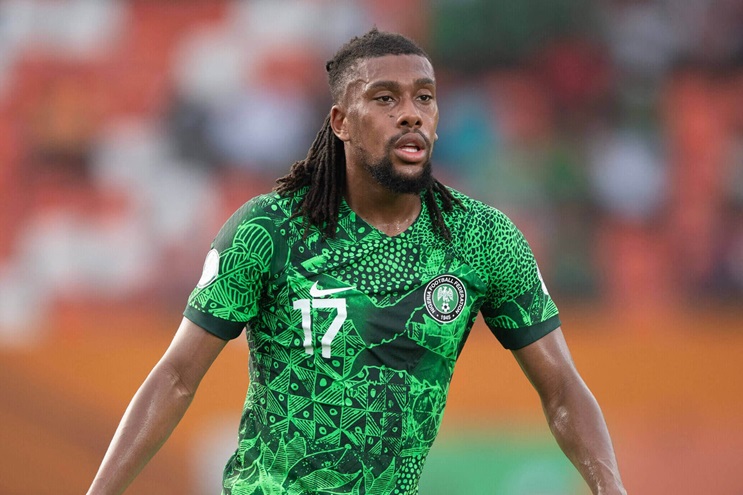
Alex Iwobi has offered a rare behind-the-scenes account of life in the Super Eagles, revealing that players have sometimes had to pay for their own flights, deal with power outages in camp, and train under far less comfortable conditions than those he experienced with England’s youth teams.
-
Despite the challenges, the Fulham midfielder insists his love for representing Nigeria has never changed, explaining that the pride of wearing the green and white shirt and feeling at home with the culture always outweigh the difficulties.
-
Iwobi’s candid remarks have reignited conversations about player welfare, infrastructure, and the standards surrounding the national team, while highlighting the sacrifices many Super Eagles stars continue to make for their country.
Aug 04, (THEWILL) — Alex Iwobi has played at some of football’s grandest stages. He has faced Lionel Messi and Cristiano Ronaldo, scored at the Camp Nou, and established himself as one of the Premier League’s most consistent midfielders. Yet, none of those achievements sparked as much conversation this week as a candid interview in which he spoke about life inside the Super Eagles camp.
Appearing on the Beast Mode On podcast hosted by former England striker Adebayo Akinfenwa, the Fulham midfielder offered an unusually frank account of what representing Nigeria can sometimes look like behind the scenes. His comments have since reignited discussions about player welfare, infrastructure and the realities of international football in Africa.
“I love playing for Nigeria, but you have to pay for your own flight. You get to the hotel and there’s no electricity. You wash your own kit, the pitch is only half grass, and if you make one bad pass the coach is screaming at you. But I love the food”, Iwobi stated.

The remarks quickly spread across social media, not because they came from a disgruntled former player, but because they came from one of Nigeria’s most experienced current internationals. With nearly 90 appearances for the Super Eagles, Iwobi has become one of the country’s most-capped players, making his perspective difficult to dismiss as an isolated complaint.
What makes his observations even more striking is that he has experienced football at two very different levels. Before committing his international future to Nigeria, Iwobi represented England through several youth categories after developing inside Arsenal’s academy under Arsène Wenger. That background gave him first-hand experience of one of the world’s most structured football environments.
Reflecting on the contrast, he described England’s camps as highly organised, with detailed itineraries, strict punctuality and carefully managed interactions with supporters. Nigeria, he explained, offered a completely different experience.
“England, there’s a strict itinerary, you stick to it, you stick to the time, you’re never late”, he recalled. “It’s one to a room, and the fans are a bit more controlled. Nigeria, don’t get me wrong, I love playing for my country. However, sometimes you have to book your own flight, sometimes you have to pay for your upgrade. No NEPA when that goes.”
For many Nigerians, the mention of “NEPA” instantly resonated. While partly humorous, the reference to power outages highlighted a broader issue that has long followed Nigerian football. Stories about logistical challenges, delayed travel arrangements and inadequate facilities have surfaced repeatedly over the years, but it is rare for a serving Super Eagles regular to discuss them so openly.
Iwobi also spoke about the demanding atmosphere during training camps, describing an environment where mistakes receive immediate criticism.
“The coach, if you make one bad pass, it’s like, ‘What is wrong with you now?'” he said while recalling one particular training session. He remembered a younger player being ordered to run laps after misplacing a pass, admitting the intensity initially surprised him.
Yet, despite everything he described, Iwobi repeatedly returned to the same point: he genuinely enjoys representing Nigeria.
That sentiment perhaps explains why his comments have resonated so strongly. They are not framed as an attack on the national team or an attempt to distance himself from it. Instead, they reveal the complex reality of a player who accepts the imperfections while remaining deeply committed to wearing the green and white shirt.
His affection for Nigeria was perhaps most evident when the conversation turned to food.
“I just felt like I was at home,” he said, smiling as he listed favourites including jollof rice, asaro, yam and eggs.
It was a small detail, but one that revealed something larger. For a player who could have continued with England’s national teams, home ultimately meant something more than comfort or convenience.
Iwobi revealed that Wenger encouraged him to carefully consider his international future before making a final decision. England remained an option, yet he chose Nigeria and has continued choosing the Super Eagles throughout his career despite the challenges he described.
His story reflects a broader pattern in Nigerian football. Several generations of players have overcome administrative shortcomings, difficult travel arrangements and inconsistent facilities while continuing to compete at the highest level. Their commitment has often been driven less by comfort than by a deep emotional connection to the country they represent.
Iwobi’s honesty has reopened familiar conversations about improving player welfare, upgrading facilities and modernising the Super Eagles’ environment. Those debates have surfaced repeatedly over the years, often fading before lasting reforms take hold.
This time, however, the conversation carries extra weight because it comes from one of Nigeria’s most trusted voices still actively wearing the national colours. Rather than turning away from the team, Iwobi’s message is that loving Nigeria does not mean pretending every problem has been solved.
If anything, his interview serves as a reminder that the country’s footballing success has often been built on resilience as much as resources. For Iwobi, the inconveniences are real, the challenges remain, but so does the pride of representing Nigeria. That, perhaps more than anything else he said, explains why he keeps answering the call.

