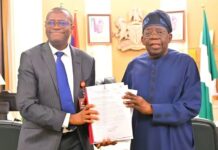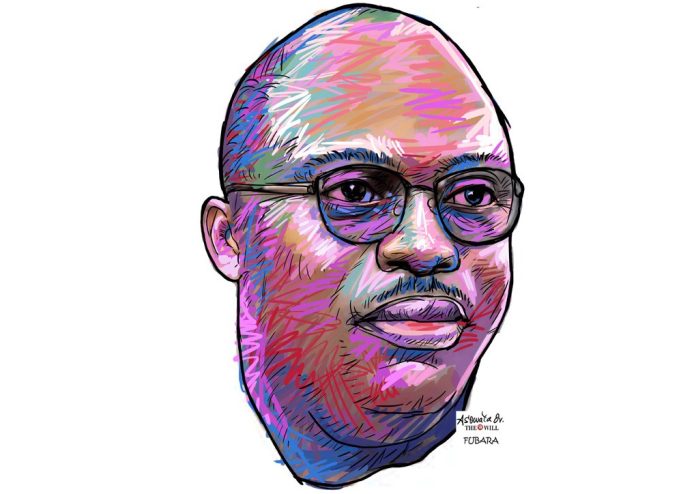
January 11, (THEWILL) — A week after Governor Siminalaiyi Fubara and Minister of the Federal Capital Territory, Abuja, Nyesom Wike renewed post-emergency rule hostilities, tension has not only mounted in the oil rich state but also riveted national attention and heated up the polity with the governing All Progressives Congress, APC, associations and pundit seeking to douse the spreading uncertainty. Trouble started again when the pro-Wike House of Assembly formally commenced impeachment proceedings against Governor Siminalayi Fubara and his deputy, Prof. Ngozi Odu, over allegations of gross misconduct.
The impeachment move was initiated during a plenary session presided over by House Speaker Martins Amaewhule, where the Majority Leader, Hon. Major Jack, read a notice of allegations against the governor on the floor of the House. Relying on Section 188 of the 1999 Constitution (as amended), Hon. Jack outlined several counts of alleged gross misconduct against Governor Fubara. The accusations include the alleged demolition of the House of Assembly Complex, extra-budgetary spending without legislative approval, withholding of funds meant for the Assembly Service Commission and refusal to comply with a Supreme Court judgment regarding the financial autonomy of the legislature.
The Majority Leader disclosed that 26 members of the House signed the impeachment notice, meeting the constitutional threshold required to begin the process. Following the presentation of the notice, Speaker Amaewhule announced that the allegations would be formally served on the governor within seven days, in accordance with constitutional provisions. Moments later, the Deputy Speaker of the House, Hon. Linda Stewart, presented a separate notice of gross misconduct against the Deputy Governor, Prof. Ngozi Odu.

The allegations against Prof. Odu include reckless and unconstitutional expenditure of public funds, obstruction of the House of Assembly from carrying out its constitutional responsibilities, and alleged connivance in allowing unauthorised individuals to occupy government offices without proper screening or approval by the legitimate Assembly.
Other allegations levelled against the deputy governor include approaching another group for budgetary approval instead of the Rivers State House of Assembly, as well as the alleged seizure of salaries and allowances due to lawmakers and the Assembly Service Commission. This development represents a major escalation in the protracted political standoff between FCT Minister Nyesom Wike and Governor Fubara, raising fresh concerns about governance and political stability in the oil-rich state. Under constitutional provisions, Governor Fubara and his deputy are expected to respond to the allegations once they are formally served, after which the House will determine the next steps in the impeachment process.
As at Friday, THEWILL gathered that holidaying President Bola Tinubu in France urged the warring parties to cease fire and accord the legal and political rights to the governor whose defection to the APC places him as leader of the party in the state, while the issues raised in the impeachment notice should be addressed peacefully to give peace a chance in the state, so soon after the restoration of democratic rule after six months of emergency rule
Meanwhile, the Ijaw National Congress (INC), the apex socio-cultural organisation of the Ijaw nation worldwide has called on the Rivers State House of Assembly to immediately drop the renewed impeachment proceedings against Governor Siminalayi Fubara and his Deputy, Professor Ngozi Odu, declaring that the state needs peace, development and good governance, not political warfare.
Professor Benjamin Okaba, President of the INC, described the impeachment bid as politically motivated and a continuation of what it called a “relentless cycle of vendetta” against the democratically elected government of Rivers State, warning that the move threatens democracy and stability in the state. According to the Congress, the impeachment attempt (the third since 2023) poses a grave danger not only to Rivers State but also to the wider Niger Delta region, stressing that the crisis is not an ethnic issue but a fundamental test of Nigeria’s democratic order.
“The allegations being cited by the Assembly, including matters relating to budgetary spending and appointments, are governance issues that should be resolved within the framework of law and due process, not through the weaponisation of impeachment”, the INC stated. The group noted that the renewed impeachment move followed the collapse of a peace agreement brokered by President Bola Tinubu in June 2025 to resolve the political feud between Governor Fubara and Wike.
While acknowledging the constitutional provisions of Section 188 of the 1999 Constitution cited by the Assembly, the INC questioned the speed and context of the process, arguing that it undermines the spirit of fairness and suggests the use of impeachment as a political tool rather than a genuine check on executive power.
In the same vein, both the All Progressives Congress (APC) and the Peoples Democratic Party (PDP) in Rivers State have also urged the Assembly to halt the process. The APC is, however, the faction loyal to former Minister of Transportation and led by Emeka Beke. It has rejected moves by the Assembly to commence impeachment proceedings against the governor and his deputy, describing the process as ill-advised and capable of destabilising the state.
While acknowledging the independence of the legislature and its constitutional role of checks and balances, the APC said the current impeachment push was unacceptable. “Our position as of today on this matter is that we solemnly reject the resort to an impeachment process against our Governor and his deputy”, the party declared.
The APC cautioned against what it described as the re-emergence of internal political strife, insisting that disagreements that previously rocked the Peoples Democratic Party (PDP) should not be imported into the APC fold in Rivers State. Addressing claims that the impeachment threat was linked to budgetary issues, the party recalled that during the period of emergency rule, a budget was transmitted to the National Assembly by the President in May 2025 and duly approved by the Senate on June 25, 2025, and by the House of Representatives on July 22, 2025. The approved budget, totalling N1.485 trillion, was said to be valid for one year and expected to run until August 2026. It further noted that the governor is constitutionally permitted to operate within a six-month spending window into a new fiscal year and may choose not to present a supplementary budget if satisfied with the existing appropriation.
The Chancellor of the International Society for Social Justice and Human Rights, ISJHR, Omenazu Jackson, described the impeachment move as anti-democratic, constitutionally reckless and a clear abuse of legislative powers.
Jackson stressed that impeachment is not a political weapon, but a constitutional process strictly guided by law, particularly Section 188 of the 1999 Constitution (as amended), which requires proven allegations of gross misconduct supported by due process. He said: “The Constitution requires clear allegations of gross misconduct, due process, fair hearing, legislative quorum, judicial panel investigation and strict procedural compliance. Any deviation renders such impeachment null, void and unconstitutional.” Jackson further cited Sections 4, 5, and 6 of the Constitution, which establish the doctrine of separation of powers, noting that no arm of government is permitted to dominate or coerce another. “The Legislature cannot lawfully intimidate or harass the Executive into surrendering its constitutional mandate or policy direction outside the confines of the law,”
Fiery human rights lawyer, Inibehe Effiong has expressed concern about the minister’s conduct and its impact on the state’s stability, urging President Tinubu to rein him in. “The president has to call the minister to order. He simply cannot continue like this. You cannot have a minister in the country basically going out as the commander-in-chief, telling people not to come to the state. He (Wike) should return to his office, discharge his ministerial functions and allow the people of Rivers State to prosper,” he said.
He questioned the unusual political dynamics at play in Rivers State, pointing to the rarity of impeachment proceedings initiated by assembly members against a governor from their own party. “In which history, in how many instances, have you seen a governor in the same party and members of the Assembly in the same party proceeding on impeachment?” Effiong asked.
Fearing that the worsened crisis may degenerate further, the Pan Niger Delta Forum intervened at the weekend by calling on all actors to make way for peace as it set up a seven-man mediation team led by a former Attorney-General of the Federation, Chief Kanu Agabi. Other members are has six other members Senator Obende Domingo (Vice Chairman); Chief Essien Nduese; Dr Timiebi Koripamo-Agari; Chief Mike Ejiofor; Mrs Nella Rabana-Andem, SAN; and Prince Godwin Okotie, the Deputy National Secretary of PANDEF, who will serve as the secretary of the team.
Felix Ifijeh is a journalist with years of professional reporting experience. Known for his keen news sense, compelling storytelling and commitment to accurate, impactful reporting, he has built a reputation for turning leads into clear, engaging, and well-structured reports that resonate with readers. His work reflects deep newsroom experience and a commitment to accurate, impactful journalism.