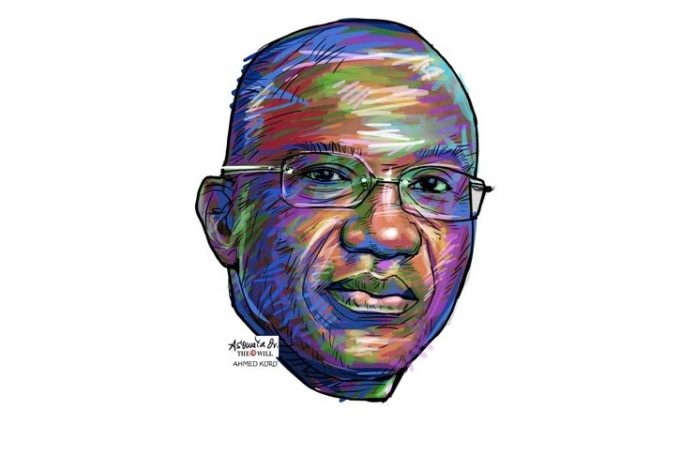
December 24, (THEWILL) – The recent altercation between the Senate Committee on Banking, Insurance and other Financial Institutions and top officials of the Asset Management Corporation of Nigeria (AMCON), which led to the angered lawmakers calling for the immediate dissolution of AMCON has, again, activated the debate over the continued operation of the 13-year-old toxic assets manager.
The federal lawmakers who registered their displeasure over AMCON’s unsatisfactory performance when its managing director, Ahmed Kuru, appeared before the committee on Wednesday, December 13, to defend the agency’s budget for the 2024 fiscal year, frowned at AMCON’s failure to recover its over N5 trillion liabilities since 2010 the agency came into existence, yet incurring heavy recurrent and overhead costs.
“Most of the loans were owed by individual companies which were never sanctioned. At the end of the day, the same company would go back to buy back their assets that AMCON had hitherto taken over. Are we going to continue like this?

“It is not only about defending the budget; it is about seeing the effect of the appropriation. We need to know whether it is working. Or are we just creating a job for those we can’t protect?” remarked Sani Musa, the committee chairman who also queried why AMCON should not be scrapped since it appeared to have lost its statutory mandate.
Established by the act of the National Assembly in 2010, with an intended 10-year lifespan, there is no doubt that the corporation’s mandate of stabilising the banking sector was immediately felt with the take-over of more than N5 trillion loans and injection of fresh funds into the sector. There is the general belief that some banks are perhaps still operating today due to AMCON’s intervention in the industry.
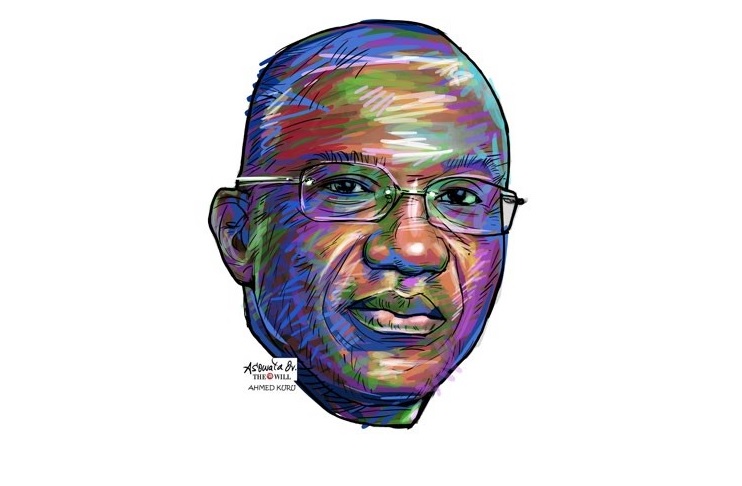
Besides, AMCON has sold assets in excess of N500 billion and has resolved about 5000 Eligible Bank Assets (EBSs). The corporation has till date recovered over N1.8 trillion out of accumulated liabilities. .
While AMCON is firing from all cylinders to recover the over N4 trillion owed by various entities that are regarded as recalcitrant debtors, the failure of some bank customers to repay loans has largely frustrated AMCON’s efforts.
Although AMCON’s tough stance has earned it remarkable accolades, the flipside is that among the “recalcitrant debtors” are victims of wrongfully classified debts, and toxic loans which constitute a good chunk of AMCON’s debts that may not be recovered.
THEWILL learnt from those familiar with the matter that while some of the debts owed AMCON (referred to as AMCON debts), are real and indisputable, others are not. The latter constitutes part of the countless litigations in which AMCON is either a plaintiff or defendant, or joined as such.
Among the wrongly classified toxic assets are unsubstantiated, non-existent, disputed and interest capitalisation facilities. Legal and finance experts revealed that AMCON’s debt recovery drive has created casualties of victimisation and highhandedness – those with wrongfully classified debts hung on their neck like millstone.
A legal practitioner who is vast in AMCON-related matters attributed the anomaly to the faulty procedure in buying the Non-Performing Loans (NPLs). He argued that this has created fundamentally legal and administrative challenges as due diligence was not exercised over the integrity of the toxic assets prior. This, he said, led to AMCON buying “unsubstantiated and disputed loans” that have now created a problem for the system
“AMCON parades over N4 trillion debts; sadly, this figure includes unsubstantiated debts – debts that never existed; and debts whose figures remain controversial and doubtful. It is therefore futile to engage in the pursuit of such debts. From my extensive handling of AMCON related matters, I would say that a lot of the AMCON debts will never be recovered”, said Victor Ukutt, Principal Partner, Victor Ukutt and Co. (Legal Practitioners) in their Lagos Chambers.
Ukutt told THEWILL that the coming of AMCON revealed deep-rooted rot in the Nigerian banking sector: Some corrupt bank officials used the customers’ accounts for various fraudulent practices. The procedure for acquiring the toxic loans allowed fraudulent bank officials to go free while innocent customers, the victims, suffer.
Among the unsubstantiated facilities Ukutt explained to THEWILL was the case of Bamidele Enterprises Limited (not real name) who applied for a credit facility to
invest in their diesel supply business. The application was never approved and no facility was extended to the customer. Surprisingly, Bamidele Enterprises Limited was published in the CBN’s list of banks’ bad debtors.
This led to a prolonged legal action that is yet to be concluded, yet Bamidele’s business has been destroyed, AMCON is yet to recover the debt that it bought erroneously.
THEWILL was shown legal mortgage documents executed as collateral for the loan which Ukutt said were fictitious as no such property existed in Ife Modakeke where it was said to be located.
THEWILL also learnt that some AMCON debts in dispute have to do with faulty processes created by the banks to swindle the customer. This includes the execution of stamp duty to perfect a legal mortgage used as collateral. Some banks were said to have under-declared the value of the mortgaged property so as to pay less stamp duty; but the customer (borrower) is debited with the charges for real/full value of the transaction.
A legal expert said the Supreme Court had ruled that the value declared for the purpose of stamp duty would be deemed to be the value of the facility even where the actual value exceeds the declared value. “There are cases like this; and the client would, through his lawyer, insist on the Supreme Court pronouncement on the matter. How will AMCON be carrying the wrong value of the facility as NPL?”, the lawyer asked.
A particular case of wrongful categorisation as non-performing loan was that of Suru Worldwide Venture, a Lagos-based firm which is into property and hotel business.
The managing director, Mr Edward Akinlade, had in a press conference in Lagos late 2020, narrated his ordeal in the hands of AMCON over a facility his firm had with a third generation bank. Mr Akinlade later spoke with THEWILL to expatiate on the issues he raised at the media chat.
He explained that his firm had a funding of about N13.5 billion from a new generation bank that was later acquired by a Tier-1 lender. He revealed that his firm had drawn down N10 billion and that the facility was performing and being serviced. Yet it was surreptitiously sold to AMCON after the firm had paid over N700 million in the three months preceding the sale of the loan to AMCON.
“AMCON was set up to purchase non-performing loans, but our loan was performing yet they sold it. We sued the bank in 2011 for that action – mismanaging our account”, Akinlade told THEWILL.
According to Akinlade, the company’s business has been destroyed, the facility confiscated by AMCON is not yielding returns and interest is piling on the facility.
“How will AMCON recover such debts that cannot be substantiated? Whose debts is AMCON recovering now?” Ukutt asked.
The Minister of Finance and Co-ordinating Minister of the Economy, Wale Edun, said in September in Abuja that the Federal Government was working towards ensuring that AMCON wound down as soon as possible.
“On AMCON work is being done to ensure as much as possible that AMCON meets its mandate of winding up in the very near future. So, it is a question of financial engineering, a question of making arrangements for taking care of the liabilities. And those responsible include the banking system which has a portion to pay, as well as the central bank and other stakeholders,” Edun said at a press meeting to discuss the economic agenda of President Tinubu-led administration.
AMCON in a recent statement by its spokesperson, Jude Nwauzor, said it has recovered over N1.8 trillion. The managing director/chief executive officer, Ahmed Kuru, insists that the agency is pursuing real debtors and would leave no stone unturned to recover the accumulated liabilities.

Sam Diala is a Bloomberg Certified Financial Journalist with over a decade of experience in reporting Business and Economy. He is Business Editor at THEWILL Newspaper, and believes that work, not wishes, creates wealth.