

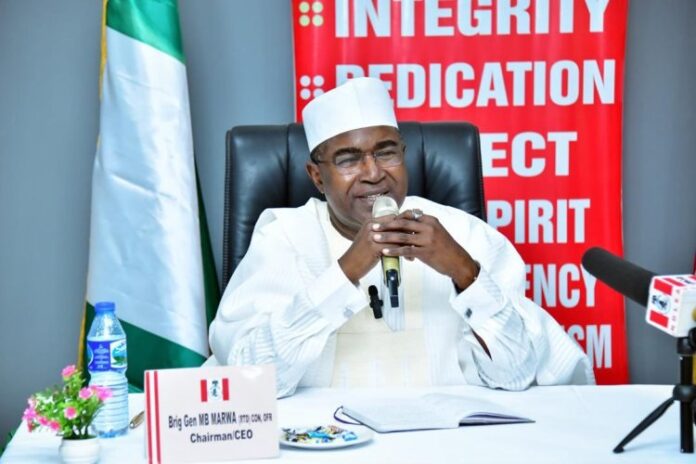
May 28, (THEWILL) – The Attorney General of the Federation and Minister of Justice, Prince Lateef Fagbemi (SAN), and the Chairman/Chief Executive of the National Drug Law Enforcement Agency (NDLEA), Brig. Gen. Mohamed Buba Marwa (rtd), have expressed optimism that the recent amendment of the NDLEA Act by the National Assembly will significantly strengthen Nigeria’s anti-drug campaign once signed into law by President Bola Tinubu.
Speaking at the opening ceremony of the Inter-Ministerial Committee on Drug Control meeting held in Abuja on Wednesday, both officials emphasized the critical role of a strong legal framework in advancing drug control efforts.
In his keynote address, Fagbemi noted that the NDLEA had recorded remarkable progress over the last four years in areas including arrests, seizures, convictions, and drug demand reduction campaigns under the War Against Drug Abuse (WADA) initiative.

“The Federal Ministry of Justice has collaborated with the NDLEA to align our national legal system with the agency’s evolving mandate. We are now at the final stage of amending the NDLEA Act to enhance the agency’s capacity to combat substance abuse and illicit drug trafficking,” the AGF said.
He added that the Ministry is also working to support the NDLEA in managing proceeds of crime, a crucial step in dismantling drug trafficking networks.
Fagbemi, who was represented by the Director of Public Prosecution of the Federation, Mohammed Abubakar, acknowledged the role of other law enforcement bodies and civil society in supporting Nigeria’s drug control efforts.
He also praised state governments that have established drug control committees at sub-national levels.
He urged stakeholders to expand prevention programmes, particularly those targeting vulnerable groups such as youths, women, and marginalized communities.
“Let us leave here with renewed commitment to securing our communities and building a drug-free Nigeria. The efforts of the NDLEA, the Inter-Ministerial Committee, and our partners remain vital to this vision,” he said.
On his part, Marwa noted that although funding challenges had affected the full implementation of the National Drug Control Master Plan (NDCMP) 2021–2025, the NDLEA had remained steadfast in achieving its goals.
“One of the most promising developments is the amendment of the NDLEA Act, which has been passed by the National Assembly and is now awaiting Presidential assent. This will significantly enhance our institutional strength in reducing drug supply,” he said.
He urged stakeholders to renew their energy and focus on delivering impact, stressing the need for collective action to address Nigeria’s complex drug challenges.
Reviewing the agency’s performance under the NDCMP’s strategic pillars, Marwa disclosed that in 2023 and 2024, the NDLEA arrested 31,334 drug offenders, secured 6,839 convictions, and seized over 4.3 million kilograms of illicit drugs.
The agency also destroyed 426 hectares of cannabis farms and provided counselling and rehabilitation for 19,033 individuals.
“Through aggressive WADA sensitisation campaigns, we’ve reached various population groups and fostered a national sense of ownership in combating drug abuse,” he added.
Also speaking, the United Nations Office on Drugs and Crime (UNODC) Country Representative, Cheikh Ousmane Toure, represented by Dr. Akani Ibanga, described Nigeria as standing at a critical juncture between public health and security in its drug response.
He noted that Nigeria accounts for about 7.5% of the estimated 39.5 million global cases of drug use disorders—an alarming statistic that underscores the urgency of sustained intervention.
“As we move into the final leg of the NDCMP, we must be guided by data and evidence-based strategies. The stakes are high, and the time to act decisively is now,” he said.
Felix Ifijeh is a journalist with years of professional reporting experience. Known for his keen news sense, compelling storytelling and commitment to accurate, impactful reporting, he has built a reputation for turning leads into clear, engaging, and well-structured reports that resonate with readers. His work reflects deep newsroom experience and a commitment to accurate, impactful journalism.



