
-
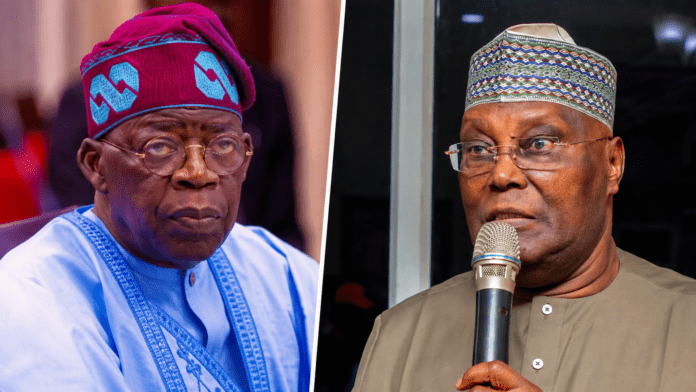
Atiku Questions Borrowing Despite Oil Windfall: Former Vice President says the Federal Government has no justification for its aggressive borrowing programme if Nigeria has earned an estimated ₦7.98 trillion in additional oil revenue above the 2026 budget benchmark.
-
Demands Accountability for Excess Crude Earnings: ADC presidential candidate challenges the Tinubu administration to explain how the alleged windfall has been utilised, asking, “Where is the money?” and calling for full public disclosure of excess crude receipts.
-
Says Nigeria Borrowed ₦5trn in Six Months: Atiku claims the Federal Government has raised about ₦5 trillion from the domestic bond market in the first half of 2026 despite higher crude oil prices and increased government revenues.
-
Unveils Alternative Fiscal Plan: Former Vice President promises transparent oil revenue management, reduced borrowing, lower cost of governance, stronger fiscal buffers and greater investment in infrastructure, healthcare, education and agriculture under an ADC administration.
July 25 , (THEWILL) — Former Vice President and Presidential Candidate of the African Democratic Congress (ADC), Atiku Abubakar, has intensified his criticism of President Bola Tinubu’s economic policies, questioning the rationale behind the Federal Government’s continued domestic borrowing despite what he described as an estimated ₦7.98 trillion oil revenue windfall generated from higher international crude oil prices.
In a statement issued on Sunday by his Senior Special Assistant on Public Communication, Phrank Shaibu, Atiku accused the Tinubu administration of pursuing contradictory economic policies by increasing the nation’s debt profile while allegedly benefiting from oil revenues far above the assumptions contained in the 2026 Appropriation Act.
The former Vice President said the government’s fiscal approach lacked transparency, accountability and discipline, insisting that Nigerians deserved a comprehensive explanation of how excess crude earnings had been managed.

According to him, the Federal Government has already borrowed approximately ₦5 trillion from the domestic bond market during the first half of 2026, representing nearly 80 per cent of the amount raised during the corresponding period in 2025.
He argued that such an aggressive borrowing programme would ordinarily be expected only if government revenues had declined sharply.
“The exact opposite is the case” ,Atiku said.
Questions Over Excess Oil Revenue
Atiku noted that the 2026 national budget was prepared using a benchmark crude oil price of $64.84 per barrel, whereas Brent crude—the international benchmark—averaged about $92 per barrel between March 1 and July 14, 2026.
He further observed that Nigerian crude typically trades at a premium to Brent, suggesting that the country’s actual earnings from crude exports may have been even higher.
Based on the difference of $27.15 per barrel between the budget benchmark and prevailing international prices, Atiku estimated that Nigeria earned an additional $42.7 million daily from crude oil exports, assuming average production of 1.5 million barrels per day.
He said that over the 135-day period under review, the additional earnings amounted to approximately $5.76 billion, equivalent to about ₦7.98 trillion.
“This naturally raises two unavoidable questions. First, why is a government enjoying such an extraordinary oil windfall borrowing at almost twice last year’s pace as though the nation were in financial distress? Second, where is the money?” Atiku queried
He maintained that Nigerians deserved clear answers regarding the utilisation of the excess revenue.
“Where has the money gone? Why is there no transparent disclosure of the proceeds from excess crude sales? Why is the government borrowing heavily when oil revenues are significantly above budget projections?” he asked.
Transparency Under Scrutiny
The former Vice President recalled that previous administrations maintained fiscal mechanisms such as the Sovereign Wealth Fund and other recognised buffers for warehousing and reporting excess crude earnings.
According to him, the absence of regular public disclosure under the current administration has fuelled concerns over accountability.
“A government that cannot explain what it has done with an estimated ₦7.98 trillion in additional oil receipts has no moral authority to continue plunging the country deeper into debt,” he said.
Atiku also argued that despite increased oil revenues and the removal of fuel subsidy, Nigerians have seen little improvement in their living conditions.
Citing recent United Nations findings, he claimed that nearly 80 per cent of Nigerians cannot afford a decent meal daily, while roads, healthcare facilities, schools and other public infrastructure continue to suffer from inadequate investment despite repeated assurances that subsidy savings would be channelled into critical development projects.
He said the country’s worsening economic hardship contrasted sharply with government claims of improved fiscal performance.
“It is increasingly evident that this administration lacks the competence, discipline and transparency required to manage the nation’s resources. Rather than allowing Nigerians to benefit from favourable global oil prices, it has chosen the path of endless borrowing, mounting debt and deepening poverty”, he stated.
ADC’s Alternative Economic Agenda
Outlining his party’s economic vision, Atiku pledged that an ADC administration would adopt a rules-based fiscal framework requiring every naira earned above the budget oil benchmark to be transparently recorded and publicly accounted for.
He said surplus oil revenues would be used to reduce Nigeria’s growing debt burden, strengthen fiscal reserves and finance strategic investments in infrastructure, healthcare, education, agriculture and other productive sectors capable of creating jobs and driving long-term economic growth.
The former Vice President also promised to restore transparency in oil revenue management by publishing regular reports on excess crude earnings, cutting the cost of governance, eliminating waste, plugging revenue leakages and ensuring that future borrowing would be undertaken only for projects capable of generating measurable economic returns.
“Nigerians deserve answers. They deserve accountability. Above all, they deserve a government that manages national wealth in the public interest, not one that presides over unprecedented opacity while asking future generations to repay debts incurred in the midst of plenty”, Atiku said.
Background
The latest statement marks another escalation in Atiku’s sustained criticism of the Tinubu administration’s economic management ahead of the 2027 general election.
In recent weeks, the former Vice President has repeatedly challenged the Federal Government over its borrowing programme, budget implementation, management of fuel subsidy savings, public expenditure and transparency in the handling of oil revenues.
The Tinubu administration has consistently defended its fiscal policies, maintaining that borrowing remains necessary to finance budget deficits, fund critical infrastructure and sustain ongoing economic reforms aimed at stabilising the economy. Government officials have also argued that difficult policy decisions—including the removal of fuel subsidy and foreign exchange reforms—are laying the foundation for long-term economic recovery.
As of the time of filing this report, the Presidency, the Federal Ministry of Finance and the Nigerian National Petroleum Company (NNPC) Limited, had not responded to Atiku’s latest allegations or his demand for a comprehensive public accounting of the alleged ₦7.98 trillion in excess crude revenue.

Felix Ifijeh is a journalist with years of professional reporting experience. Known for his keen news sense, compelling storytelling and commitment to accurate, impactful reporting, he has built a reputation for turning leads into clear, engaging, and well-structured reports that resonate with readers. His work reflects deep newsroom experience and a commitment to accurate, impactful journalism.
