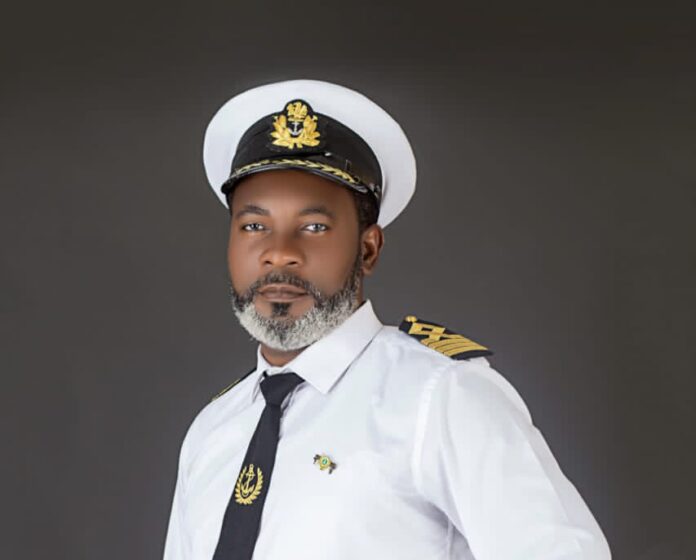
March 26, (THEWILL) – Bayelsa State is spearheading Nigeria’s maritime transformation with bold initiatives aimed at harnessing its vast marine resources. As the first state to establish a dedicated Ministry of Marine and Blue Economy, Bayelsa is setting the pace for structured development in the sector, according to maritime expert, Capt. Paul Mandela Ogoun.
Speaking on the state’s ambitious approach, Ogoun highlighted Bayelsa’s groundbreaking Marine and Blue Economy policy as a landmark achievement. The comprehensive 40-page document, he noted, was developed through extensive consultation with over 20 experts from academia, maritime law, and key federal agencies.
According to him, “This policy is a bold statement of intent. While the Federal Ministry of Marine and Blue Economy is yet to finalise such a framework, Bayelsa has taken the lead in defining its maritime future.”

The document envisions Bayelsa as Nigeria’s leading maritime state while balancing its initiatives with federal maritime regulations.
Capt. Ogoun revealed that Bayelsa plans to train at least 100 seafarers, 100 welders, and 100 divers annually over the next decade.
“These training programmes will not only cover basic maritime skills but will also include specialised courses in autonomous ships and marine renewable energy”, he stated.
He added that partnerships with renowned maritime training institutions—both local and international—will ensure that Bayelsa produces globally competitive maritime professionals.
“The goal is to equip our people with the skills required in modern maritime operations, reducing dependence on foreign expertise.”
He averred that the Fish Cities Project is a game-changer for local fishermen.
“Governor Douye Diri’s Fish Cities Project is another transformative initiative aimed at transitioning the state’s fishing industry from subsistence-level operations to commercial ventures.
“The Fish Cities project is designed to provide modern processing facilities, cold storage units, and direct market access for fishermen”, Ogoun explained.
However, he noted that the initiative would require substantial infrastructural investment, including stable power supply, water treatment facilities, and environmental safeguards.
“Successful implementation will depend on community involvement and training. Traditional fishermen will need to be equipped with new competencies to integrate seamlessly into commercial fishing operations.”
Bayelsa’s maritime expansion comes with security concerns, and the state is addressing these through the establishment of a Marine Safety Task Force.
“This task force is designed to tackle sea robbery, waterway offences, and environmental protection”, Ogoun noted.
Integration with modern surveillance technology and collaboration with the Nigerian Navy and Marine Police will enhance security across Bayelsa’s waterways.
“Infrastructure development and manpower training for a local coast guard will be critical. We also need quick-response centres along key waterways and vessel-tracking technology to monitor maritime activities effectively.”
Another pillar of Bayelsa’s maritime blueprint is the development of the Agge Deep Seaport, which Ogoun described as a potential economic game-changer.
“The port’s success will hinge on complementary infrastructure, including road and railway links to industrial hubs”, he explained.
He added that high private-sector investment through public-private partnerships would be essential to fund the project’s execution.
“Stakeholder engagement will also be crucial to address environmental concerns and ensure that local communities benefit from this project”, he emphasised.
He also advocated for balancing of Economic Growth with Environmental Sustainability.
While Bayelsa’s maritime expansion is promising. Ogoun emphasised the need for environmental conservation.
“The state’s rich marine ecosystem, including its vast mangrove forests, must be protected”, he said.
Environmental sustainability measures, including waste management policies and renewable energy integration, will be incorporated into maritime operations.
“Proper marine spatial planning will ensure that economic development does not come at the cost of ecological destruction”, he added.
Capt. Ogoun also believes that Bayelsa’s maritime initiatives serve as a test case for Nigeria’s blue economy potential.
“The establishment of the Marine and Blue Economy Ministry is a major step forward. However, long-term success will depend on infrastructure development, federal-state collaboration, and community engagement.”
He called for evidence-based decision-making and pragmatic policy implementation to ensure that Bayelsa’s maritime ambitions translate into sustainable economic growth.
“Bayelsa’s journey will shape Nigeria’s national discourse on marine economy development. If properly managed, this could become a model for other coastal states looking to harness their maritime potential”, Ogoun concluded.

Amos Okioma is a Correspondent at THEWILL