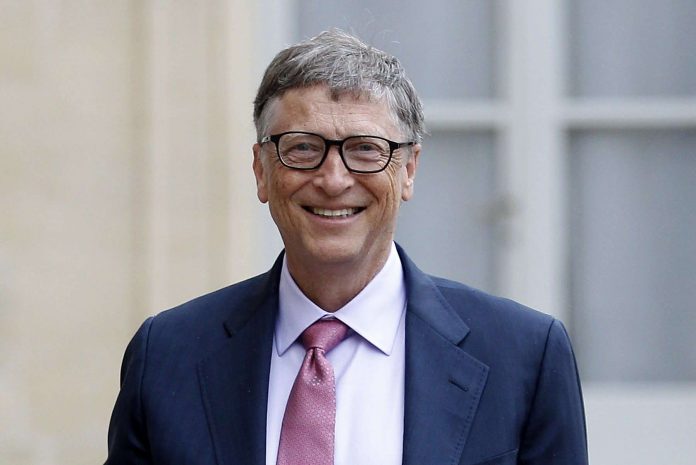
June 05, (THEWILL) – Billionaire philanthropist and Microsoft co-founder, Bill Gates, has said Nigeria’s current health budget is grossly inadequate to tackle its growing public health crises.
Gates, who is currently on a working visit to Africa, with stops in Ethiopia and Nigeria, spoke on Wednesday during a media roundtable in Lagos.
He highlighted that Nigeria’s investment in healthcare, both in percentage of GDP and actual figures, remains too small to address critical challenges such as maternal mortality, child malnutrition, and poor access to primary care.

“When you look at the numbers, the amount Nigeria spends on healthcare is very, very small. You can’t address systemic crises with insufficient funding”, he said.
Gates emphasised that the country’s healthcare system cannot depend on external donors to fill funding gaps. He warned that relying on foreign aid is unsustainable, especially amid shifting global economic trends and geopolitical uncertainty, which are already straining global health financing.
“We can assist as partners, but the foundation of a functioning health system must be built and maintained by the government”, he said.
The Bill & Melinda Gates Foundation, which has worked in Nigeria for over a decade, continues to support initiatives targeting maternal health, nutrition, and vaccine access. Gates highlighted innovations such as affordable bleeding control kits, micronutrient supplements, and low-cost ultrasound devices designed to identify high-risk pregnancies.
He also mentioned a recent clinical trial on anaemia and postpartum haemorrhage treatments that showed such strong results, the trial was concluded early. These innovations, he said, have the potential to drastically reduce maternal deaths when scaled across the country.
On vaccines, Gates reiterated the foundation’s efforts to drive down prices, noting that the cost of rotavirus and pneumococcal vaccines has dropped from $60 to just $2 due to their advocacy.
The foundation is also backing new technologies like needle-free vaccine patches to simplify delivery and improve immunisation rates, especially in remote areas.
While Gates acknowledged a 40% year-on-year drop in polio cases in Nigeria, he cautioned that immunisation rates in the northern regions remain dangerously low.
“We’re not at 90% coverage yet”, he said, urging state governors to ramp up commitment to vaccination efforts.
Felix Ifijeh is a journalist with years of professional reporting experience. Known for his keen news sense, compelling storytelling and commitment to accurate, impactful reporting, he has built a reputation for turning leads into clear, engaging, and well-structured reports that resonate with readers. His work reflects deep newsroom experience and a commitment to accurate, impactful journalism.