July 07, (THEWILL) — President Bola Tinubu has called for a comprehensive reevaluation of the global governance architecture, as well as financial and healthcare systems, to ensure greater equity and inclusion for low-income and emerging economies—particularly in Africa.
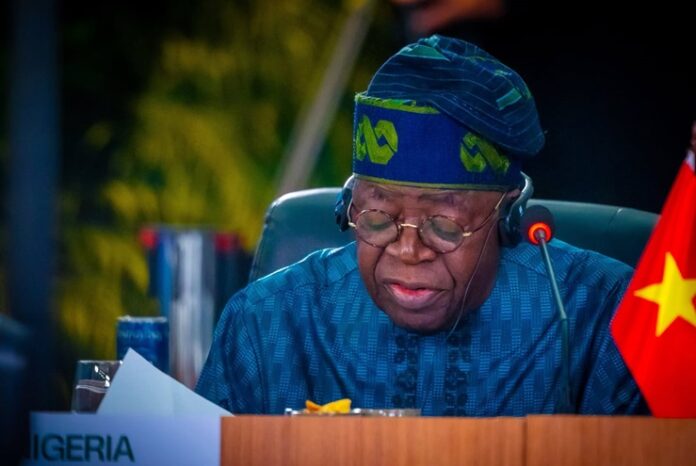
Speaking on Saturday at the 17th meeting of the BRICS bloc in Rio de Janeiro, Brazil, President Tinubu urged world leaders to pay greater attention to issues such as environmental degradation, climate change, and healthcare inequalities, which he said continue to hamper growth and development in the Global South.
Nigeria became the ninth partner country of the BRICS grouping in January 2025, joining Belarus, Bolivia, Cuba, Kazakhstan, Malaysia, Thailand, Uganda, and Uzbekistan.

The 16th BRICS Summit in Kazan, Russia, in October 2024 created the “partner-country” category.
Reaffirming Nigeria’s support for BRICS’ call for collective, fair, and inclusive global development, President Tinubu—who was invited to the summit by Brazil’s President Luiz Inácio Lula da Silva—said it was time to revisit the fundamentals of the existing global order.
“Nigeria aligns with the positions taken here today. It is time to reconsider the global governance structure and pursue financial restructuring that reflects equity,” Tinubu said.
He stressed the need for a new global path anchored in justice, sustainable technology transfer, and accessible financing so that emerging economies can fully participate in global initiatives.
“Africa is forging its own solutions through the African Carbon Market Initiative and the Great Green Wall. We believe COP-30 will provide an opportunity to strengthen our resolve toward a healthier planet,” Tinubu added.
Highlighting Nigeria’s commitment to South-South cooperation, the President said developing countries must not remain passive in global conversations about debt relief, climate action, and health equity.
“We must be the architects of a future that addresses the needs of our youth, who make up 70% of Nigeria’s population,” he said.
He added, “Guided by our Nigeria Vision 2050 and our nationally determined contributions, we are taking bold steps to accelerate renewable energy adoption, promote nature-based solutions, and achieve universal health coverage.”
He noted that the BRICS alliance should go beyond being a bloc of emerging economies to becoming a platform for innovative global solutions rooted in solidarity, self-reliance, sustainability, and shared prosperity.
“As we approach COP-30, BRICS must emerge not only as a champion for emerging economies but also as a beacon for sustainable global transformation,” Tinubu said.
He also underscored the disproportionate impact of climate change on Africa, saying, “Africa has contributed the least to global emissions, yet we bear the brunt of its consequences.”
President Tinubu was accompanied to the summit by Minister of Foreign Affairs, Yusuf Tuggar, and Minister of Finance and Coordinating Minister of the Economy, Wale Edun.
Nigeria’s formal admission as a BRICS partner country was announced on January 17, 2025, during Brazil’s rotating presidency of the bloc.
As Africa’s largest economy and sixth-most populous nation globally, Nigeria shares strategic objectives with BRICS, including the advancement of South-South cooperation and the reform of global governance institutions.
Felix Ifijeh is a journalist with years of professional reporting experience. Known for his keen news sense, compelling storytelling and commitment to accurate, impactful reporting, he has built a reputation for turning leads into clear, engaging, and well-structured reports that resonate with readers. His work reflects deep newsroom experience and a commitment to accurate, impactful journalism.