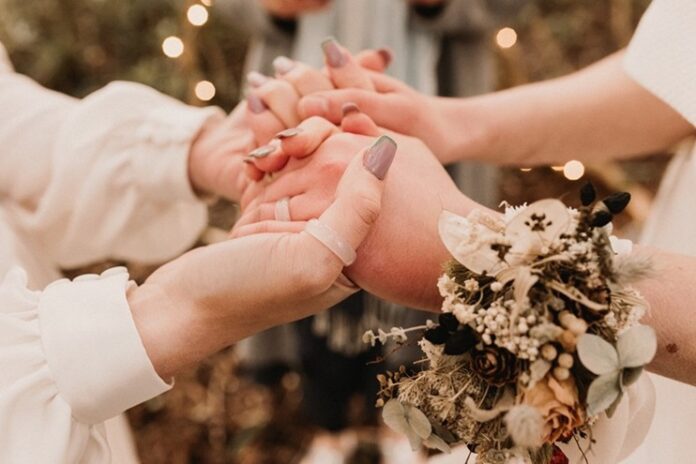
April 17, (THEWILL) — The Church in Wales has sparked renewed division within the global Anglican Communion after approving a landmark bill making permanent the blessing of same-sex marriages and civil partnerships, formally embedding the practice into its authorised liturgy following a decisive church-wide vote.
The governing body approved the measure after a temporary arrangement introduced in 2021, which allowed same-sex couples to receive blessings in church ceremonies. That trial provision, initially scheduled to expire at the end of 2026, has now been made permanent following overwhelming support across all three Orders of the Church.
A total of 143 members took part in the vote, which required a two-thirds majority from each of the Church’s governing Orders—bishops, clergy, and lay representatives. All three groups met the threshold comfortably.

Lay members voted 48 in favour, eight against, with two abstentions, while clergy recorded 32 votes in favour, seven against, and five abstentions. The bishops subsequently confirmed the motion without objection, finalising its passage.
The decision means the blessing service introduced in 2021 will now be permanently incorporated into the Book of Common Prayer, the Church in Wales’ official liturgical text governing worship and sacramental practice.
However, the Church confirmed that individual clergy will retain the right to opt out of conducting blessings for same-sex couples under a conscience provision, allowing ministers discretion in implementation.
Ahead of the vote, the Church in Wales said the proposed change “follows a period of reflection and listening across the Church”, indicating that the decision was shaped by years of internal consultation and pastoral engagement.
During the debate, senior clergy presented sharply contrasting views on theology, pastoral care, and church unity.
The Bishop of St Asaph, Gregory Cameron, speaking in support, said he had witnessed “the damage that rejection of our LGBT brothers and sisters in Christ does”, citing a case of a young man who had not spoken to his parents for four years due to fear of their reaction to his sexuality.
“Please can we not be a church that inflicts such pain, and that I believe is the fundamental choice at the base of this bill”, he said.
The Bishop of Llandaff, Mary Stallard, also backed the measure, stating that someone close to her had “been in a dark place because of attitudes towards their sexuality”, where a “culture of shame [within the Church] told them it was not OK to be gay.”
She added that the Church in Wales had done “something good and beautiful” when it first introduced the blessing on a temporary basis in 2021.
Supporters also included Rev Rhun ap Robert of the Bangor diocese, who argued that Jesus “never spoke against same-sex relationships”, adding that what matters most is “the quality of a relationship”.
Opposition voices warned that the decision could deepen theological tensions and widen divisions within the Anglican Communion.
Andy Grimwood, a deacon in the St Asaph diocese, said colleagues in other provinces who “uphold the traditional position on sexuality” had been “pained to see what the Church in Wales is proposing.”
“My fear is today doesn’t bring unity, but it brings division,” he said, warning that fractures could extend “within the Church in Wales, within the Anglican community.”
Rev Melanie Prince of the diocese of St Davids cited concerns raised by members of the Anglican Church in Nigeria, quoting: “Do not water down the gospel we are dying for.”
A lay representative from Bangor diocese, Julia Schulz, said the blessing “looks like a marriage service in all but name” and pointed to biblical teaching as the “blueprint for what a Christian marriage is.”
The approval marks a formal divergence from the Church of England, which does not permit equivalent blessings for same-sex couples, and is widely viewed as a significant doctrinal shift within Anglican practice.
The development also comes amid broader leadership changes within the Church. In July 2025, Cherry Vann became the first female and first openly LGBT+ Archbishop of Wales, saying she wanted the Church to reflect the “diversity around the world and in our communities.” Her election drew criticism from conservative Anglican groups, who described it as “another painful nail in the coffin of Anglican orthodoxy.”

Felix Ifijeh is a journalist with years of professional reporting experience. Known for his keen news sense, compelling storytelling and commitment to accurate, impactful reporting, he has built a reputation for turning leads into clear, engaging, and well-structured reports that resonate with readers. His work reflects deep newsroom experience and a commitment to accurate, impactful journalism.