
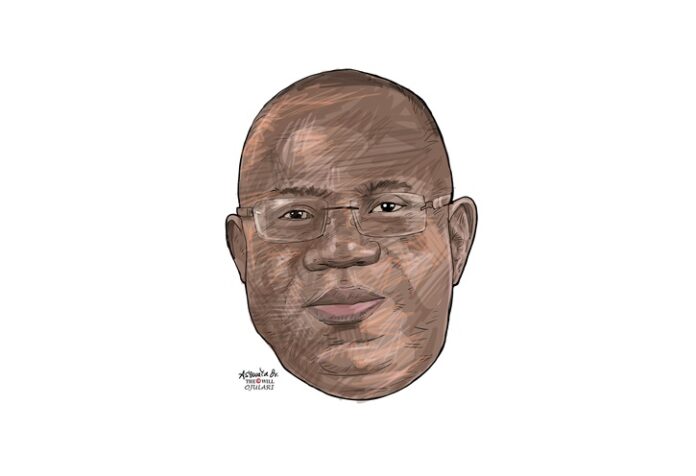
May 17, (THEWILL) — The recent declaration by the Nigerian National Petroleum Company Limited (NNPCL) regarding its new agreement with Chinese companies to restore two of the country’s long-neglected refineries has raised concerns among stakeholders and the general public.
The NNPCL had disclosed on May 4, 2026, that it signed the MoU with two Chinese firms, Sanjiang Chemical Company Limited, and Xinganchen (Fuzhou) Industrial Park Operation and Management Co., Ltd., for the restart, completion, and expansion of the Port Harcourt and Warri refineries through a potential technical equity partnership.
The agreement, signed in Jiaxing City, China, by NNPC Group Chief Executive Officer, Bayo Ojulari, alongside executives of the Chinese firms, is expected to cover the completion of outstanding work, operation and maintenance of the facilities, refinery upgrades, and expansion of petrochemical and gas-based industrial hubs.

The June 2026 target
This announcement comes ahead of the June 2026 deadline established by NNPCL for the acceptance of declarations of interest from qualified companies seeking a technical partnership. Engr Ojulari revealed in Abuja in November 2025 that NNPCL was actively seeking ‘partners’ to rejuvenate its stagnant refineries, which have been inactive for nearly two decades. This initiative follows the substantial investments made in repairing the facilities without yielding any results, despite expert recommendations indicating that the plants have surpassed their operational lifespan.
Consequently, NNPCL has set a new target of June 2026 to complete the selection of technical partners for the nation’s state-owned refineries, after years of unsuccessful rehabilitation attempts and a significant decline in refining expertise.
Ojulari, who made the announcement during a question-and-answer session at a press briefing held in Abuja on Monday, November 24, 2025 where the company presented its financial statements, made the startling revelation.
He stated that Nigeria’s refineries, namely the Port Harcourt, Warri, and Kaduna plants, despite ongoing rehabilitation efforts, continue to operate “well below international standards,” rendering their products commercially uncompetitive, particularly in comparison to the privately owned Dangote Refinery.
NECA reacts
The company’s latest move to fix the refineries ahead of the June 2026, deadline has sparked concerns.
Among the reactions is that of the Nigeria Employers’ Consultative Association which faulted the recent agreement between the NNPCL and the Chinese firms to revamp and expand the Port Harcourt and Warri refineries, describing it as another opaque arrangement amid unresolved questions over past refinery spending.
In a statement issued on Sunday, May 10, 20226, NECA Director-General, Adewale Oyerinde, said it would be unpatriotic to support another refinery rehabilitation deal without full disclosure on the previous billions of dollars spent on turnaround maintenance projects.
Oyerinde said, “While we note that the nation desperately needs functional refineries, we cannot ignore the decade-long pattern of billion-dollar rehabilitation contracts that have delivered zero sustained refining output. It will be unpatriotic to endorse another opaque deal while questions on past spending remain unanswered.”
He stated that Nigeria could not afford another round of wasteful refinery spending after expending huge sums with little to show for it.
“It is on record and apt to say that the nation cannot afford another trail of wasteful spending. In the last few years, $25bn had been spent with zero value.
“Between 2010 and 2023, Nigeria spent over N11tn – approximately $25bn – on refinery rehabilitation projects, maintenance, and turnaround programmes, yet the state-owned refineries remain significantly unreliable and non-functional,” Oyerinde said.
The NECA boss added that the $1.5bn rehabilitation of the Port Harcourt refinery, approved in 2021, had failed to deliver sustainable refining output despite repeated assurances.
“The gamble of over $1.5bn on the Port Harcourt refinery in March 2021 is still fresh in the minds of Nigerians. Despite purported claims of 90 per cent readiness by 2026, the facility has not been recorded to produce sufficient barrels of refined product on a sustainable basis,” he stated.
NECA’s DG noted that the refinery had undergone several rehabilitation cycles since the 1990s without achieving lasting operational stability. Oyerinde demanded greater transparency from NNPC on the new agreement and asked the company to disclose details of previous refinery audits and spending.
“While the intention might be right, it is, however, important for the NNPC to provide Nigerians with sufficient informational explanation on the status of past spending and audits carried out on the refineries.
“What are the details of the ‘technical equity partnerships’ of the MOU? With past efforts at TAM riddled with delays, cost overruns, and repeated shutdowns, what are the guarantees and safety nets to ensure the past does not repeat itself at the expense of Nigeria and Nigerians?” he queried.
He also questioned how the latest arrangement would guarantee local participation, technology transfer, and procurement opportunities for Nigerians beyond public announcements. NECA’s DG said Nigerian businesses had borne the burden of decades of energy insecurity through high production costs, fuel import dependence, and job losses.
“Nigerian businesses have paid the price for energy insecurity for over 30 years – high production costs, forex spent on fuel imports, and jobs lost. It will be unpatriotic to clap for another MOU while about $25bn from past revamps produced almost zero results. NNPC must earn public trust by operating more transparently in the face of public scrutiny,” he added.
Oyerinde reiterated NECA’s call for the privatisation or concessioning of the nation’s refineries instead of continuous turnaround maintenance projects.
“We, once again, advocate for the privatisation or concession of the refineries over endless TAM. We urge the urgent fixing of the governance model before fixing the pipes. Nigeria cannot industrialise on imported fuel. But it also cannot develop by burning approximately $25bn on refineries that don’t work,” he stated.
Insider voice
A top industry expert who pleaded for anonymity, citing his close relationship with NNPCL explained that the deal with the Chinese firms raises concerns about further wasting of public funds on moribund assets without accountability for the billions previously spent.
He emphasised that the opaque nature of the MoU, signed in China without adequate domestic consultation, fuels skepticism about the true intentions of the partnership. “By moving toward a ‘technical equity partnership’, the deal could see Chinese firms taking significant operational control and ownership stake in crucial national energy infrastructure,” he said.
More worrying is that the chosen Chinese firms are not known to be specialised oil refinery manufacturers, but rather petrochemical operators, raising doubts about their technical competence to revive aging refineries. The focus remains on repairing old equipment, while the core problems—corruption, poor maintenance culture, and bureaucratic mismanagement—remain, likely leading to the same failed results.
According to the source, the deal indicates a persistent lack of local capacity to maintain the nation’s critical infrastructure, despite decades of ownership. He maintained that “Given the history of delays, this new partnership may fail to bring the refineries to full capacity within the projected timelines, delaying Nigeria’s dream of self-sufficiency.
“The deal, if it lacks oversight from the National Assembly or anticorruption bodies (such as the EFCC), could result in another round of, misappropriation, similar to past failed turn-around maintenance (TAM) projects.”
The NASS’ dimension
THEWILL reports that on Thursday, October 9, 2025, the House of Representatives resolved to investigate the over $18 billion reportedly spent on the rehabilitation of Nigeria’s state-owned refineries in Port Harcourt, Warri, and Kaduna over the past two decades without achieving notable results.
The lawmaker underscored that the recent admission by the Group Chief Executive Officer of NNPCL, Engr. Bayo Ojulari, regarding the refineries’ inactivity despite significant investments, raises additional concerns about fiscal responsibility and transparency in the management of national assets.
The Senate had on October 24, 2023, constituted an ad-hoc committee to investigate all contracts estimated at over N11.35 trillion awarded for the rehabilitation of the four moribund refineries in the country.
Both exercises yielded no outcome.

Sam Diala is a Bloomberg Certified Financial Journalist with over a decade of experience in reporting Business and Economy. He is Business Editor at THEWILL Newspaper, and believes that work, not wishes, creates wealth.
