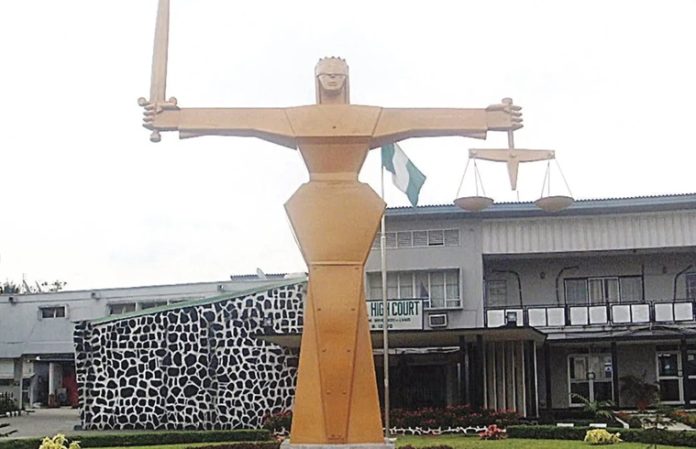
April 14, (THEWILL) — The leadership crisis within the African Democratic Congress (ADC) deepened on Tuesday, as the Federal High Court in Abuja issued fresh interim orders maintaining the status quo in the party’s disputed leadership structure, while parallel proceedings before another division of the court continued to highlight widening legal and political divisions over control of the party’s organs.
At the centre of the first proceeding, Justice Joyce Abdulmalik of the Federal High Court directed all parties to refrain from taking any steps capable of altering the existing power arrangement within the ADC, pending the determination of a substantive suit challenging the legality of the party’s caretaker or interim national leadership structure.
The order followed an application for adjournment by counsel to one of the defendants, who sought additional time to respond to processes filed by the plaintiffs. The court, while granting procedural directions, warned that any action capable of undermining its jurisdiction or rendering the matter nugatory would not be tolerated.

The suit, instituted by Norman Obinna and six others on behalf of ADC state chairmen and executive committees, challenges what they describe as the unconstitutional replacement of duly elected state structures with caretaker or interim national working committees. The plaintiffs are asking the court to declare that existing state executive committees remain valid under the party’s constitution until properly conducted congresses are held, insisting that any attempt to dissolve or bypass them violates both internal party rules and constitutional provisions on democratic governance.
Joined as defendants in the suit are the African Democratic Congress, Senator David Mark, Senator Patricia Akwashiki, Malam Bolaji Abdullahi, Ogbeni Rauf Aregbesola, Professor Oserheimen Osunbor, and the Independent National Electoral Commission (INEC).
At the core of the dispute is whether any interim or caretaker national leadership possesses the constitutional authority to dissolve, suspend, or replace state executive committees and conduct congresses without their participation. The plaintiffs argue that such actions amount to “illegal usurpation of party structures” and are seeking an order restraining INEC from recognising any congresses conducted under the disputed leadership arrangement.
Justice Abdulmalik further directed that all pending applications be consolidated and heard alongside the substantive matter, while reiterating that all parties must maintain the existing status quo throughout the pendency of the case.
In a related but separate proceeding before Justice Emeka Nwite of the same court, arguments were heard on an application seeking an indefinite adjournment of another ADC leadership dispute, further underscoring the extent of internal fragmentation and ongoing appellate litigation within the party.
The application was filed by counsel to Nafiu-Bala Gombe, a former National Deputy Chairman of the ADC, who urged the court to suspend proceedings sine die pending the determination of appeals before the Supreme Court.
Counsel Lukman Fagbemi, SAN, told the court that the matter had already progressed to the Supreme Court following an appeal filed by Senator David Mark, the embattled National Chairman of the party. He noted that although the Court of Appeal dismissed an interlocutory appeal on March 12, it ordered an accelerated hearing at the trial court and preservation of the subject matter.
Fagbemi argued that since the Supreme Court is now seized of the matter, continuing proceedings at the trial court could result in conflicting judicial outcomes. He further informed the court that the record of appeal had been transmitted to the apex court, which has scheduled a hearing for April 22, with briefs already being exchanged.
However, the request for indefinite adjournment was strongly opposed by several senior counsel representing various factions in the dispute, including counsel to the ADC, Shaibu Aruwa, SAN; counsel to Senator David Mark, Sulaiman Usman, SAN; counsel to Ogbeni Rauf Aregbesola, Mohammed Sheriff; and A.O. Olawuyi, representing Chief Ralph Nwosu.
They argued that there was no legal basis to halt proceedings, noting that no stay of execution exists and that the Court of Appeal’s order for accelerated hearing remains binding. They also contended that the Supreme Court appeal does not cover the entirety of the subject matter before the trial court.
Aruwa further argued that the matter, being political and time-sensitive, should be treated as “sui generis” under the Electoral Act to ensure expeditious determination, especially given that the party has already released timelines for internal primaries ahead of the 2027 general elections.
Counsel to the Independent National Electoral Commission (INEC), Hassan Aminu, adopted a neutral stance, stating that the commission would abide by whatever decision the court ultimately reaches.
In a separate submission, Sulaiman Usman, SAN, representing Senator David Mark, accused INEC of misinterpreting a Court of Appeal ruling by altering recognition of party leadership positions. He maintained that only the courts have the authority to determine or alter leadership status and urged judicial clarification to prevent administrative overreach.
After listening to all submissions, Justice Emeka Nwite adjourned the matter for ruling.
Felix Ifijeh is a journalist with years of professional reporting experience. Known for his keen news sense, compelling storytelling and commitment to accurate, impactful reporting, he has built a reputation for turning leads into clear, engaging, and well-structured reports that resonate with readers. His work reflects deep newsroom experience and a commitment to accurate, impactful journalism.