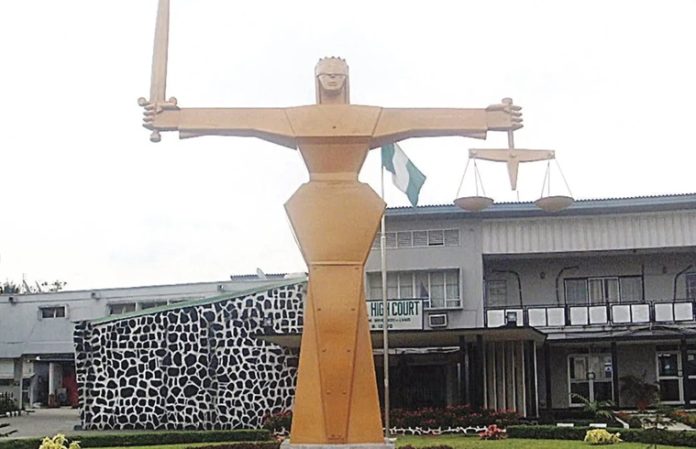
May 26 (THEWILL) — The Federal High Court in Abuja, on Tuesday, affirmed the powers of the Independent National Electoral Commission (INEC) to issue election timetables and alter them where necessary, but ruled that such powers must strictly comply with the provisions of the Electoral Act, 2026.
Justice James Omotosho delivered the landmark judgement in a suit filed by the Social Democratic Party (SDP) against the electoral body in suit number FHC/ABJ/CS/720/2026.
The court held that INEC acted within its constitutional and statutory mandate in releasing the 2027 election timetable and schedule of activities, including timelines for political parties to conduct primaries and submit membership registers.

However, the judge also ruled that some portions of the timetable violated the Electoral Act by shortening the statutory timelines granted political parties for submission of candidate withdrawals and nomination forms.
The SDP had approached the court on April 9, challenging INEC’s March 27, 2026 timetable and schedule of activities for the 2027 general elections.
Among the questions raised by the opposition party was whether INEC’s powers under Sections 82 and 84(1) of the Electoral Act extended beyond monitoring and observing party primaries to prescribing the period within which parties must conduct their primaries.
The party sought several reliefs, including a perpetual injunction restraining INEC from enforcing timelines it claimed were inconsistent with the Electoral Act, 2026.
The SDP further asked the court to declare that INEC could not lawfully abridge the 120-day statutory period provided under Section 29(1) of the Electoral Act for submission of candidates’ names by political parties.
In response, INEC argued that its responsibilities under the Constitution and Electoral Act were not limited to receiving notices and monitoring party primaries, but also included organising, supervising and regulating elections through the issuance of election timetables.
The commission maintained that the timetable did not interfere with the internal affairs of political parties and insisted that the SDP’s suit was premature and academic.
Delivering judgement, Justice Omotosho held that election timetables are a critical component of the electoral process and not limited to the dates fixed for voting alone. He said the timetable must necessarily include preparatory activities such as submission of party membership registers, conduct of primaries and nomination processes.
“The issuance of a timetable is to give effect to the Electoral Act, especially with all its various timelines. The election timetable is not only the date for voting, but also includes preparatory steps, which are conditional on a valid election, and nominations must be included in the election timetable.
“Election timetable without date for submission of parties’ membership register, timeframe for primaries, etc., is inchoate. Without this timetable, there would be chaos in our electoral system”, the judge said.
Justice Omotosho further ruled that INEC derives the powers to issue and alter election timetables from both the Electoral Act and the 1999 Constitution (as amended), particularly Section 285(14).
The court declared that the suit was not statute-barred, dismissing INEC’s objection that the action was filed outside the prescribed period.
The judge, however, faulted aspects of INEC’s revised timetable dealing with candidate substitution and submission deadlines. He noted that Section 31 of the Electoral Act allows political parties to communicate the withdrawal of candidates to INEC not later than 90 days before an election.
According to the court, the dates fixed by INEC for submission of withdrawals and sworn affidavits effectively reduced the period guaranteed under the law.
“The defendant therefore acted ultra vires its powers by reducing the time allowed by political parties to convey withdrawals and sworn affidavit to the defendant contrary to the 90 days stipulated by the Electoral Act, 2026”, the judge ruled.
Justice Omotosho also declared void the deadlines of August 29, 2026 and September 16, 2026, fixed by INEC for submission of nomination forms for presidential, National Assembly, governorship and state assembly candidates, holding that they were inconsistent with Section 29(1) of the Electoral Act.
The court consequently ordered INEC to amend the 2027 Election Timetable and Schedule of Activities to align fully with Sections 29(1) and 31 of the Electoral Act, 2026.
While granting part of the SDP’s claims, the judge reaffirmed that INEC possesses the authority to request membership registers from political parties and fix timelines for the conduct of party primaries. He stressed, however, that the commission must exercise those powers within the limits prescribed by the Electoral Act.
“This honourable court hereby declares that the defendant is empowered by law to issue a timetable for elections and to alter the same as it deems fit. But the timetable must comply strictly with the timeframes in the Electoral Act, 2026”, Justice Omotosho held.

Felix Ifijeh is a journalist with years of professional reporting experience. Known for his keen news sense, compelling storytelling and commitment to accurate, impactful reporting, he has built a reputation for turning leads into clear, engaging, and well-structured reports that resonate with readers. His work reflects deep newsroom experience and a commitment to accurate, impactful journalism.