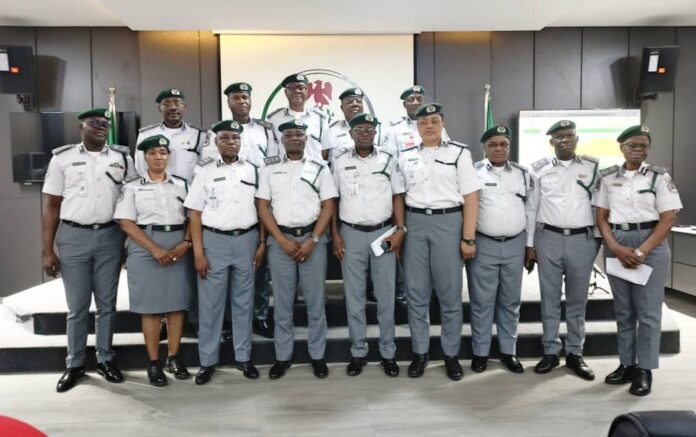
March 12, (THEWILL) – The Nigeria Customs Service is set to roll out an Automated Transire Process designed to curb cargo diversion and enhance trade efficiency across the nation’s ports.
Speaking at a sensitisation session at the Apapa Area Command, the Comptroller-General of Customs, Adewale Adeniyi, described the initiative as a transformative step for the service.
“This is not just a technological upgrade; it marks a strategic shift aimed at positioning the Nigeria Customs Service and the country at the forefront of global trade efficiency, security, and transparency,” he said.

Represented by the Zonal Coordinator, Zone A, Assistant Comptroller-General of Customs Charles Orbih, the CGC explained that the ATP was developed in-house by NCS ICT officers.
He noted that the system would significantly reduce customs clearance times, enhance tracking capabilities, and improve accountability within the logistics chain.
ACG Orbih highlighted that real-time tracking and data transparency would mitigate risks associated with cargo diversion while boosting stakeholders’ confidence.
He added that faster access to goods at ports and terminals would benefit importers, exporters, and other key players in the sector.
The initiative, according to Orbih, was a product of last year’s CGC conference, where the ICT/Modernisation Department was tasked with automating the transfer process by the first quarter of 2025.
With the milestone now achieved, the NCS is gearing up for implementation.
Deputy Comptroller-General in charge of ICT/Modernisation, DCG Kikelomo Adeola, represented by ACG Zanna Gaji, outlined the benefits of the new system.
“This automation will enhance efficiency, improve revenue collection, and minimise opportunities for corruption by ensuring a fair and predictable process,” he said.
He added that the system aligns with international best practices and would strengthen Nigeria’s position in global trade.
ACG Gaji stated that the rollout would be phased, beginning with a user acceptance test and a pilot phase at one of the bonded terminals.
“We cannot introduce the system all at once. Stakeholder engagement, hands-on testing, and refinements based on feedback are crucial for its successful implementation,” he noted.
During a feedback session, Area Controllers within the Apapa axis stressed the need for the system to integrate all relevant units and incorporate a watchlist feature to enhance monitoring.
Stakeholders also sought clarification on the official launch date and called for adjustments to align the system with operational realities.
In response, Assistant Comptroller of Customs Usman Abba, the ATP development team leader, assured attendees that the system would be fully integrated across all units, departments, and commands before full deployment.

Felix Ifijeh is a journalist with years of professional reporting experience. Known for his keen news sense, compelling storytelling and commitment to accurate, impactful reporting, he has built a reputation for turning leads into clear, engaging, and well-structured reports that resonate with readers. His work reflects deep newsroom experience and a commitment to accurate, impactful journalism.