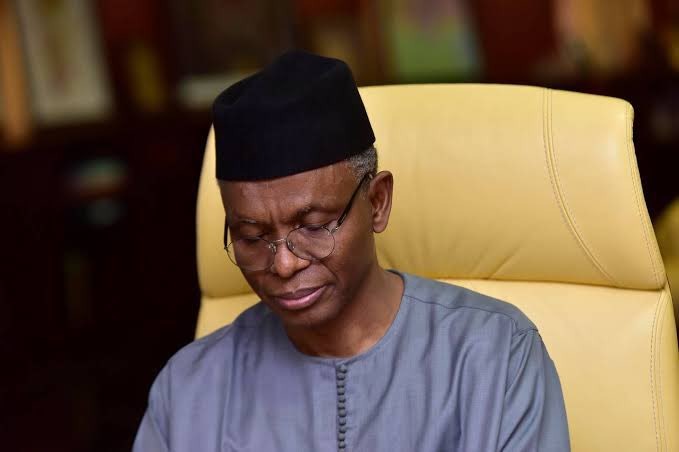
THEWILL earlier reported that the DSS had filed a three-count charge against El-Rufai, accusing him of unlawfully intercepting the telephone communications of the NSA, in a move said to threaten national security. The charges alleged that the former governor collaborated with other individuals currently at large to intercept the NSA’s calls, in violation of the Cybercrimes (Prohibition, Prevention, etc.) (Amendment) Act, 2024, and the Nigerian Communications Act, 2003.
He is accused in one count of admitting involvement in the alleged interception during a February 3 appearance on Prime Time, a programme aired on Arise Television. This alleged act violates Section 12(1) of the Cybercrimes Act. In a second count, the prosecution alleged that El-Rufai, described as a leading figure among opposition politicians critical of President Bola Tinubu’s administration, had knowledge of the unlawful interception but failed to report it to the relevant authorities. The third count accused him of using technical equipment to intercept the NSA’s calls in a manner that endangered public safety and created “reasonable apprehension” among Nigerians, contrary to Section 131(2) of the Nigerian Communications Act, 2003.
El-Rufai is currently in the custody of the Independent Corrupt Practices and Other Related Offences Commission (ICPC), after being taken into custody on February 18, following two nights with the Economic and Financial Crimes Commission (EFCC).

In an application filed in response to Charge No. FHC/ABJ/CR/99/2026, El-Rufai had urged the court to strike out the suit instituted against him, arguing that the allegations fail to disclose any offence recognised under Nigerian law.
When the matter was called on Wednesday, prosecution’s counsel, Oluwole Aladeloye (SAN), informed the court that the case was scheduled for arraignment. However, proceedings could not continue in the absence of the defendant, as the former governor was not presented in court by the security agency.
Aladeloye explained that the defendant could not be produced because he was currently in the custody of the ICPC. He subsequently applied for an adjournment to allow the DSS liaise with the anti-corruption agency to ensure El-Rufai’s appearance on the next adjourned date.
Counsel to the defendant, Oluwole Iyamu (SAN), expressed dissatisfaction with the situation, arguing that his client’s absence was unjustified.
He maintained that if the DSS genuinely intended to proceed with the arraignment, securing El-Rufai’s presence would not have been difficult since he was in the custody of a sister government agency. Iyamu cited provisions of the Administration of Criminal Justice Act (ACJA) 2015 and urged the court either to hear his client’s pending bail application or compel the prosecution to produce him the following day.
In her ruling, trial judge, Joyce Abdulmalik, agreed with the prosecution that consideration of bail was premature because the defendant had not yet been formally arraigned before the court.
Justice Abdulmalik emphasised that it remained the responsibility of the prosecution to produce the defendant for arraignment and subsequently adjourned the matter until April 23 for further proceedings.
Felix Ifijeh is a journalist with years of professional reporting experience. Known for his keen news sense, compelling storytelling and commitment to accurate, impactful reporting, he has built a reputation for turning leads into clear, engaging, and well-structured reports that resonate with readers. His work reflects deep newsroom experience and a commitment to accurate, impactful journalism.