
-
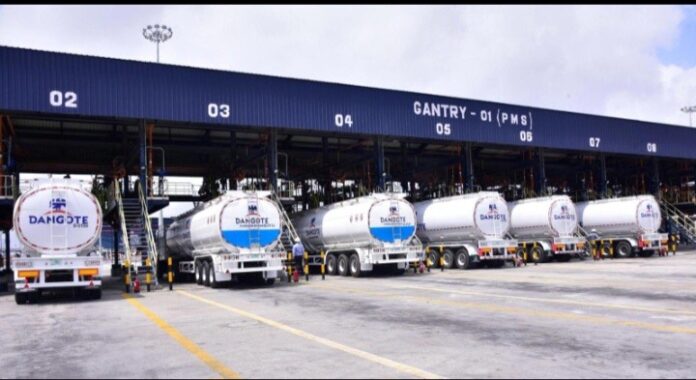
Dangote Refinery reverses course, ending its controversial dollar-denominated petrol sales and restoring naira transactions with a new gantry price of N1,215 per litre.
-
Policy U-turn comes amid rising global oil prices, with Brent crude climbing to $95 per barrel, underscoring the refinery’s effort to cushion marketers and consumers despite mounting international cost pressures.
-
IPMAN applauds the decision, saying marketers are prepared to cut pump prices nationwide once the lifting of petrol at the new ex-depot price begins.
-
Economists say the biggest immediate gain is forex stability, as the return to naira sales is expected to ease pressure on Nigeria’s foreign exchange market, although soaring global crude prices may limit significant reductions in retail fuel prices.
July 23 , (THEWILL) — Dangote Petroleum Refinery has reversed its decision to sell Premium Motor Spirit (PMS), also known as petrol, in U.S. dollars, returning to naira-denominated transactions with a new gantry price of N1,215 per litre.
The development comes barely 10 days after Africa’s largest refinery switched to dollar pricing for petroleum products, a move that sparked widespread criticism from petroleum marketers, industry stakeholders, and economists.
They warned that it would worsen pressure on Nigeria’s already fragile foreign exchange market and ultimately increase fuel costs for consumers.

The refinery said the decision to resume sales in naira offers some relief to marketers and consumers despite the continued rise in international crude oil prices.
Brent crude, the global benchmark, climbed to $95 per barrel on Wednesday, driven by persistent geopolitical tensions in the Middle East and tightening global oil supply.
Shift to Dollar Transactions
The return to naira sales marks a significant policy reversal by Dangote Refinery, which had only recently adopted a dollar-based pricing structure for refined petroleum products.
Under the arrangement introduced about 10 days ago, petrol was sold at an ex-depot price of $0.779 per litre, diesel at $1.087 per litre, and aviation fuel at $0.942 per litre.
The move immediately drew criticism from downstream operators who argued that requiring marketers to source scarce foreign exchange before purchasing products would inevitably increase operational costs, weaken the naira, and push pump prices even higher.
Industry associations, including the Independent Petroleum Marketers Association of Nigeria (IPMAN), appealed to the refinery to reconsider the policy, insisting that domestic petroleum products should be sold in the country’s local currency.
The latest decision is therefore being seen as a major concession by the refinery following sustained pressure from stakeholders.
IPMAN Welcomes Decision, Promises Lower Pump Prices
Reacting to the development, the National President of the Independent Petroleum Marketers Association of Nigeria (IPMAN), Abubakar Maigandi, described the return to naira transactions as a welcome relief for marketers and Nigerian consumers.
“We lamented the effect of the sale in dollars; now we are happy that the Dangote Refinery management has listened to us. It is a welcome development for us marketers and for Nigerians,” Maigandi said.
He expressed optimism that the change would quickly reflect at filling stations across the country once marketers begin lifting products at the revised gantry price.
“We do not take joy in high prices and hardship for Nigerians. Once we load at the new price from Dangote Refinery, then we will also reduce the price per litre,” he said.
The assurance has raised expectations among motorists that retail petrol prices could moderate in the coming days, although analysts caution that broader market realities remain a determining factor.
Forex Relief More Certain Than Price Cuts, Says Economist
Offering a broader economic perspective, the Chief Executive Officer of the Centre for the Promotion of Private Enterprise (CPPE), Muda Yusuf, said the greatest significance of the refinery’s decision lies in its potential to reduce demand for foreign exchange rather than immediately lower fuel prices.
According to Yusuf, allowing marketers to purchase petroleum products in naira would ease pressure on Nigeria’s forex market and support exchange rate stability.
“I can tell you that this reversal will ease the pressure on our forex market; this is the most significant thing about the reversal to naira sale,” Yusuf said.
He, however, warned against assuming that the policy reversal would automatically result in cheaper petrol at filling stations.
“You have to remember that crude oil prices have been on a steady rise daily due to the geopolitical crises in the Middle East; therefore, it doesn’t necessarily translate to pump price reduction,” he added.
Industry Awaits Market Response
The decision comes at a critical period for Nigeria’s downstream petroleum sector, where fuel pricing has increasingly become influenced by global crude oil prices, exchange rate fluctuations, and the country’s deregulated market environment.
With Brent crude trading at about $95 per barrel, analysts say international market conditions continue to exert upward pressure on the cost of refined products despite improvements in domestic supply.
Nonetheless, stakeholders believe Dangote Refinery’s return to naira sales represents an important step towards reducing foreign exchange exposure in the downstream sector and strengthening confidence among petroleum marketers.

Felix Ifijeh is a journalist with years of professional reporting experience. Known for his keen news sense, compelling storytelling and commitment to accurate, impactful reporting, he has built a reputation for turning leads into clear, engaging, and well-structured reports that resonate with readers. His work reflects deep newsroom experience and a commitment to accurate, impactful journalism.
