
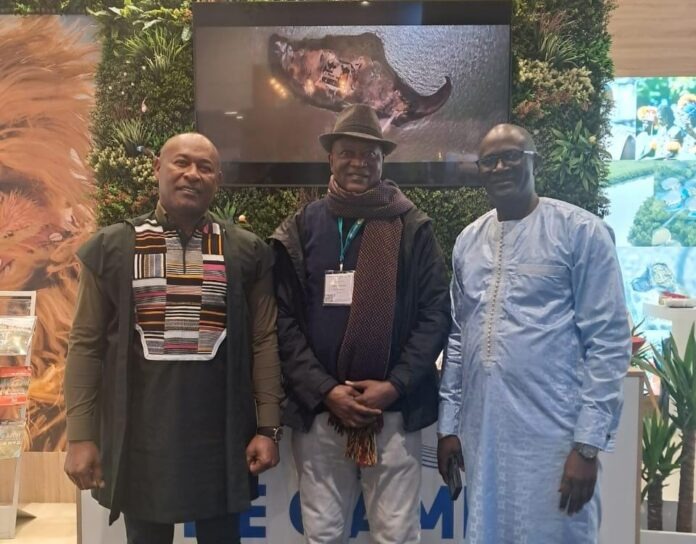
March 06, (THEWILL) — For more than a decade, West Africa’s tourism story has largely unfolded in quiet corners, overshadowed by the global glare cast on Southern and East Africa.
The region’s absence from the world’s premier tourism exhibitions has been noticeable, a gap that many industry observers say cost West Africa visibility, investment, and strategic partnerships.
It is in this context that Akwaaba African Travel Market’s return to ITB Berlin after 12 years is not just an exhibition milestone—it is a reckoning with a decade-long silence.

Akwaaba, the Lagos-based international travel expo, last participated at ITB Berlin in 2012. Its withdrawal coincided with a period of regional challenges: inconsistent tourism policies, underdeveloped infrastructure, limited cross-border collaboration, and scant investment in global marketing campaigns.
During these years, West Africa’s narrative in international tourism circles dwindled, creating a perception of inactivity despite the region’s rich cultural, ecological, and historical offerings.
Meanwhile, destinations in East and Southern Africa, backed by consistent government support and aggressive marketing, increasingly dominated the global travel stage.
The consequences of this absence were tangible. Airlines bypassed regional hubs, international tour operators prioritised other African markets, and investment in hospitality development lagged.
“Visibility is currency in tourism. A decade of absence from global platforms meant fewer deals, fewer partnerships, and fewer tourists discovering West Africa’s offerings”, a Lagos-based industry expert stated.
Akwaaba’s recent resurgence, therefore, represents a deliberate and strategic intervention.
Over the past 12 months, the fair has actively reasserted West Africa’s presence in global travel circuits, participating in Kilifair Travel Expo (Tanzania), Magical Kenya Travel Expo, World Travel Market London, and EMITT in Turkey.
Each engagement was a calculated step in rebuilding relationships, benchmarking against global best practices, and signalling to international buyers that West Africa is ready for renewed engagement.
Its return to ITB Berlin is particularly significant. The Berlin fair, established in 1966, remains a nexus for tourism diplomacy, business deals, and global trend-setting.
By returning to this platform, Akwaaba is effectively bridging a decade-long visibility gap, asserting that Lagos—and West Africa at large—can compete on a global scale.
For regional tourism authorities, this is not just an exhibition opportunity but a chance to correct a narrative of invisibility.
Yet, the comeback is not without its challenges. Analysts note that structural issues remain: visa restrictions, underfunded tourism boards, inconsistent policy implementation, and inadequate infrastructure continue to hinder West Africa’s full competitiveness.
Akwaaba’s presence on the global stage, while symbolic, cannot alone transform the region’s tourism fortunes. It requires concerted policy action, public-private collaboration, and sustained international engagement to turn visibility into tangible growth.
What emerges from Akwaaba’s return is a layered narrative. On one level, it is a story of a regional brand reclaiming its place in a global market.
On another, it reflects the broader tension in African tourism: the struggle to assert regional relevance amid uneven policy frameworks and shifting global priorities.
Perhaps most critically, it underscores a lesson that resonates beyond tourism: absence in a competitive, globalised space can have long-term consequences, and reclaiming lost ground demands strategy, resilience, and visibility.
As Lagos hosts Akwaaba once again at ITB Berlin, the fair’s story transcends trade deals and exhibition booths. It is about West Africa telling its own story after years of silence, about signaling readiness to investors, tourists, and global partners, and about reclaiming a narrative that has long been deferred.
The message is clear: a decade away has not diminished West Africa’s potential—it has only made its return more deliberate, and its presence more resolute.
In a world that often measures relevance by visibility, Akwaaba’s comeback is both a warning and an invitation: regions that fail to engage the global stage risk irrelevance, while those that return, even after a long hiatus, can redefine their story—and reclaim their place on the world map.

Janefrances Ebere Chibuzor is a Tourism Writer at THEWILL
