
February 01, (THEWILL) — Nearly three decades after his death, Fela Anikulapo-Kuti has received the coveted Grammy Lifetime Achievement Award, becoming the first African musician to earn this distinction from the Recording Academy. The honour, announced on January 31, 2026, follows the 2025 induction of his album, Zombie into the Grammy Hall of Fame, accepted by his sons Femi and Seun. These accolades represent more than belated appreciation for a musical innovator. They mark the global acknowledgement of an artist who transformed personal suffering into a weapon against tyranny and whose refusal to compromise reshaped the possibilities of African music.
Born Olufela Olusegun Oludotun Ransome-Kuti on 15 October 1938 in Abeokuta, Nigeria, Fela inherited a legacy of resistance. His mother, Funmilayo Ransome-Kuti, led the 1946 Abeokuta Women’s Revolt against colonial taxation and became a formidable advocate of women’s rights. His father, Israel Oludotun Ransome-Kuti, served as an Anglican minister, school principal and founding president of the Nigeria Union of Teachers. This upbringing instilled in him a profound sense of justice that would later permeate every aspect of his artistic and political life.
In 1958, Fela travelled to London ostensibly to study medicine but enrolled instead at Trinity College of Music, where he studied trumpet, piano, composition and theory. There he formed Koola Lobitos, experimenting with jazz and highlife in local clubs. Upon his return to Nigeria in 1963, he continued developing his sound as a radio producer, but the decisive transformation came during a 1969 tour of the United States. Encounters with Black Power activists and the ideas of Malcolm X and the Black Panthers broadened his perspective beyond Nigeria’s borders, positioning him as a voice for Pan-African unity and resistance to colonial and post-colonial oppression.

From these influences emerged Afrobeat, a genre that defied easy categorisation. Fela fused Yoruba rhythms, highlife, jazz, funk, and other elements into compositions that often stretched between fifteen and thirty minutes. This was music built for endurance rather than commercial appeal, anchored by Tony Allen’s polyrhythmic drumming and enriched with extended improvisations, call-and-response vocals and brass sections that gave the sound both visceral power and emotional depth. His decision to sing primarily in Pidgin English ensured his message reached beyond elite circles, making his critiques of military rule and government corruption accessible to ordinary Nigerians.
The music was never merely entertainment. Songs such as Zombie, Monkey Banana, and Beasts of No Nation became anthems for those suffering under successive military juntas. Zombie, with its mocking portrayal of Nigerian soldiers as mindless automatons who moved, shot and killed only on command, proved particularly incendiary. Released in 1976, the track humiliated the military establishment and the response was devastating. In February 1977, approximately a thousand soldiers stormed the Kalakuta Republic, the commune Fela had declared independent from Nigerian rule. They burned buildings, destroyed master tapes and instruments and assaulted residents. Most tragically, they threw Funmilayo Ransome-Kuti from a second-floor window. She died from her injuries, transforming Fela’s personal grief into renewed protest when he carried her coffin to the gates of the Dodan Barracks, the seat of military power.
This episode crystallised the cost of his artistry. Whilst many musicians sing abstractly about revolution, Fela lived it in the crosshairs of state violence. He bore the physical scars of police batons and faced arrest on dubious charges numerous times, earning designation as a prisoner of conscience from international organisations. He channelled this trauma into albums such as Sorrow, Tears and Blood and Unknown Soldier, which documented state brutality with journalistic precision that conventional media dared not replicate. In 1979, he founded the Movement of the People political party and ran unsuccessfully for president, demonstrating his commitment to formal political engagement alongside his musical activism.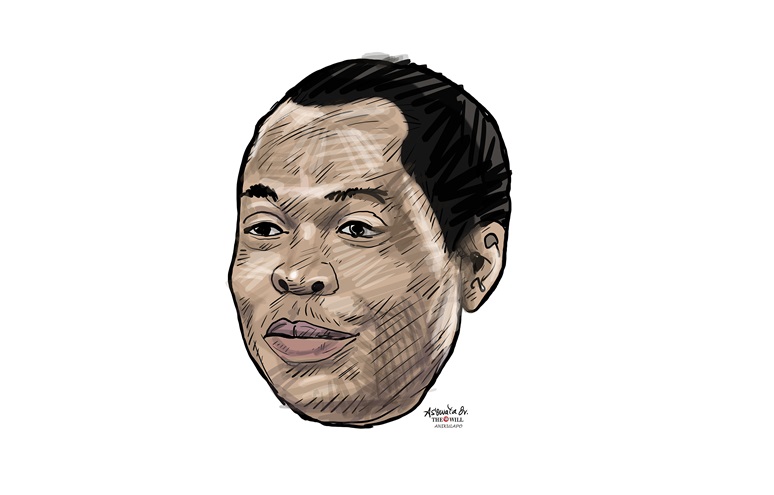
Yet for years, sections of the public and international gatekeepers dismissed Fela, not for his politics but for his personal life. His marriage to 27 women in a single 1978 ceremony, his open use of marijuana and his general flouting of conventional morality drew condemnation from those who viewed his lifestyle as evidence of irresponsibility. These critics fundamentally misunderstood what Fela represented. His embrace of cannabis, which he termed “African grass” or “natural grass”, reflected a spiritual practice and rejection of colonial habits rather than simple hedonism. His polygamy challenged imported Judeo-Christian norms in favour of traditional African practices. The women known as the Kalakuta Queens were not passive figures but dancers and artists integral to Afrobeat’s visual and sonic experience, standing alongside him against military violence whilst rejecting Western beauty standards.
To reduce Fela to caricature based on these choices was to miss the coherence of his vision. Every aspect of his existence, from his clothing to his language to his relationships, expressed a commitment to African self-determination and freedom from psychological colonisation. His so-called irresponsibility was in fact a radical assertion of autonomy in the face of forces that demanded conformity. As time passed, many like my humble self who had dismissed him began to recognise that his life and work addressed fundamental questions about inequality, cultural authenticity and the role of the artist in society.
The Grammy recognition arrives at a moment when Afrobeat’s global influence is undeniable. Contemporary artists from Lagos to London draw on the rhythms and instrumentation Fela pioneered, though few possess his willingness to risk everything for a message. The modern Afrobeats explosion that fills international stadiums owes its existence to the foundation he built, not in boardrooms but in the Afrika Shrine, not for commercial gain but for consciousness. The Hall of Fame induction of Zombie carries particular resonance as the final victory of art over brute force. The soldiers who attacked Kalakuta held guns, but Fela held a microphone and history has proven the latter the more enduring weapon.
This honour also reflects on the institutions that once ignored or marginalised him. The Recording Academy’s decision implicitly acknowledges that the global music community failed to recognise a giant whilst he walked among them. It took nearly 30 years after his 1997 death from AIDS-related complications for the establishment to grasp what the streets of Lagos understood from the beginning: that Fela Anikulapo-Kuti was not simply a musician but a visionary whose work fundamentally altered how we understand the relationship between music, politics, and human dignity.
His sons, Femi and Seun, grandson Made and countless other artists, including Burna Boy and Wizkid, continue to sample his music and extend his legacy through festivals, museums and recordings that ensure Afrobeat remains a living force rather than a historical artefact. The Grammy Lifetime Achievement Award confirms that whilst his body has gone, the spirit of the Black President endures, undefeated and increasingly understood on the global stage he always deserved.