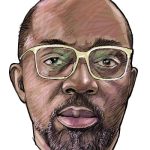
April 13, (THEWILL) – Last week, Benedict Peters, a very influential Nigerian businessman across the continent who lives in Ghana, found himself at the centre of a brief controversy in the West African country.
Initial reports suggested he was arrested for obstructing traffic, operating an armed militia and using sirens, allegations that sparked concern, given his prominence. However, the Ghanaian police clarified that no arrest occurred. They described the incident as a routine traffic matter, resolved without charges, stemming from a misunderstanding.
Media coverage, especially in the West African nation, had inflated the event, but the official account revealed it as minor, highlighting how quickly misinformation can spread.

This Ghana episode, though fleeting, contrasts sharply with Peters’ substantial contributions to Africa’s economic and social fabric. Far from defining him, it underscores his ability to rise above distractions, as his work in oil, gas, mining, and philanthropy continues to shape the continent’s future.
Peters was born into a middle-class family in Nigeria and graduated from the University of Benin with a degree in geography and regional planning. His career began in the 1990s, working for companies like Ocean and Oil Services Limited, the parent company of Oando Plc, and MRS Oil and Gas Limited in the oil and gas sector. These roles provided the foundation for his entrepreneurial path.
In 1999, he founded Sigmund Communecci, a petroleum trading firm, which he rebranded as Aiteo Group in 2008. Today, Aiteo stands as Africa’s largest indigenous oil producer, managing key infrastructure like the Abonnema Storage Terminal and one of Nigeria’s largest petroleum tank farms.
A defining achievement came in 2014 when Aiteo acquired a majority stake in Oil Mining Lease (OML) 29 and the Nembe Creek Trunk Line from Royal Dutch Shell Plc for $2.4 billion.
OML 29, in the Niger Delta, ranks among Nigeria’s most productive oil blocks, while the pipeline is vital for regional oil transport. This deal marked a triumph for an African company over a global giant, revealing Peters’ strategic foresight and reinforcing Aiteo’s industry standing. It also reflected his belief in African-led economic progress, challenging foreign dominance in a cut-throat sector.
Peters has not confined his ambitions to oil. He founded Bravura Holdings to develop mining assets across Africa, targeting minerals like platinum, lithium, copper and gold, resources critical for modern industries. Operations span Ghana, Nigeria, Zimbabwe, Congo, Senegal, and beyond, creating jobs and fostering economic ties.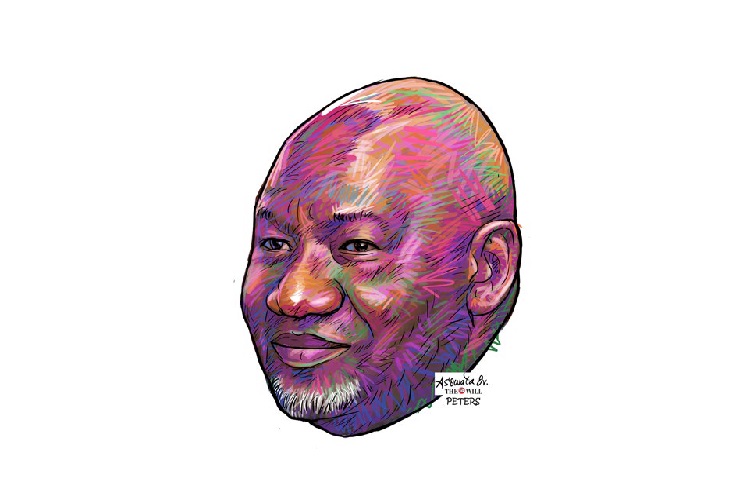
Aiteo’s collaboration with the Atlantic Council to study critical minerals further demonstrates his forward-thinking approach, aligning with global demand shifts while embodying a Pan-African vision that promotes cooperation and self-reliance across the continent.
Philanthropy forms a cornerstone of Peters’ enviable legacy. The Joseph Agro Foundation supports rural Nigerian farmers with tools, training and resources, improving livelihoods and agricultural output. Its projects also enhance education and water access, addressing practical community needs.
On the other hand, the B&E Foundation tackles inequalities, funding initiatives for underprivileged groups across Africa. Peters’ support for sports, through sponsorship of the Nigeria Football Federation and Confederation of African Football (CAF) Awards, as well as sporting festivals in Nigeria promotes talent and unites communities. These are all efforts that create thousands of jobs, uplift rural areas and reflect a commitment to societal good beyond profit.
The Ghana incident warrants closer scrutiny in this context. Allegations of a “militia” likely arose from Peters’ use of private security, a standard practice in the high-risk minerals, oil and gas industry, where threats to personal safety are very high. Global CEOs in similar sectors employ comparable measures and the charge appears to reflect a misinterpretation rather than wrongdoing. The use of sirens, also tied to security protocols, in my view was similarly overstated. This is quite common in this part of the world. So, I don’t understand why this is even an issue.
The police’s swift resolution, with no charges, suggests overzealous reporting or personnel, not a substantive issue. Past claims, like a 2019 alleged fraud case in Nigeria, were fought rigorously and dismissed by courts, further supporting Peters’ integrity against politically tinged accusations.
Recognition from respected bodies bolsters this view. In 2018, Forbes named Peters among Africa’s Top 50 Most Powerful People in Oil and Gas. He received the 2014 Marquee Award for Global Business Excellence and the 2015 Dr. Martin Luther King Jr. Legacy Award for Economic Empowerment from The King Centre. Multiple “CEO of the Year” titles in Nigeria affirm his standing among peers. Earned through decades of impact, these are awards that position Peters as a figure for emulation, not phoney sensationalism.
Peters’ career traces a path from modest beginnings to continental influence. Starting with limited resources, he built Aiteo into a powerhouse, competing with international firms. His mining and critical minerals ventures address Africa’s future needs, while his philanthropy invests in its people, be they farmers, youth, or underserved communities.
Operating across 14 African countries, he fosters economic unity, embodying Pan-African ideals in a dog-eat-dog industry where stakes are high and envy common.
The Ghana incident, clarified as trivial, fades against this backdrop. It reflects the scrutiny public figures face, amplified by competitive tensions, not evidence of fault. Peters’ response, which is to continue his work undeterred, mirrors his approach to past challenges, focusing on progress over noise.
This great thinker, Benedict Peters, remains a pivotal force in African business and society. His achievements in oil, gas, mining, and community support highlight a career driven by vision and responsibility. The Ghana matter, a minor hiccup, underscores his ability to thrive despite distractions. His story, rooted in building and giving back, invites admiration for its depth and impact, not fleeting shenanigans.