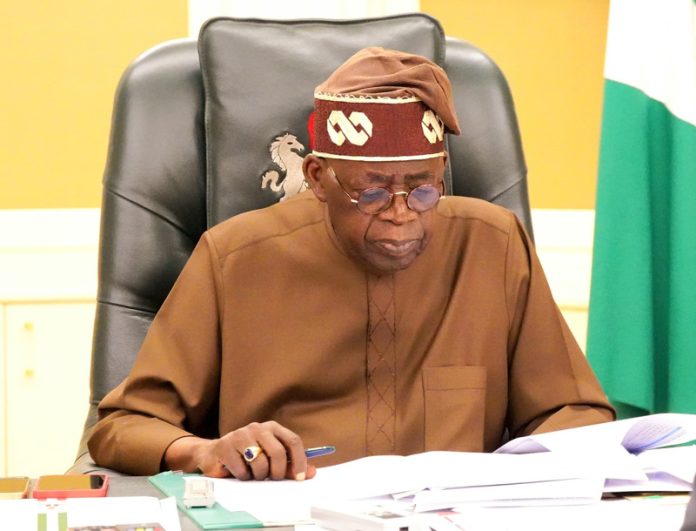
November 25, (THEWILL) – A former Nigeria’s Permanent Representative at the United Nations General Assembly Prof Ibrahim Gambari, has urged President Bola Tinubu to adjust some of his economic reform policies adopted from the World Bank and the International Monetary Fund.
The IMF and the World Bank have consistently advocated the removal of petrol subsidies and the floating of the naira.
Tinubu had on May 29, 2023, removed the subsidy on petrol. He subsequently floated the naira. The decision, he described as part of his economic reforms, has not only resulted in hardship but also protests by Nigerians who can hardly afford the high cost of living amid a hike in petrol prices and weak naira.

Speaking Sunday when he featured on Inside Sources with Laolu Akande, a socio-political programme aired on Channels Television, Gambari, a former Chief of Staff to ex-President Muhammadu Buhari, questioned the value of policies that the people do not support.
Decrying the hardship some of Tinubu’s economic policies have caused, Gambari said Nigeria has been lucky because, in other parts of Africa, the cost of living crisis would have triggered riots.
He advised Tinubu to domesticate and revise some of the policies of the Bretton Woods institutions for the benefit of Nigerians.
He said, “Ultimately, what’s the value of the policies that the people do not support?
“The IMF and the World Bank are partners and this is our country. Therefore, if there is a policy they are advocating or they advise, and we find that it is not working, we should have the freedom to adjust it because our primary responsibility of the government is to the people of this country.
“We’ve been very lucky because Nigerians don’t demand very much. That’s why they go about their business. That’s why it has never been a pressure.
“There are countries like Sudan where the price of bread rose by 20% and there were riots, and a governor was overthrown. But in Nigeria, the people adjust but there may be a breaking point. We don’t want to wait till a revolution takes over before (we take action).”
He added, “Having worked in the United Nations for 13 years, and served my country at the United Nations for 10 years, I am saying that the leadership of every country has to take their destiny into their hands.
“Yes, we are part of the international community. Yes, we are part of the IMF and World Bank because we are part of the international system, but we must be able to adjust the advice of the IMF to our own needs. Our primary responsibility is to Nigeria. We are not responsible and we will not be held responsible for what the IMF does.
“Yes, we value them. They are development partners but this is our country. It is the only country we have. Nigeria is the only country we can call our own and we have to salvage it together.”
“Any president of Nigeria must make security number one because there can be no development without peace…The contribution every president can make to Nigeria is to secure this country. And then promote the framework to release the energy of our people so that they can master their affairs in terms of economy.”
Felix Ifijeh is a journalist with years of professional reporting experience. Known for his keen news sense, compelling storytelling and commitment to accurate, impactful reporting, he has built a reputation for turning leads into clear, engaging, and well-structured reports that resonate with readers. His work reflects deep newsroom experience and a commitment to accurate, impactful journalism.